

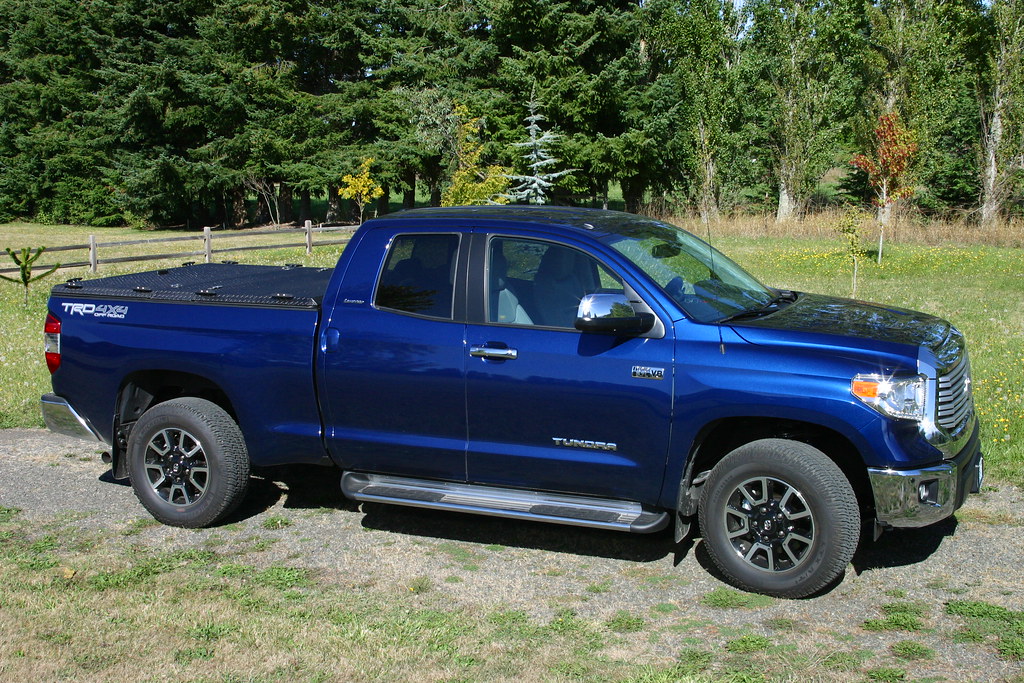
The buyer pulled up to a quiet split-level house with a bank envelope in his jacket pocket and a weirdly specific kind of optimism: the “I’m about to finally buy a clean Tundra” optimism. The listing had been up for two days, priced just under what similar trucks were going for, and the photos were suspiciously decent—clean interior, no rust glamour shots, odometer visible, title “in hand.”
The seller had messaged back fast, answered the basic questions without getting defensive, and offered to meet at his place because, according to him, the truck was “right here” and he was “home all day.” The buyer didn’t love the idea of bringing $18,000 in cash to someone’s driveway, but the seller sounded normal enough. Plus, the truck was parked out front in plain view like a prop in a commercial, making the whole thing feel less sketchy than it could’ve.
They did the standard little dance—walkaround, small talk, seller pointing out new tires and a “fresh oil change,” buyer pretending he wasn’t already sold. The Tundra looked legit. The seller had the keys, started it cold, let it idle, and even handed over the folder with the title and a couple service receipts like he’d done this before.
The handshake moment that made it real
Once the buyer saw the title, he relaxed in that dangerous way people relax right before something goes sideways. The title matched the VIN on the dash, matched the sticker in the door jamb, and the name printed on it matched the seller’s ID when he flashed it. It wasn’t even a hurried flash—he held it out like, “Here, look, it’s me, everything’s fine.”
The buyer counted the cash in the front seat because that’s where the light was, and because that’s what everyone ends up doing even when they swear they’ll meet at a bank. The seller stood outside the open door, arms folded, watching the bills like they were a magic trick. He made a couple jokes about people always trying to talk him down and how he’d had “a million messages,” but the buyer was already past negotiation mode.
They were right at that clean, satisfying moment where the buyer hands over the envelope, the seller signs the title, and both people feel like they got a fair deal. The seller even reached into his pocket like he was going to grab a pen. That’s when the front door of the house swung open hard enough to bounce.
A guy bursts out like the house is on fire
The seller’s brother came running out in socks, no shoes, like he’d launched himself off the couch mid-argument. He wasn’t jogging over to see what was going on; he was sprinting with purpose, face already twisted up, one hand chopping the air as he closed the distance. Before he even made it to the driveway, he started yelling.
“That’s my truck!” he shouted, pointing at the Tundra like it might drive away on its own. “That’s my truck and he stole the title out of my drawer!”
The buyer froze in the driver’s seat with the envelope half-open, cash still visible. The seller’s whole posture changed—his shoulders came up, his jaw got tight, and he snapped back with the kind of anger that sounded practiced. It wasn’t confusion or “what are you talking about,” but more like “not this again.”
For about three seconds, nobody moved. The truck idled. The buyer’s eyes bounced between the brothers, then down at the title, then back up, like his brain was trying to do the math fast enough to avoid getting punched or arrested.
The title folder suddenly looks like evidence
The brother reached the driveway and didn’t stop at a polite distance. He walked straight to the open driver’s door, leaning in just enough to make the buyer instinctively lean back. He jabbed a finger toward the title folder and said, slower this time, like the buyer was the one who needed convincing: “He stole that. I keep it in my desk. He took it.”
The seller stepped between them and tried to herd his brother away from the truck with a hand on his chest. “Get inside,” he hissed, voice low now, like he didn’t want the neighbors to hear. The brother knocked his hand off and shouted, “Don’t touch me,” then turned his attention right back to the buyer and the cash.
The buyer asked the only question he could think to ask without picking a side: “Is the truck in your name?” It came out awkwardly, too loud, like he’d accidentally hit the question button on a game show. The brother said yes immediately. The seller said no, then corrected himself and said it was “basically his,” then said it was “complicated,” which is the exact word that makes every private sale go cold.
Now the title felt less like a piece of paper and more like something radioactive. The buyer checked it again even though nothing on it had physically changed in the last 30 seconds. He looked at the printed name, then at the seller’s ID again, trying to spot a mismatch he’d somehow missed.
Cash on a car deal turns into a hostage situation
The seller tried to salvage the deal with volume and speed. He kept talking, saying his brother was “dramatic,” that they’d “already agreed” the truck would be sold, that the brother just didn’t like letting go. He said it in the tone of a guy trying to keep a waiter from taking away his plate—quick, confident, like if he kept control of the pace, the buyer wouldn’t have time to reconsider.
The brother wasn’t playing along. He started listing grievances that sounded older than the truck: money owed, things “taken,” stuff “promised.” He said the truck was his because he’d been the one making payments, and the seller had “no right” to sell it, and the only reason the seller had the title was because he’d gone into his room and grabbed it.
The buyer asked if they could just call the police and sort it out. It wasn’t a threat; it was a lifeline. The seller’s eyes flicked toward the street like he was calculating how fast a patrol car could show up, then he scoffed and said, “For what?”
The brother said, “Call them,” like he’d been waiting for someone neutral to appear. The seller immediately started backpedaling, saying they didn’t need cops, that it was a “family thing,” that the buyer was “fine” because the title was “right there.” The buyer, still holding the envelope, realized he’d become the third corner of a triangle that was about to collapse.
The buyer tries to exit without becoming the villain
He did the careful thing people do when they’re scared but don’t want to look scared. He set the envelope back on his lap, closed it, and said he wasn’t comfortable moving forward until they figured out ownership. He kept his tone neutral, like he was canceling a haircut, not backing away from a potential felony.
The seller’s friendliness snapped clean off. He accused the brother of “ruining everything,” then swung around and told the buyer he was wasting his time. The brother shot back that the buyer needed to “get out of the truck” because it wasn’t the seller’s to sell, which felt less like a request and more like the opening line of a confrontation.
In the middle of all of it, the buyer’s brain latched onto one practical detail: his keys were still in his pocket, but the seller’s key fob was on the center console. If someone grabbed the envelope, or if the brother decided to block him in, this could become a whole different kind of bad.
So he did a thing that sounds simple but takes nerve in the moment—he handed the title folder back, slowly, without letting go until the seller had a firm grip. Then he slid out of the seat, closed the door gently, and stepped away from the truck like he was exiting a room with a sleeping animal. No sudden moves, no speeches, just a quiet retreat toward his own car.
Two brothers, one driveway, and a deal that won’t die quietly
That should’ve been the end, but the seller kept trying to pull it back from the edge. He followed the buyer, still talking, promising he could “prove” it, saying his brother was “not stable,” offering to meet later somewhere else. The brother stayed by the Tundra like a guard dog, yelling that the buyer needed to leave and that the seller was a thief.
The buyer got into his car with the weird, floaty feeling of almost being part of something criminal without doing anything criminal. He locked the doors out of habit and started the engine with hands that were steadier than he felt. Through the windshield, he watched the seller argue with his brother in front of the truck, both of them gesturing toward the title like it was a weapon.
He didn’t call the police from the driveway, because he didn’t want to be the guy who summons cops to someone’s house over a deal he could simply walk away from. But he also didn’t feel right driving off without doing anything, because the title and the ID and the story had lined up just enough to make him wonder if he’d witnessed an actual theft in progress—or just a family war playing out in public.
He left with his cash still in his pocket and the Tundra still sitting in the driveway, but the scene didn’t resolve itself neatly in his rearview mirror. The seller kept texting afterward, alternating between “ignore him, he’s lying” and “I can knock another $500 off if you come today,” while the brother, somehow having gotten the buyer’s number from the seller’s messages, sent a single text: “Do not buy that truck.” The truck never moved from the listing photos, but the real mess was already out in the open—two people claiming the same thing, both sounding sure, and a piece of paper that suddenly didn’t feel like proof of anything at all.