

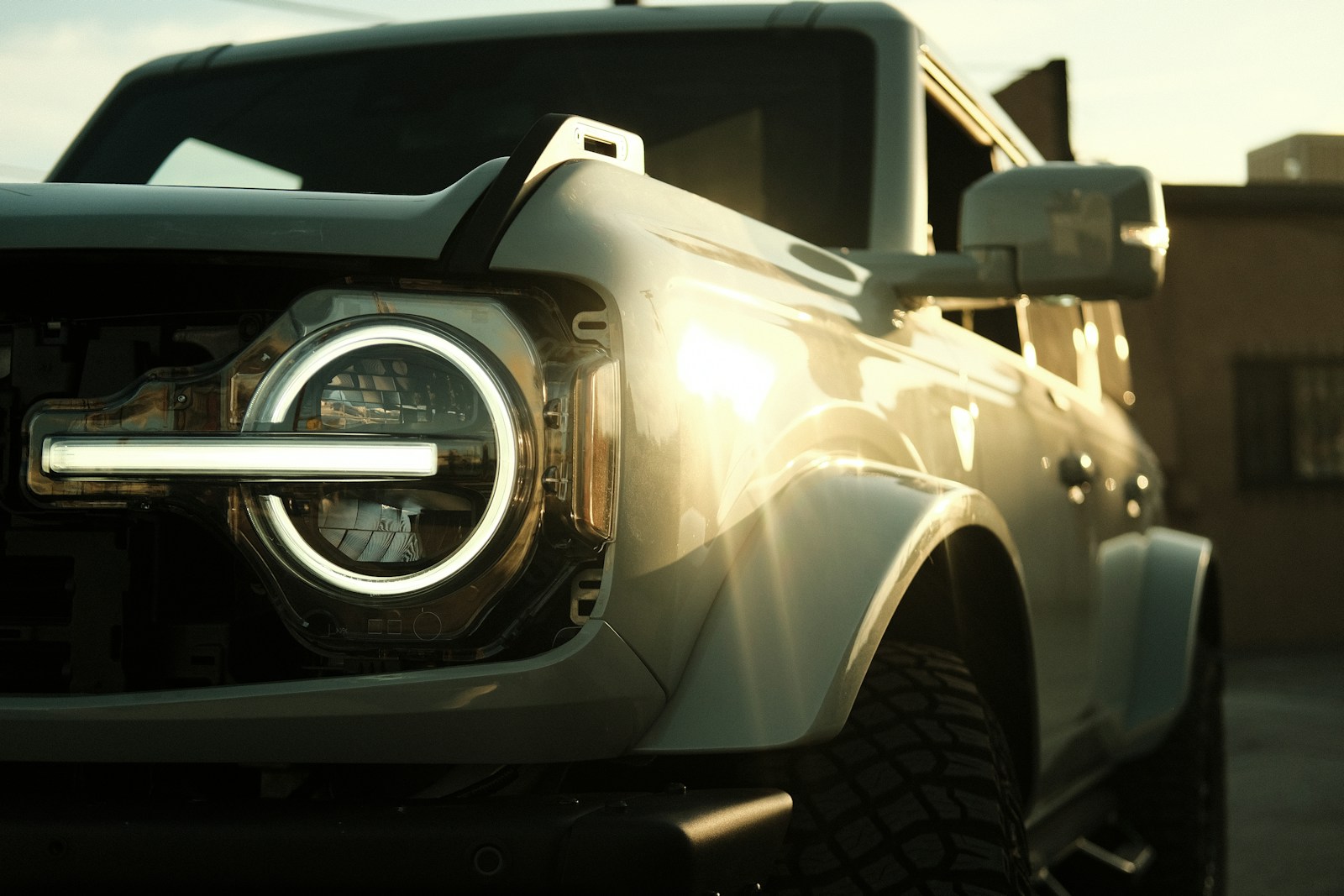
The 2022 Bronco rolled into the shop on a random weekday for what was supposed to be the most boring thing on the calendar: a routine brake job. The owner wasn’t chasing squeals or grinding, just doing the responsible “new pads, check the rotors, flush if needed” maintenance because the truck still smelled new and he wanted it to stay that way.
He did the normal drop-off dance—quick walkaround, quick signature, a little small talk about how backordered parts have been lately. The service writer gave him the usual confidence: couple hours, maybe three, they’d call when it was ready. When the call finally came, it sounded even more routine than the drop-off, like they’d done a thousand of these that morning.
And then, pulling out of the lot, he hit the first traffic light and learned in the most physical way possible how thin the line is between “brake service complete” and “you are a passenger in your own vehicle.”
The pickup: clean keys, clean paperwork, clean vibes
When he showed up, the Bronco was parked out front like it was posing—nose angled toward the driveway, windows up, nothing visibly wrong. The invoice looked normal too: pads, labor, maybe a rotor resurface, brake fluid top-off. The kind of receipt you glance at, groan at the total, and then immediately forget.
The service writer gave him the standard handoff, keys dangling, voice pitched casual. Something along the lines of “all set, you’re good to go,” with that customer-service smile that says please don’t ask any more questions because I have five more people behind you. The owner asked if anything looked weird back there, and the answer was a fast, practiced “nope.”
He got in, adjusted his seat, and did the little pre-drive ritual everyone does without thinking. Start button, dash lights settle, shift into drive. Nothing on the cluster screaming at him, no warning chimes, no puddle under the truck—just a normal afternoon and a heavy piece of machinery that had been taken apart and put back together by strangers.
Rolling out: the first pedal press that didn’t feel right
Leaving the lot, the speed was low enough that he wasn’t worried. He tapped the brakes at the exit, and the pedal felt… off. Not “new pads bedding in” off, more like a softness that didn’t match a vehicle that had just had its braking system touched by professionals.
He did what most people do when something feels slightly wrong but not emergency-wrong: he tried it again. Another press, a little firmer, and the pedal sank farther than he expected. That’s the moment his brain started doing the math—how far to the street, how fast the cross traffic is, whether he should throw it in park and go back inside looking like a paranoid customer.
But he was already committed to the driveway. The lot spit him out toward a light that was red, and there were cars stopped ahead. He pressed the pedal for real this time, the kind of press you do when you’re closing distance and your instincts are expecting a solid bite.
The pedal went to the floor like it was connected to nothing. Not a squishy stop, not a slow roll—just that awful hollow drop where your foot keeps moving and the truck does not decelerate the way a 2022 anything should.
The “no brakes” scramble: hazard lights, downshifts, and pure luck
What happened next wasn’t cinematic; it was messy. He stomped again, harder, because that’s what humans do when a machine disobeys them, and the pedal still sank. The truck kept creeping toward the line of cars, and he felt the heat of that split-second panic where your vision narrows and every option feels bad.
He threw on the hazards with one hand and started looking for space—shoulder, empty lane, anything. The Bronco was moving slow enough that he had a few heartbeats to improvise, but fast enough that “just coast to a stop” wasn’t happening. He yanked the shifter down to slow it, letting the transmission drag, and started easing toward the edge of the road instead of the back bumper ahead.
He reached for the parking brake, the electronic switch that suddenly felt like a toy compared to the old-school lever people used to trust. It grabbed just enough to help, not enough to make it graceful. The whole thing ended with him angled half into a driveway/shoulder situation, stopped awkwardly, with his hazards blinking like a confession.
When he got out, he wasn’t thinking about the shop yet. He was thinking about the cars he almost hit, the fact that this happened within sight of the service bay, and the way his legs were shaky like he’d just gotten off a roller coaster he didn’t buy a ticket for.
The trail back to the bay: the drip that answered everything
He walked around the Bronco expecting maybe a warning light, maybe a tire issue, maybe something simple like the tech didn’t pump the brakes after compressing the pistons. That’s a common thing: pedal goes low until you build pressure, then it comes back. Except this wasn’t “low for a moment.” This was “no brakes at all.”
Then he saw it—fluid, fresh and glossy, trailing down behind one of the front wheels. Not a damp film. A real drip, the kind that leaves a little shiny punctuation mark on pavement. Brake fluid has that unmistakable look when it’s new and actively escaping, and it was doing exactly that.
He drove it the only way he could—barely, crawling, hazards on—back into the lot. He didn’t pull up politely to the service lane. He parked it like someone who has just learned they can’t trust the thing they’re sitting in, then walked inside holding the keys a little too tight.
The service writer’s face did that shift people get when they realize this isn’t going to be a quick “hey, I think you forgot to reset my oil life” conversation. The owner didn’t start with yelling. He started with the simplest sentence in the world, the one that makes everyone in earshot look up: “I didn’t have brakes when I left.”
The reveal: the missing banjo bolt and the quiet panic behind the counter
Once the Bronco was back on a lift, the explanation arrived in the most brutal way possible: the caliper banjo bolt hadn’t been reattached. That’s the hollow point of the whole story—this wasn’t a squeaky pad or a loose lug you catch later. The banjo bolt is what seals the brake hose to the caliper. Without it properly installed and torqued, the system can’t hold pressure.
In plain terms: every time he pressed the pedal, he was pushing brake fluid out of an open connection. The pedal went to the floor because the hydraulic pressure had somewhere to go besides the brake pistons. It wasn’t “air in the lines,” it was “the lines aren’t even closed.”
The shop’s vibe changed fast. There’s a particular kind of silence that shows up when a mistake isn’t just embarrassing but dangerous, the kind that triggers liability training and internal protocols. People stopped making eye contact with the owner and started making eye contact with each other, the quick sideways look that says, we need a manager, now.
The tech who worked on it wasn’t out front doing a sheepish apology tour. He was suddenly “in the back,” and the service writer was stuck in the role of translator between an understandably furious customer and a shop that wanted time to figure out what to say without admitting the exact words that could haunt them later.
The aftermath: paper trails, apologies that don’t feel like apologies, and a truck that doesn’t feel safe anymore
They fixed it, obviously. They had to. The line got reattached, fluid refilled, the system bled properly, and someone did the kind of brake pedal check that should’ve happened before the keys ever reached the counter. But the repair itself wasn’t the point anymore—trust was the point, and trust doesn’t bleed back into a system the way brake fluid does.
The owner wanted more than “we’re sorry.” He wanted to know how a vehicle left the lot with a missing banjo bolt, and who signed off on it. He wanted names, not just “the team,” and he wanted it documented that the failure happened immediately after their work, not two days later when blame could get fuzzy.
The shop offered the predictable stuff: refunding the brake job, maybe comping a tow if he’d needed one, maybe throwing in a free inspection. None of it really fit the shape of the fear he’d just had at the first light, the moment where his brain pictured crumpling into the back of a sedan because someone skipped a step.
And that’s where the tension hangs. The Bronco can be mechanically fine again, but the owner now has to drive it with the memory of that pedal hitting the floor, plus the nagging thought that he only got a second chance because traffic was slow and he had room to improvise. The shop, meanwhile, has to decide whether they treat it like a fix-and-discount situation or the kind of mistake that deserves a bigger reckoning—because the scariest part isn’t what happened in their lot, it’s how easily it could’ve happened on a faster road with no shoulder and no space to get lucky.