
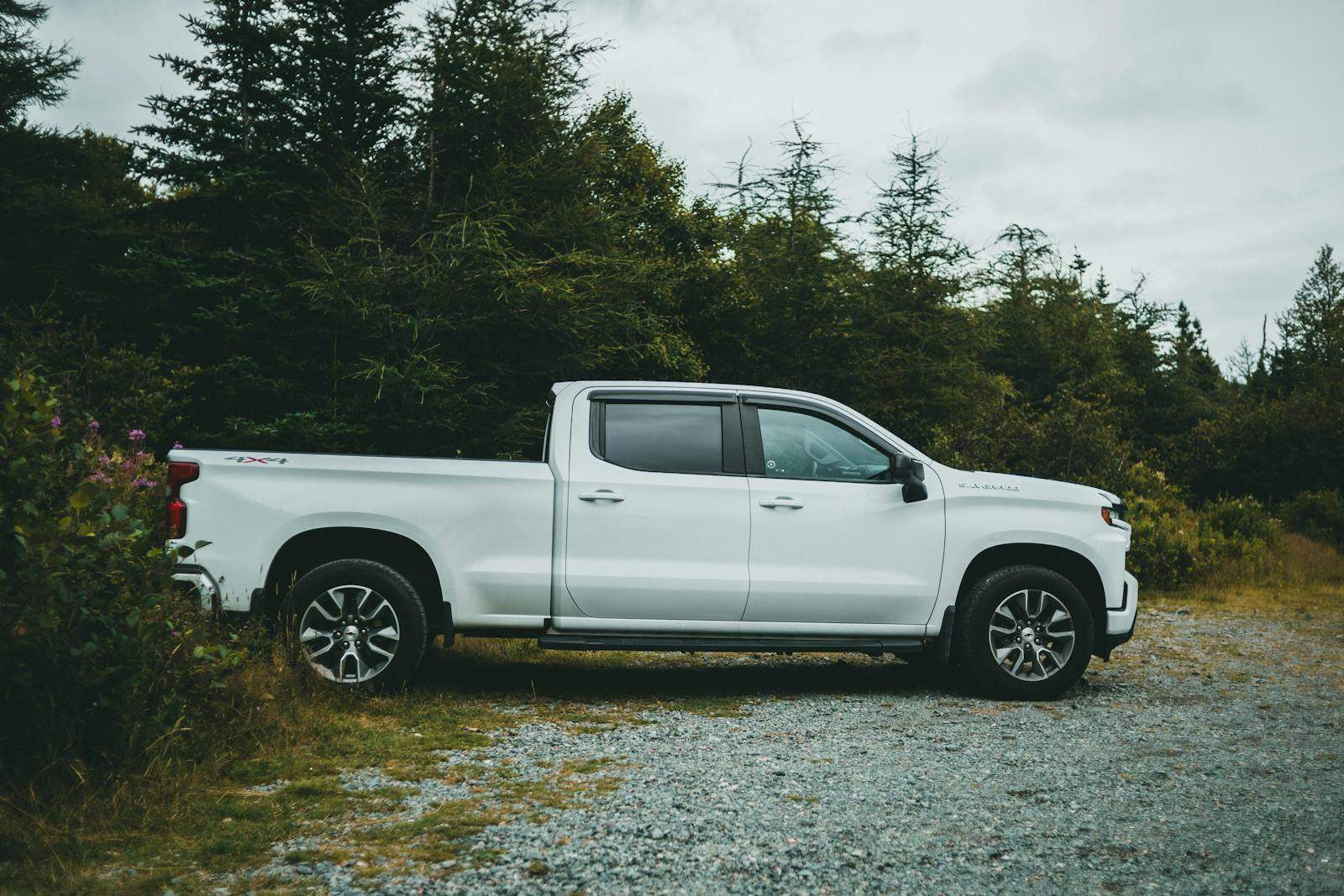

He wasn’t even shopping for something fancy. He just wanted a clean, late-model truck that could handle weekend hauling, the occasional road trip, and Texas weather without becoming a project. The 2019 Silverado on the lot looked like exactly that—sharp paint, no weird smells, interior still tight, and a mileage number that felt believable for a five-year-old truck: 71,000.
The salesman did the whole smooth walk-around routine, tapping the tires with his shoe and pointing at the touchscreen like it was a life-changing invention. Then came the line that made the buyer relax a little: “It’s a one-owner.” Not “clean title” or “no accidents,” but “one-owner,” delivered like it was a stamp of character.
The buyer—let’s call him Marcos—did what people do when they’re trying to be responsible but also kind of in love with a vehicle. He asked a few questions, stared at the Carfax-style report the dealer provided, and took a test drive long enough to convince himself the transmission felt normal. The paperwork moved fast, the keys changed hands, and Marcos drove home feeling like he’d threaded the needle between “brand new price” and “used truck roulette.”
The “One-Owner” Detail That Didn’t Sit Right
The first few days were quiet. Marcos did the normal new-to-him truck stuff: pairing his phone, adjusting the mirrors, and playing with the center console like he was looking for hidden compartments. He noticed a couple of scuffs that didn’t match the overall condition—little bruises in plastic trim, the sort of wear that looks like a lot of different people have climbed in wearing work boots.
He shrugged it off, because a used truck is a used truck. Still, “one-owner” kept bouncing around in his head, mostly because the interior felt oddly… public. There were no decals, no fleet numbers, nothing obvious, but the vibe was there the way you can sometimes tell a hotel room has had a thousand guests even after the sheets are fresh.
Then the registration process started. Texas doesn’t care about your feelings; it cares about forms, fees, and whether the VIN lines up with the story you were told. Marcos went to handle the title transfer and expected it to be a boring errand, the kind where you lose half a morning and gain a paper plate.
DMV Records: “Rental” Shows Up Like a Jump Scare
The DMV clerk didn’t accuse him of anything, which almost made it worse. She just looked at her screen, paused in that way that means something isn’t matching, and asked a couple of clarifying questions—nothing dramatic, just the standard “You bought this recently?” and “From a dealer?”
Marcos mentioned the truck was sold as a one-owner vehicle, like he was giving her a helpful detail. The clerk’s face didn’t do a big reaction, but her tone shifted into that careful customer-service mode people use when they’re trying not to start a fire. According to the record, the Silverado had been registered under a rental fleet for about two years.
Not leased. Not “company vehicle.” A rental fleet. Marcos had that moment where the room feels too bright and you can hear the air conditioner louder than normal. He asked if she was sure, because maybe it was some clerical mix-up, some confusing ownership chain where a person owned it but rented it out.
The clerk stayed calm and repeated it: rental fleet registration, then later a private owner. That’s two owners, minimum, and also a totally different life than the one-owner story he’d been sold. Marcos walked out with a stack of papers and a new problem that felt bigger than a scuffed trim panel.
Back to the Dealership: The Polite Version of Angry
He didn’t storm in shouting. Marcos did that controlled thing people do when they know losing their temper will be used against them. He called first, asked to speak to the salesperson, and explained what the DMV showed.
The initial response was classic: confusion, then a soft retreat into “We go off what we’re given.” The salesman suggested maybe the DMV record was wrong or maybe “rental” didn’t mean what Marcos thought it meant. Marcos said he had the printout, the VIN matched, and he wasn’t looking for a debate about vocabulary.
So he went in. The same desk, the same fluorescent lights, the same vibe of people moving money around while pretending it’s just paperwork. Marcos laid the DMV documents on the counter and asked a simple question: how does a rental fleet truck become “one-owner” in your listing and sales pitch?
This is where the conversation reportedly got slippery. The dealer side didn’t lean into a clean apology. They leaned into technicalities—maybe the rental company counted as the “one owner,” maybe the term meant something different in their system, maybe it was “one owner” since it left the fleet. All of those explanations depend on the customer being too tired to argue.
The Paper Trail Starts Talking
Marcos went home and dug in, because once someone sells you a story that doesn’t match the paperwork, you start wondering what else is off. He pulled the vehicle history report again, but this time he didn’t skim it like a normal person; he read it like a prosecutor. There it was: a period of time where the vehicle bounced around service visits in different cities with a cadence that screamed “rental rotation.”
Even the maintenance pattern felt different when you looked at it with that lens. Oil changes right on schedule, tires replaced in a way that suggested cost control rather than care, and random minor repairs that looked like the aftermath of dozens of strangers treating the truck like a tool. None of that automatically means the truck is bad, but it does change the bargain you thought you were making.
And then there’s resale value. “One-owner” is a quiet multiplier in the used market, the kind of phrase that makes buyers assume the vehicle had a consistent routine and someone who remembered its quirks. “Former rental” does the opposite—it makes people picture hard acceleration, indifferent cold starts, and nobody being emotionally invested in the break-in period.
Marcos started feeling less like a guy who bought a truck and more like a guy who got maneuvered. Not robbed at gunpoint, not scammed in a movie-plot way, but nudged into a decision with a phrase that wasn’t true in any normal-person sense. He wasn’t mad only because of the label; he was mad because the label seemed intentional.
The Dealer’s Offer (If You Can Call It That)
When Marcos pushed for a remedy, the dealer didn’t jump to unwind the deal. They leaned toward the kind of “solution” that costs them the least: a small concession, a service credit, maybe they’d “look into it” with their listing provider. The vibe was basically, “Let’s make this go away without admitting anything concrete.”
Marcos didn’t want free oil changes. He wanted the truck he thought he bought, or the price that matched the truck he actually bought. He asked about returning it, which is when the tone tends to change in these stories—suddenly everyone remembers all the signatures and the “as-is” language and how complicated it would be to reverse time.
The dealer kept circling back to the same defense: the rental company was an owner, therefore “one-owner” wasn’t a lie. Marcos kept circling back to reality: if you tell a normal buyer “one-owner,” they don’t picture hundreds of renters over two years, and the dealer knows that. It turned into one of those arguments where both sides are technically talking about the same phrase but living in different universes.
From there, it started looking like a fight that would be won with paperwork and patience, not a heated conversation at a sales desk. Marcos began collecting everything—screenshots of the listing, any text messages, the buyer’s guide, and the exact wording the salesperson used. He wasn’t just trying to be right; he was trying to prove that the transaction was built on a claim that shaped the deal.
The truck itself sat in his driveway like a daily reminder. It drove fine, which almost made the whole thing more maddening, because it meant the conflict wasn’t about a broken vehicle. It was about trust, about whether the words used to close the deal meant anything, and about whether a buyer is supposed to quietly swallow a “technically” when the practical truth is obvious.
And the messiest part was this: once you learn a vehicle used to be a rental fleet truck, you can’t unknow it. Every little rattle feels suspicious, every scrape feels like evidence, and every time someone says “Nice truck,” Marcos has to decide whether to just nod or to feel that flash of irritation all over again. The dealer hadn’t fully folded, and Marcos hadn’t fully let it go, which left the whole situation hanging in that tense space where the paperwork is done but the story still isn’t.
More from Steel Horse Rides: