
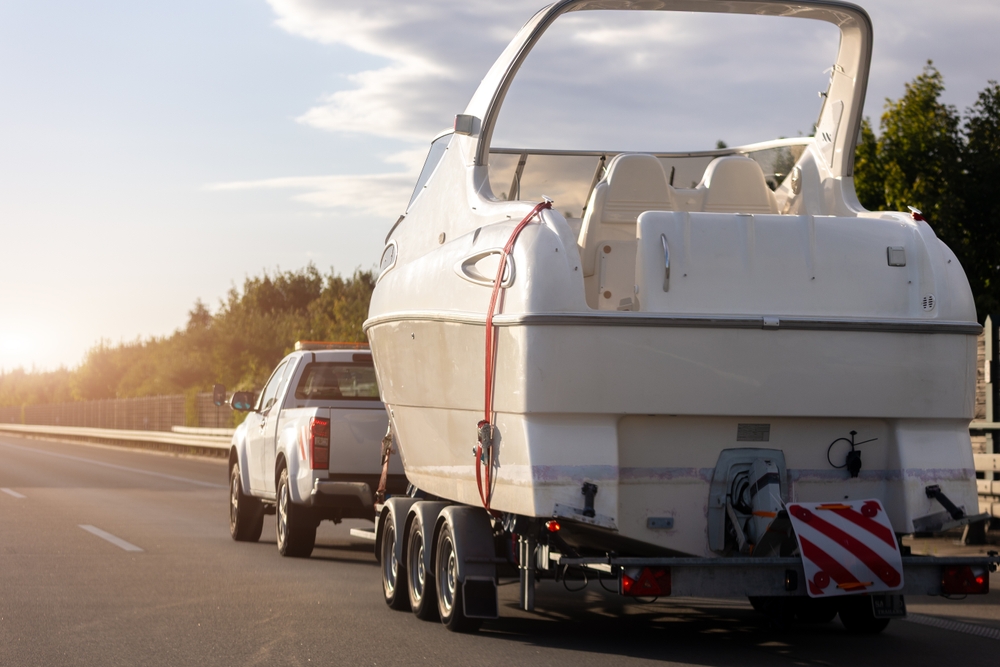

He’d done this drive a dozen times: half-ton truck, boat on the trailer, cooler wedged behind the rear seat, everybody half-hyped for a day on the water. The lake was only an hour out, the kind of Saturday plan that feels effortless right up until it doesn’t. He even did the little pre-trip routine—checked the hitch pin, tugged the safety chains, made sure the strap on the bow was tight enough to sing when you plucked it.
The only thing he didn’t do was crawl under the dash and interrogate the brake controller, because who does that when it worked fine last weekend? He’d tapped the manual lever in the driveway and felt that familiar, reassuring drag through the truck. The boat followed obediently. Everything felt normal, which is exactly what made the first real sign of trouble so hard to accept.
It started on a downhill stretch heading toward the lake, one of those long grades that looks gentle until you’re in it and gravity starts writing checks. Traffic was light, the road was dry, and the boat was doing that subtle trailer sway that’s not dangerous, just enough to remind you there’s a lot of weight back there. He eased onto the brake pedal to keep speed in check, expecting the trailer brakes to help settle everything down.
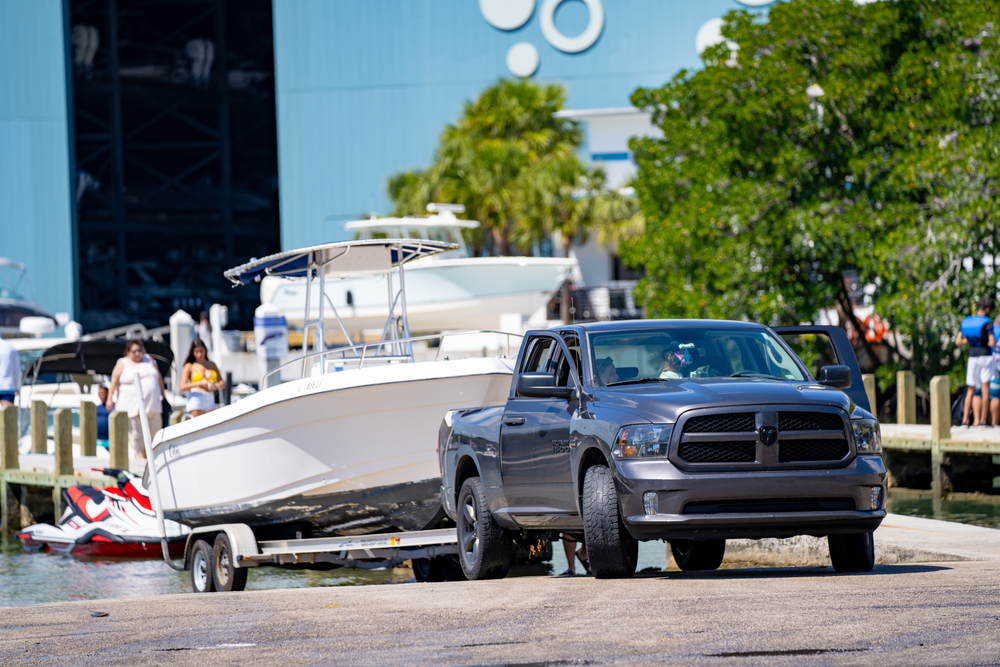
The First Hint Something Was Off
Instead of that smooth, shared slowing—truck and trailer working together—he felt the truck doing all the work. The pedal had that slightly firmer, “I’m carrying you” feeling, and the boat didn’t tuck in behind him the way it normally did. He glanced down at the brake controller, the little module mounted low near his knee, and saw the display flicker like a tired flashlight.
He tried the manual override lever with his thumb, the move you do when you want the trailer to pull itself straight. Nothing. No tug, no change in the trailer’s posture, just the same forward shove of a heavy load that’s suddenly decided it has its own plans.
That’s the moment the internal debate started: maybe it’s just the gain set too low, maybe the connector’s a little dirty, maybe it’s fine and he’s overthinking it. But the hill kept going, and the speed crept up in that annoying, incremental way where you don’t notice until you’re five miles per hour faster than you meant to be. He tapped the brakes again and felt the front end dip harder than it should.
The Downhill Turns Into a Problem
He did the responsible thing first—moved into the right lane, put on the hazards, and started hunting for an exit or a wide shoulder. There’s a special kind of stress that hits when you’re towing and you realize you might not be able to stop normally. It’s not panic, exactly, but it sharpens everything; every car ahead suddenly looks like an obstacle, and every curve looks tighter than you remember.
He downshifted to let the engine hold some of the speed, the truck growling like it didn’t appreciate being asked to do a job it wasn’t hired for. The boat trailer nudged and pushed, and you could feel the mass of it wanting to keep going. He tried the manual lever again, pressing harder this time, like force could make electricity happen.
The controller blinked and went dark for a second, then came back with a faint glow. That was worse than it staying off, because it suggested something was failing in real time. A couple cars passed him on the left, and he watched them disappear down the hill like they were in a different world where physics wasn’t personal.
By the time he spotted a turnout—gravel, uneven, not ideal—his jaw was clenched tight enough to hurt. He eased the truck over, careful not to jerk the wheel, and let the rig roll down into the turnout. When he finally got it stopped, it wasn’t graceful; it was the kind of stop where you feel the truck’s brakes heat up and you know you’ve just spent some of their life.
The Shoulder Inspection Nobody Wants
He climbed out and walked back, doing that forced-calm thing people do when they’re trying not to scare whoever’s riding with them. The boat sat there innocently on the bunks, like it hadn’t just tried to shove him into the next county. He crouched near the trailer wheels and sniffed—hot brakes have a smell, and he expected to catch it if the trailer had been working too hard.
Nothing. No heat radiating off the hubs, no warm metallic smell, no hint that the trailer brakes had done anything at all. The truck’s front wheels, meanwhile, were putting off that faint “we just worked” odor, and he hated how clear that contrast was.
He popped the trailer plug from the truck’s socket and looked at it like it might confess. The pins looked okay at first glance, but there was a discoloration on one blade—darkened plastic around it, like it had gotten hotter than it had any right to. He wiggled the cable and watched the controller inside the cab flicker again, which was equal parts helpful and unsettling.
He called a buddy who knew towing setups better than he did, the kind of friend who owns a multimeter and isn’t afraid of wiring diagrams. The buddy asked the obvious questions: “You sure the breakaway battery’s charged?” “You blow a fuse?” “Any trailer lights?” The answers didn’t line up neatly—some lights were working, some weren’t, and the controller was acting like it was haunted.
What the Controller Was Actually Doing
They ended up limping the rig—slow, careful, back roads where possible—to a shop near the lake town, because turning around and going back up the grade felt like tempting fate. At the shop, a tech plugged in a tester and immediately got that look mechanics get when they see something that’s both common and stupid. The controller was sending weird, inconsistent voltage, and the “hot” feed to the trailer plug wasn’t stable.
The diagnosis landed with the kind of bluntness that makes your stomach drop: the brake controller module had burned out the hot-wire to the trailer plug. Not a loose connector, not “just turn the gain up,” but actual cooked wiring. The tech pulled the paneling enough to show the section where the insulation had browned and stiffened, like it had been toasted.
It was one of those failures that makes perfect sense and no sense at all. The controller draws and modulates current to power the trailer brakes, and if something’s shorting, corroded, undersized, or just stressed for long enough, heat builds. Add a heavy boat, a long downhill, and a setup that’s been “fine” until today, and suddenly the system that’s supposed to help you stop becomes the reason you can’t.
He kept circling back to the moment in the driveway when it seemed to work. The tech shrugged in that practiced way: intermittent faults can pass quick tests, and a damaged wire can behave until it warms up under load. That line—“until it warms up”—hit hard, because it put an ugly logic behind the controller flickering on the grade. It wasn’t random; it was cooking.
The Awkward Fallout in the Parking Lot
While the truck cooled off and the tech wrote up options—new controller, rewiring the hot lead, checking the trailer’s brake magnets for shorts—he stood in the lot and made the calls nobody likes making. The people waiting at the lake got the “we’re delayed” version first, then the fuller explanation when it became obvious the boat wasn’t hitting the water anytime soon. You could hear the disappointment through the phone, even when everybody tried to sound chill.
And then there was the quieter, messier part: the self-recrimination. He’d bought the truck because it was “plenty capable,” a phrase that sounds confident until you’re parked at a shop realizing capability depends on the small stuff you can’t see. He’d trusted a controller and wiring that were probably installed by someone on a rushed afternoon, and now he was replaying every time he’d said, “It tows great.”
The tech asked if he’d noticed any weirdness lately—dim trailer lights, a warm plug after driving, a controller that occasionally reset—and he realized he had, sort of. He’d dismissed the occasional flicker as the screen being finicky, the trailer lights being old, the plug being “a little loose like they all are.” Those small ignores stacked up into a big moment on a downhill grade, and there was no arguing with that.
They didn’t hand him a cinematic ending. The boat stayed on the trailer, the lake stayed in the distance, and the repair estimate came with that irritating “we can get parts by Monday” vibe that ruins a weekend without technically being anyone’s fault. The last thing he did before leaving the truck at the shop was stand behind it and stare at the trailer plug like it had personally betrayed him, because the worst part wasn’t the money or the lost day—it was knowing how close he’d been to learning the same lesson in a way that left dents instead of receipts.
More from Steel Horse Rides: