

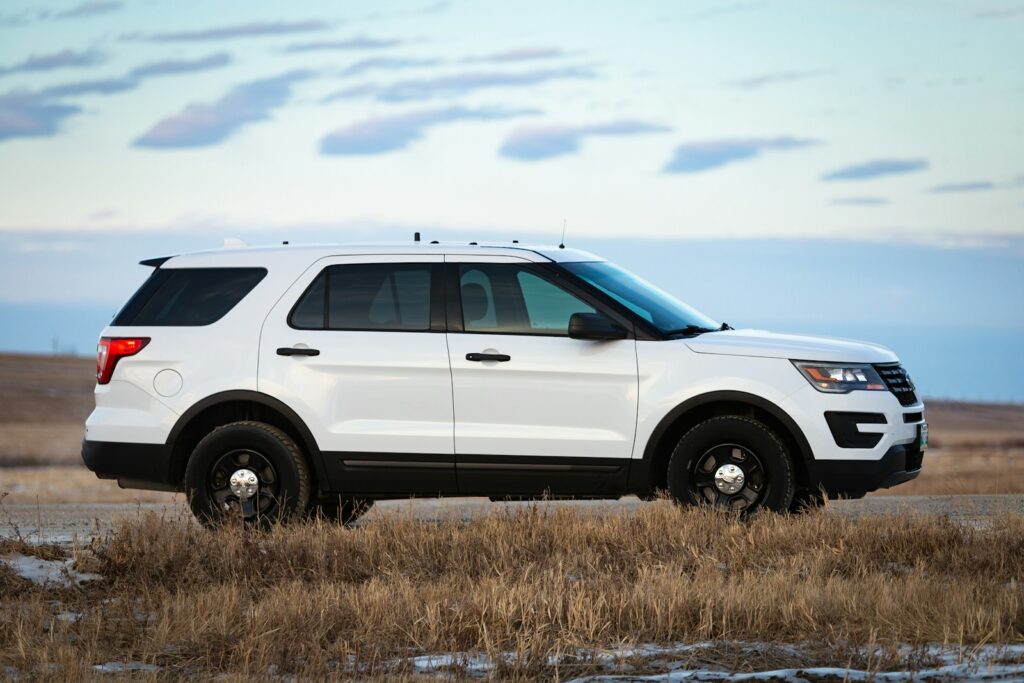
He’d been moving at that obnoxiously slow, deliberate crawl that makes everyone behind you wonder if you’re stuck or just being precious. The SUV was in 4-Low, nose pointed up a rocky shelf on a narrow trail that kept pinching down between scrub and exposed shale. You could hear tires deforming over stones, the fan cycling, the occasional clack of skid plates kissing rock.
The owner—mid-30s, proud of his build, proud of his “overland” setup even though this was basically a weekend flex—had been talking all morning about how he’d “finally geared it right” and how 4-Low made everything feel “like cheating.” He wasn’t being reckless, exactly, but he had that energy of someone who trusts the rig more than he trusts the terrain. The group behind him was a mix of friends and friends-of-friends, and the vibe was half hangout, half moving roadblock.
Then, right as the front tires climbed the next ledge and the body leaned left, the front end made a noise that didn’t match anything on the playlist. It wasn’t a scrape or a tire chirp—more like a tight, metallic bind, followed by a single ugly pop that went through the chassis. The SUV jerked like it had been tugged by a rope, and the driver’s head snapped forward as if his instincts tried to catch the sound midair.
The slow climb that didn’t feel slow anymore
He stopped immediately, which was smart, but he stopped in the one place nobody wanted to stop: halfway up the obstacle, at an angle, with limited room to pass. He let it idle for a second like the engine might confess what it did, then put it in neutral and tried to roll back a hair. The whole vehicle gave this stiff, reluctant shudder, like something underneath was arguing with the idea of moving at all.
One of the guys behind him walked up and did the classic “spotter” thing even though nobody asked—hands out, squinting under the bumper, doing that mechanic’s head tilt. The driver leaned out the window and said, way too casually, “That sounded expensive.” Someone else immediately told him to “just bump it” like it was a video game and not a driveline with thousands of pounds of torque on it.
He tried the gentlest throttle input, basically a polite request for the SUV to continue. The front end answered with another binding sensation—more vibration than noise this time—and the steering wheel twitched like it had a pulse. That’s when the driver’s voice changed from curious to annoyed, and he killed it completely.
Everyone crowds under the truck, and nobody likes what they see
Once the engine was off, the trail got quiet in that weird way where you can suddenly hear the wind and everyone’s shoes on gravel. Two people pulled out phones for light, which is always the moment you know it’s either bad or about to become an argument. The driver slid out carefully, looked at his own tires like they might be the issue, then dropped to a knee and started peering under the front.
At first it looked like nothing. Then the light caught something shiny where there shouldn’t have been anything shiny: needle bearings and metal dust scattered around the front driveshaft yoke like someone had cracked open a pepper grinder. The U-joint wasn’t just worn—it had come apart in a way that didn’t seem possible until you remembered how much load 4-Low puts on every weak link.
The front driveshaft had shifted and was hanging at an angle that made everyone instinctively move their faces back. It wasn’t dangling free like a clean break; it was wedged and twisted, still trying to exist in the space it used to occupy. One of the more experienced guys said, quietly, “Don’t start it,” and for once nobody argued.
The “but it was fine yesterday” phase
The driver’s first response was denial, the kind that comes from having just spent money on upgrades and not wanting the universe to invoice you again. He kept saying the U-joints were “recent,” which could mean last month or last year depending on how a person measures time. He said he’d greased everything, too, which is something people say when they don’t want greasing to be relevant to the conversation.
Someone asked him point blank if he’d ever felt vibration at highway speeds. He hesitated for half a second—just long enough—and then admitted, yeah, maybe there was “a little” vibration at 60–70, but he thought it was tires. Another person asked if the driveshaft had ever been out, because sometimes a joint that’s pressed in slightly wrong will live a short, dramatic life. He shrugged like he didn’t know, which basically meant a shop had done it and he’d never really looked.
That’s when the social dynamic shifted from “helpful trail buddies” to “people doing math about how long this is going to take.” The obstacle behind them wasn’t passable, the trail ahead was narrow, and the SUV was now a sideways cork in the bottle. Everyone was polite, but you could feel the calculations: sunset, towing options, cell service, and whether anyone brought extra water or just LaCroix and confidence.
The moment they realized it wasn’t just the U-joint
If it had been a simple U-joint failure, the plan would’ve been annoying but manageable: pull the shaft, secure it, limp out in rear-wheel drive if the transfer case would cooperate. But as they started to manipulate the driveshaft by hand—carefully, like it was a sleeping animal—they noticed it wasn’t rotating freely. It was binding at the transfer case output, and not in a “this is stuck because of angle” way, more in a “metal has changed shape” way.
One guy lay on his back, reached up, and tried to wiggle the yoke. He stopped and said, “That’s not supposed to move like that,” which is the least comforting sentence you can hear under a vehicle. The output shaft—where the front driveshaft connects to the transfer case—had a subtle wobble, like it had been levered sideways under load.
The picture started to make sense in the worst way. When the U-joint disintegrated, the driveshaft didn’t politely drop; it flailed for a fraction of a second under torque, and that was enough. It slammed and bound against the output, and the force had bent the shaft just enough to turn “remove the driveshaft” into “the transfer case is now part of the problem.”
The driver’s face went pale in that controlled way people get when they’re trying not to look panicked in front of friends. He kept staring at the transfer case area like if he stared long enough, it would straighten itself out. The experienced guy didn’t say “you’re screwed,” but he didn’t have to; his silence did the work.
Getting off the trail turns into a group negotiation
Now the conversation wasn’t just mechanical—it was logistical and personal. Somebody suggested trying to shift the transfer case into 2-High and pulling the front driveshaft entirely, but there was no guarantee the case would shift cleanly with a bent output, and nobody wanted to grenade it further. Another person brought up flat towing, which sounded great until they remembered the trail was narrow, rocky, and not exactly a place you can casually swing a tow rig into position.
The driver kept offering solutions that sounded like bargaining. “What if we just strap the shaft up?” “What if we drive it super slow?” “What if I just keep it in neutral and you pull me?” Each idea got gently shut down with some variation of: you don’t know what’s rubbing, you don’t know what’s cracked, and you definitely don’t know what happens when that bent shaft decides to seize.
The tension peaked when one of the guys—who’d been patient all day—finally asked why the driver hadn’t replaced the U-joints when he noticed the vibration weeks ago. It wasn’t yelled, but it landed hard. The driver snapped back that he was “getting to it” and that not everyone has time to preemptively replace parts “because of a vibe.” That’s when it turned from a shared problem to an avoidable problem with an owner attached to it.
They ended up doing the only thing that made sense: stabilize the vehicle, carefully back it down with minimal driveline stress, and coordinate a recovery that didn’t involve improvising on a cliffside. It took forever, and it wasn’t cinematic—just slow, sweaty, and full of tiny moments where everyone held their breath. Every few feet, someone would stop him, check the underside, and remind him to keep his foot out of it.
By the time they got to a spot where a trailer could actually reach, people were tired in that specific way that makes you less sympathetic. The driver kept saying he “couldn’t believe” it happened, and nobody said what they were thinking: that they absolutely could. The U-joint didn’t fail politely; it failed like a weak link that had been warned, and it took the transfer case output shaft with it like a parting gift.
The last thing that stuck with everyone wasn’t the broken metal, though—it was the look on the driver’s face when he realized the recovery bill was just the opening act. A bent transfer case output isn’t a trail fix, and it’s not cheap, and it comes with the kind of downtime that kills plans and trips and pride. They loaded the SUV up in the fading light, and the group drove out quieter than they came in, with the uncomfortable understanding that the real argument was still coming—between “bad luck” and “you ignored the signs,” and who was going to own which version of the story.
More from Steel Horse Rides:
- 13 Most Powerful Muscle Cars of All Time
- 13 Underrated JDM Cars That Deserve More Love
- 15 JDM Cars That Were Illegal in the U.S.
- 13 SUVs From the ’90s That Are Surprisingly Cool Today