
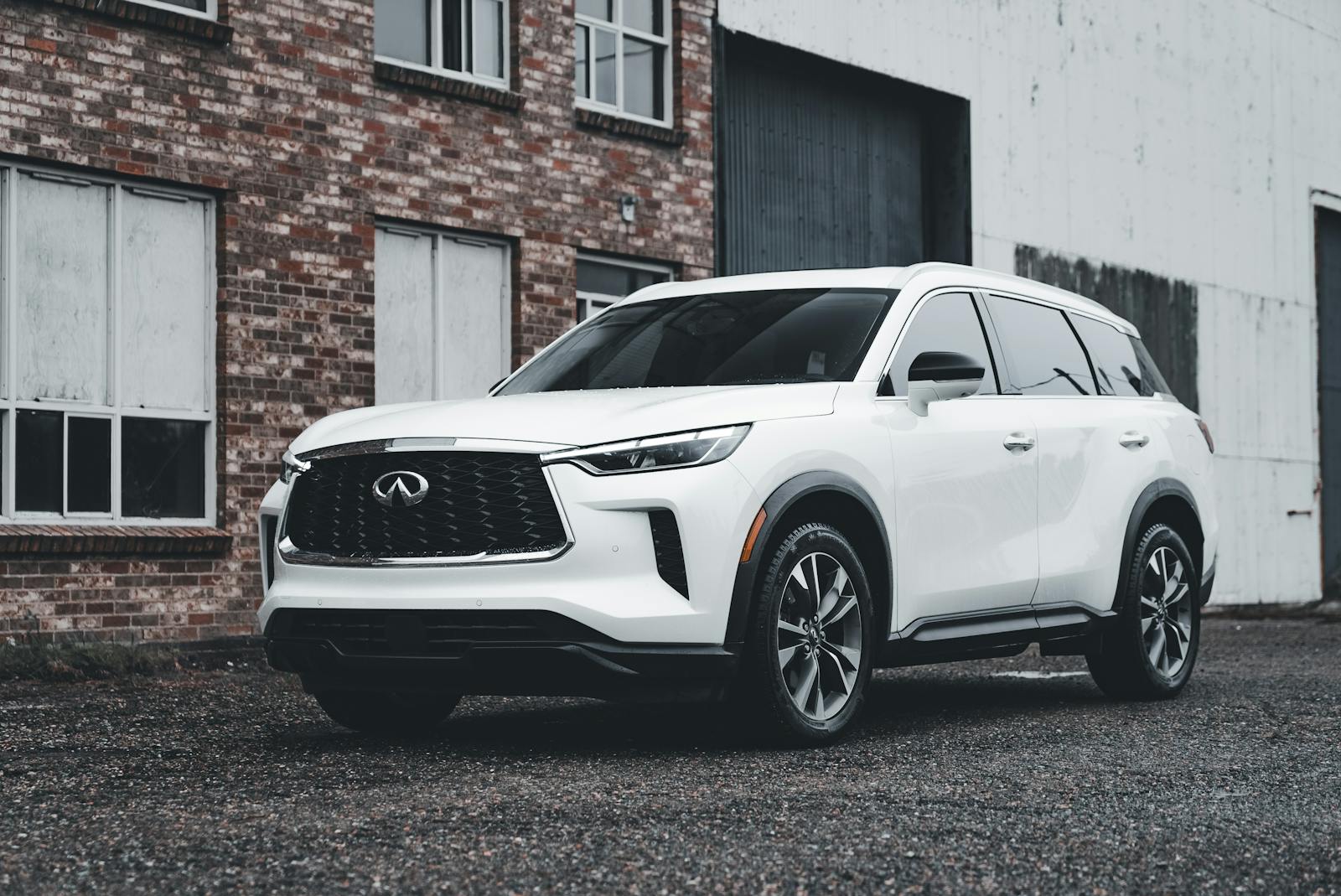

He’d bought the SUV because it was supposed to be the “grown-up” choice. Big, quiet, expensive, loaded with driver aids and tasteful leather—something you could point at and say, see, I’ve got my life together. On that Tuesday afternoon, he was doing the most boring, responsible thing imaginable: cruising home on the highway with the climate control set just cold enough to feel rich.
Traffic was moving fast but steady, the kind of flow where everyone’s technically speeding and pretending they’re not. He had a podcast on and one hand resting on the wheel like he’d done it a thousand times. Then there was a loud pop—sharp and ugly, like someone smacked the underside of the hood with a hammer—and the cabin filled with a faint, sweet chemical smell that didn’t belong there.
In the rearview, he caught a weird gray puff that didn’t match the weather. He looked down at the dash and saw the temperature needle starting to climb with that slow, confident certainty that makes your stomach drop. By the time he flicked his turn signal on, smoke was billowing out from the seams of the hood like the SUV had decided it was done being a luxury object and wanted to cosplay as a dumpster fire.
The shoulder scramble and the “please don’t be what I think it is” moment
He did the instinctive checklist—hazards on, eyes scanning for a gap, trying not to slam the brakes and become a new obstacle for someone scrolling their phone. The SUV still had power, but it felt wrong, like it was running with a fever. He drifted to the shoulder, turned the wheel as far away from traffic as he could, and rolled to a stop with that intense silence that follows adrenaline.
He didn’t fling the hood open right away, because even non-car people know that’s how you get a face full of boiling coolant. He sat there for a beat, watching the smoke curl up and out, and listening to the engine tick like it was offended. When he finally popped the latch and lifted the hood carefully, a wave of heat came up that felt personal.
What he saw didn’t match the cinematic idea of an engine fire. There were no flames, just a wet-looking mist and streaks of neon coolant sprayed in places it definitely wasn’t supposed to go. The smoke was coming from where that coolant was landing on something extremely hot—later he’d learn it was the manifold—and instantly turning into angry steam.
The tow truck conversation that turned into an interrogation
He called roadside assistance and tried to sound calm, because there’s a special humiliation in admitting your fancy SUV is currently disabled on the shoulder like a 1998 beater. While he waited, he kept glancing at the temperature gauge, which was now fully committed to the red. He shut the engine off and sat on the guardrail, watching other cars blast by like nothing mattered.
The tow truck driver pulled up with the relaxed confidence of someone who’s seen every kind of automotive betrayal. He walked around the SUV once, took one look under the hood, and made a face that wasn’t sympathy so much as recognition. “That smells like coolant,” he said, like he was diagnosing a body on a crime scene.
When the owner mentioned the pop, the driver’s eyebrows lifted, and he asked a question that landed weirdly: “How many miles you got on it?” The owner told him—still not that many, not enough to feel like anything should be exploding. The driver made a little noise in his throat, the kind people make when they’re trying not to say, yeah, I’ve heard this one before.
At the shop, the hood goes up and the mood gets worse
They dropped it at a shop that worked on higher-end SUVs, the kind of place with clean floors and a waiting area that tries to feel like a boutique hotel. The owner stood at the counter, still keyed up, trying to translate “loud pop + smoke” into something that didn’t sound like he’d driven it through a war zone. The service advisor nodded in that practiced way that says, sure, sure, we’ll see, but also: don’t tell me what you think it is.
A couple hours later they called him into the bay, which is never a good sign because they don’t bring you back there to show you something cheap. The tech had the hood up, light clipped on, and there was coolant residue everywhere—splattered and dried in little crusty trails like the engine had sneezed. The owner asked if it was a hose, because a hose felt like a problem you can solve without losing your mind.
The tech didn’t even bother with the soft lead-in. The water pump impeller—plastic—had exploded. Not cracked, not worn down, not “starting to fail.” Exploded, sending pieces through the pump housing and turning the cooling system into a pressurized sprinkler aimed at the hottest parts of the engine.
“Plastic? In a water pump?” and the slow realization of what that means
The owner kept repeating the word plastic like it didn’t belong in the sentence. Plastic sounded like a toy, like something you’d forgive in a disposable appliance, not in a vehicle that was priced like a small condo. The tech explained, in the weary tone of someone who’s had this argument before, that manufacturers use composite impellers for weight and efficiency and cost and whatever else the spreadsheets demand.
But the explanation didn’t make the moment feel better. The owner stared at the mess and tried to imagine the exact second that impeller gave up—spinning at highway speed, suddenly deciding it had had enough of heat cycles and time. That pop he’d heard wasn’t random; it was the cooling system losing its mind all at once.
The worst part wasn’t just the part that broke. It was the chain reaction: coolant sprayed onto the hot manifold, making all that smoke and steam, and the engine temperature spiked fast enough that he barely had time to get over. The tech was careful with the words—no promises, no clean guarantees—because overheating can mean warped heads, cooked gaskets, and damage that doesn’t show up until later like a grudge.
The phone calls: warranty dancing, blame drifting, and the “did you keep driving?” question
Once the story left the bay and entered the world of paperwork, it got messy in a different way. The owner called the dealership, then the warranty line, then the dealership again, because everyone wanted the same timeline. How long did he drive after the warning? Did he shut it off immediately? Did he “continue operating the vehicle” while it was overheating?
He kept coming back to the same point: he heard the pop, saw smoke, and got off the highway as safely and quickly as he could. But the questions weren’t neutral; they carried that familiar implication that if this gets expensive, someone is going to try to make it his fault. The advisor asked if he’d had any recent work done, as if a rogue oil change could have sneaked in and detonated the water pump impeller out of spite.
Meanwhile, the shop was building an estimate that looked less like a repair and more like a negotiation tactic. Water pump assembly, coolant, labor, maybe a thermostat, maybe hoses, maybe more once they could pressure-test without scattering more plastic fragments into the cooling system. The owner started doing that mental math everyone does: the car payment, the insurance, the premium fuel, and now the privilege of arguing about whether a plastic part exploding counts as “wear.”
By the time he finally got a clear answer, it wasn’t a tidy resolution—more like a temporary truce. They’d cover the pump under warranty, sure, but the shop still wanted to inspect for secondary damage, and that part lived in a gray area where everyone speaks carefully. The owner drove a loaner that didn’t smell like coolant and tried not to flinch every time he heard a loud noise on the road.
What stuck with him wasn’t just the mechanical failure; it was the feeling of being trapped between a machine that had literally popped under stress and a system that treats every failure like a courtroom question. He’d bought luxury for peace and predictability, and now he was waiting on a call that could swing from “all set” to “we found overheating damage” with a single sentence. The SUV was sitting somewhere with its hood up, cooling down, while he kept replaying that pop in his head like the sound of trust cracking.
More from Steel Horse Rides: