
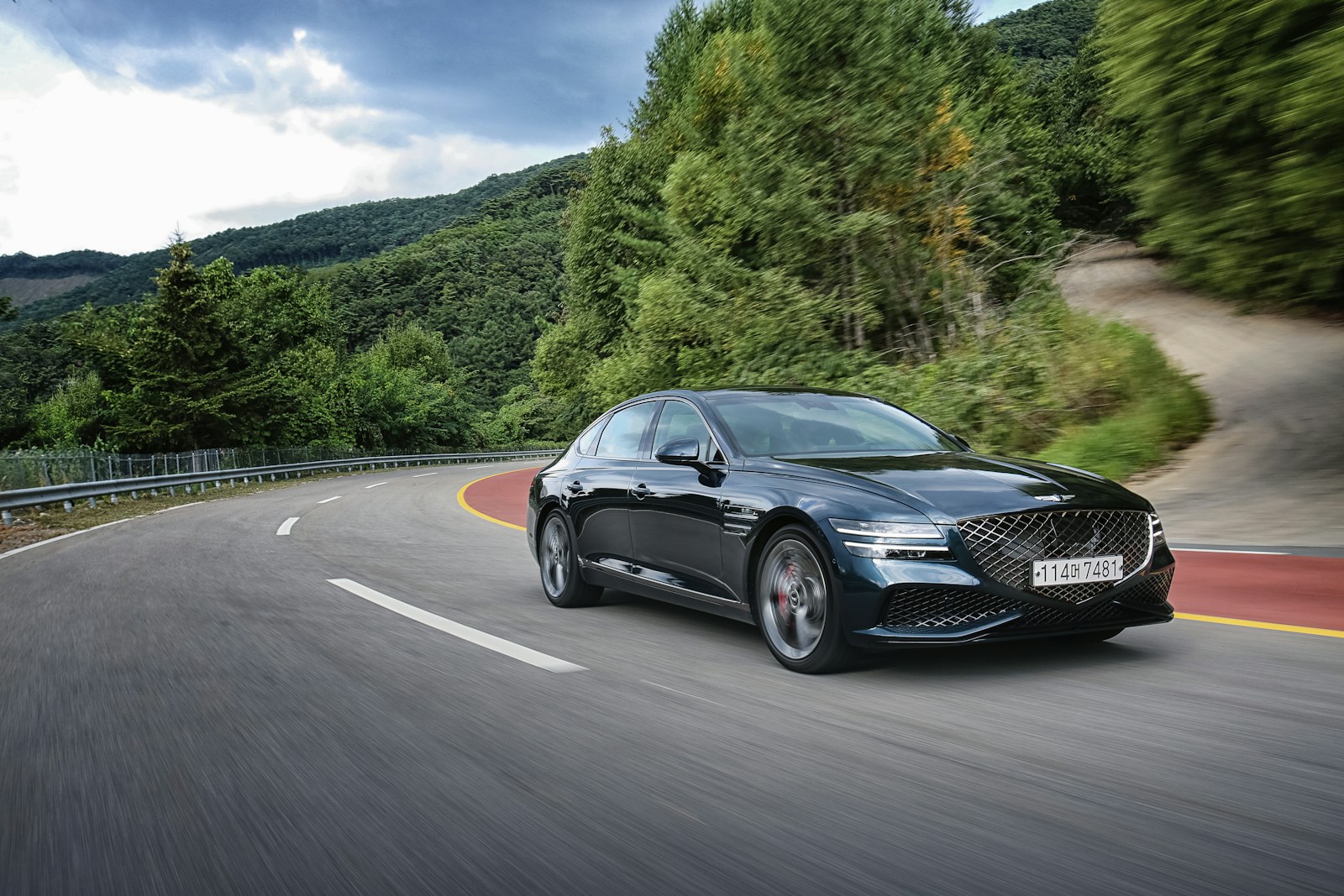

He wasn’t out there doing anything complicated. Just a clean, empty-ish stretch of highway, a warmed-up performance sedan, and that itch you get when you’ve spent too much money on parts to drive like a responsible adult all the time.
The owner had been posting little updates for weeks—nothing boastful, more like a running diary. New tune dialed in. Fresh oil. A set of forged aftermarket pistons he’d been excited about because they were supposed to be “the worry-free solution.” The car was finally at that point where it felt fast in a way that made him grin without even thinking about it.
So when he rolled into the throttle for a highway pull, it was almost casual. Third gear, steady climb, that smooth, turbine-y rush that makes you forget you’re sitting on a machine that’s basically a controlled explosion. Then, mid-sweep, the car made a sound that didn’t belong—one sharp bang like someone smacked the underside with a sledgehammer—and the hood did this ugly little shiver like it wanted to fold in half.

The pull that turned into an emergency coast
For half a second his brain tried to label it as something normal: maybe a backfire, maybe a blown intercooler coupler, maybe the hood latch catching air. But the hood didn’t just flutter; it buckled upward enough that he could see it move from the driver’s seat, like the front end had hiccuped.
He lifted immediately, because whatever “send it” impulse he’d had evaporated the moment something under the hood tried to rearrange itself. The car didn’t feel right anymore—no smooth power delivery, just a dead, heavy drag like the engine was suddenly full of gravel. He got it into the right lane on pure instinct, hazards on, watching mirrors and trying not to panic-swerve.
There was a smell too, that hot metallic stink that hits before you even see anything. Not exactly coolant, not exactly oil, more like “something important is being cooked.” He kept his eyes glued forward, but he could tell from the way the car decelerated that it wasn’t just a misfire; it was internal.
By the time he reached the shoulder, the engine was making a dull knocking sound that rose and fell with the last little bits of momentum. He killed the ignition fast, because if he’d learned anything from watching other people grenade motors online, it’s that you don’t keep running it hoping it’ll magically heal.
When the hood opened, the story got uglier
He popped the hood latch and immediately hesitated, like he expected flames. It wasn’t on fire, but the engine bay looked “wrong” in a way that’s hard to describe unless you’ve seen it. Things were slightly out of position, and there was a faint haze coming up like the car had exhaled.
He didn’t see a thrown rod from the top—no obvious shrapnel, no cartoonish hole in the block—just a lot of fresh oil misting places oil should never reach. The serpentine area looked wet, the belly pan was dripping, and there were tiny specks of metal on the plastic cover like someone had peppered it with glitter.
That’s when the second wave of dread hit him: the kind that comes from realizing this isn’t a tow-it-home-and-fix-a-sensor day. This is a “don’t even try to restart it” day. He called for a flatbed and sat on the guardrail for an hour doing that thing where you replay the last thirty seconds over and over, trying to find the exact moment you ruined your own week.
The awkward part was how normal everything else around him felt. Cars kept cruising by. A couple people glanced and kept going. Meanwhile he’s staring at his own sedan like it betrayed him personally, like it waited until the one time he did a pull on a clean road to throw a tantrum.
The teardown revealed the kind of failure nobody wants
Once the car was home and up in the air, the evidence stopped being subtle. Oil wasn’t just leaking; it had been launched. The underside was coated, and the lowest point of the engine had that unmistakable look of impact damage—fresh, jagged edges where metal was never meant to open up.
The oil pan had a hole punched clean through it. Not a crack, not a seep, but a violent exit wound, with a little smear trail that suggested something had tried to leave and only partially succeeded. Seeing it like that is different than reading about it; it’s the mechanical equivalent of walking into a room and noticing a chair embedded in the drywall.
They dropped the pan and immediately found pieces that didn’t belong as separate items. Shards of piston skirt, glittery bearing material, and that sickening mix of oil and metal soup that makes you stop talking for a minute. The connecting rod for one cylinder was visibly wrong—no longer aligned like it had any intention of staying part of a rotating assembly.
The piston itself was the headline in miniature. It was a forged aftermarket piston, the kind people buy specifically because they think cast pistons are for economy cars and broken dreams. And there it was, cracked—split enough that the rod had lost its stable partner and turned into a flailing hammer.
“But forged pistons are supposed to be stronger”
This is where the emotional temperature in the story changed, because the owner wasn’t just dealing with a blown motor. He was dealing with the specific flavor of blown motor that makes you question every decision, every forum thread you trusted, every friend who said “you’ll be fine.”
He’d chosen forged pistons on purpose, not as some random eBay gamble. They were a known brand, bought new, installed by a shop he believed in, and matched with a tune that was supposed to be conservative for the setup. The build wasn’t some backyard experiment, which is what made the failure feel personal—like the car found a loophole in the plan.
The first arguments started before the engine was even fully apart. Was the tune too aggressive on the highway? Was it seeing knock under load? Did it run lean for a split second? Or was it a mechanical issue—clearances, ring gap, a piston with a defect, an injector that hiccuped at the exact wrong time?
Someone pointed out the part nobody likes to admit: forged doesn’t mean invincible. Forged pistons can handle big power, but they also demand everything around them is right—fueling, timing, temperature, assembly tolerances. And when one thing goes wrong at speed, “stronger” just means it survives long enough to destroy more on the way out.
The messy aftermath: shop talk, blame math, and the dead silence of the garage
He had receipts, logs, and photos, but none of that makes the next steps easy. Engine failures don’t come with a neat little label that says “cause: X, responsible party: Y.” The shop could say it was detonation or a bad tank of gas. The tuner could say the mechanical build wasn’t right. The piston manufacturer could say improper installation or abnormal combustion.
He started going through data logs with the kind of intensity people reserve for security footage after a break-in. Intake temps, ignition timing, AFR targets, knock counts—every line item became a potential smoking gun. The problem is that catastrophic failures don’t always leave clean clues; they leave chaos, and everyone interprets chaos differently.
Meanwhile the car sat there like a very expensive paperweight. The hood still looked slightly off, as if it remembered the bang. The oil stain under it kept growing despite the drip tray, a constant reminder that this wasn’t theoretical anymore.
And the weirdest part was how fast the owner’s excitement curdled into embarrassment. Not because he’d done anything wildly irresponsible—just a highway pull—but because the moment you break something expensive, you start anticipating the same conversations on repeat. “How hard were you pushing it?” “What boost?” “What tune?” It always sounds like an interrogation, even when people are just curious.
By the end, there wasn’t a clean ending, just a pile of broken parts and a bunch of strained phone calls. He didn’t know yet if the piston cracked first and started the chain reaction, or if something else triggered it and the piston was just the first visible casualty. All he knew was that the “built” motor that was supposed to buy him peace of mind had, in one loud bang and a buckled hood, turned his whole setup into a blame puzzle he’d be paying to solve.
More from Steel Horse Rides: