


The diesel tech was halfway through a routine service ticket when he saw the heavy-duty pickup lurching across the lot like it was dragging an anchor. It wasn’t the dramatic kind of breakdown where a truck arrives on a hook with smoke still rolling off it. This one limped in under its own power, which is always the most ominous version, because it means the owner convinced themselves it was “still okay” for just a few more miles.
The driver climbed out looking irritated instead of worried, like the truck was inconveniencing him on purpose. He had that tight jaw people get when they’ve been staring at a warning light for days and trying to out-stubborn it. He waved a receipt from the last shop like it was a court document and said something about “just an oil change” and “it started doing this thing” and “I don’t have time for a big diagnosis.”
The tech didn’t argue, but he clocked the details immediately: the way the idle sounded slightly uneven, the faint haze in the exhaust, and the smell that didn’t match a simple maintenance visit. When he pulled the dipstick, the oil didn’t just look dark. It had that weird, slick, chocolate-milk sheen that made his stomach tighten, because that usually meant coolant had found its way where it absolutely didn’t belong.
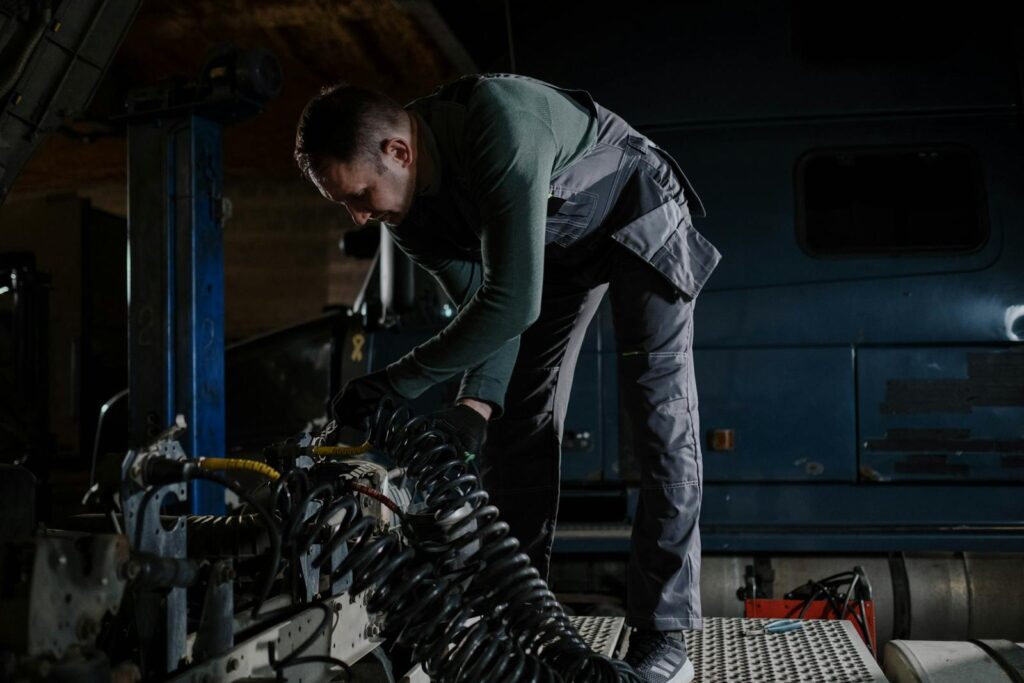
The “It’s Probably Nothing” Arrival
Inside the cab, the dash was lit up like the truck was auditioning for a Christmas display. The driver kept pointing at one light in particular, saying it had been coming and going, so it couldn’t be “serious.” He also kept repeating that he’d just towed a load last weekend and it “pulled fine,” which is the mechanical equivalent of saying you ran a marathon yesterday so the chest pain today must be indigestion.
The tech asked the usual questions—when was the last fuel filter change, any recent repairs, any overheating—and got a lot of shrugging and vague timelines. The guy had receipts for oil changes, sure, but nothing for fuel system maintenance. He leaned on the counter and watched like he expected the tech to hook up a scan tool, press a magic button, and print a coupon for “one free engine.”
The first awkward moment came when the tech said, calmly, “Your oil’s contaminated.” The customer’s whole face shifted into negotiation mode, like contamination was a matter of opinion. He started tossing out theories: maybe the shop used the wrong oil, maybe it was just condensation, maybe diesel engines “always look like that.”
Coolant in the Oil Isn’t Subtle
The tech didn’t try to win an argument; he went for evidence. He popped the hood and checked the coolant reservoir, which was lower than it should’ve been, and the residue around the cap had that greasy look that doesn’t belong in clean coolant. Under the oil fill cap, there was the early-stage sludge—nothing cartoonish yet, just enough to confirm the dipstick wasn’t lying.
He pulled a sample, and even before any test strips, the texture told the story. Oil should smear slick and uniform; this smeared like it had a second, watery layer that didn’t want to mix. It was the kind of thing that makes a shop go quiet for a second, because coolant in oil isn’t “maybe replace a sensor,” it’s “something expensive has been happening while you were driving it.”
The customer heard the word “coolant” and immediately jumped to head gasket. You could see him brace for impact, because everybody’s heard the legend of the head gasket bill. The tech didn’t confirm or deny yet, but he didn’t let the guy off the hook either—he explained that coolant in oil can come from a few places, and none of them are cheap if you keep running it.
The Fuel System Breadcrumbs
While the customer hovered, the tech started looking for a second problem, the one that would explain why the truck arrived limping instead of just quietly eating itself. He checked for fuel pressure issues and listened for the kind of unhappy mechanical sounds that don’t show up on a scan tool. The engine didn’t sound like it was about to seize, but it had that strained, uneven rhythm that makes you think of a pump trying to push sand.
He asked again about fuel filters, and this time the customer admitted—half proud, half defensive—that he’d been “meaning to do it.” The tech grabbed the filter housing, cracked it open, and the fuel that dribbled out didn’t look like clean diesel. It had a shimmer to it, like someone had sprinkled metallic paint into the cup.
That’s when the tech stopped narrating and started moving with purpose. He took a magnet to the drained fuel and watched tiny metallic flecks collect like glitter with consequences. The customer, seeing the magnet trick, tried to laugh it off, but his laugh was the wrong tempo—too fast, too forced.
The High-Pressure Pump Reveal
The tech explained it in plain terms: the high-pressure fuel pump doesn’t just “wear out.” When it fails in the ugly way, it can shred itself internally and send metal through the entire fuel system. That metal doesn’t politely stay in one place; it gets carried downstream into rails and injectors, where it becomes a million tiny abrasives carving up precision parts.
The customer asked, “So you’re saying it needs a pump?” like that was the worst-case scenario. The tech shook his head and gave him the look every mechanic has—the one that means, you’re not going to like the next sentence. If the pump has grenaded, it’s usually not a pump-only repair, because replacing the pump without addressing contaminated components is basically paying for the same failure twice.
Then the coolant-in-oil piece circled back in the most unpleasant way. A failing fuel pump can contaminate fuel, and fuel system failures can lead to all kinds of drivability issues, but coolant in oil points to an additional problem—either a leak in a cooler, a gasket issue, or something cracked. The tech couldn’t promise one neat root cause; he could only promise that the engine had been fighting two battles at once, and the driver had kept asking it to keep towing.
That was the moment the interaction turned from tense to personal. The customer’s voice got sharper, like volume could rewrite reality, and he started talking about how the truck “has never had an issue” and how “these new diesels are junk.” He wanted a single villain: bad fuel, bad parts, a bad shop, somebody else’s fault that could be invoiced cleanly.
The Estimate Everyone Sees Coming
The tech did what techs do when someone’s getting emotional: he got extremely specific. He laid out the diagnostic path—confirm the coolant intrusion source, pressure test, inspect oil cooler circuit, pull data, and, separately, assess the fuel system contamination level. He also said the sentence customers hate most, the one that sounds like a trap even when it’s honest: “We won’t know the full scope until we open it up.”
When the estimate range came out, the air changed. The customer stopped pacing and went still, staring at the numbers like they were a typo. He asked for the “cheaper option,” and the tech, without being cruel, made it clear that the cheaper option was usually the one that ends with a bigger tow bill later.
The customer tried to bargain in weird ways—asking if they could “just flush it,” asking if they could replace “only the bad injector,” asking if the metal could be “filtered out.” He latched onto the limp-in arrival as proof the truck wasn’t that bad, like survival was evidence of health. The tech reminded him that limp mode is the truck protecting itself, not giving permission.
Then came the warranty talk, which always feels like a coin flip in these situations. The customer insisted the truck was “still covered” in some way, or should be, because the pump shouldn’t fail. The tech asked for service history and fuel receipts, and the customer’s confidence started slipping, because missing maintenance and questionable fuel can turn warranties into long phone calls that go nowhere.
By the time the customer left the counter to “make some calls,” the truck was still sitting in the bay, hood up, looking innocent. The tech watched him step outside and pace near the driver’s door, phone pressed to his ear, gesturing like he was arguing with someone who wasn’t there. And the thing hanging in the air wasn’t just the cost—it was the fact that the truck had clearly been giving warnings for a while, and now the bill was asking exactly how long denial had been driving.
Later, when the tech wrote up the notes, he kept them dry and factual, but the frustration still leaked through in the details. Coolant in oil, metallic contamination in fuel, suspected high-pressure pump failure, vehicle arrived in limp mode. The customer might approve the teardown, or he might tow it out to chase a second opinion that tells him what he wants to hear, but either way the truck’s done pretending—metal has already been through the system, coolant has already mixed where it shouldn’t, and the next decision is going to feel personal no matter how mechanical the cause actually was.
More from Steel Horse Rides: