

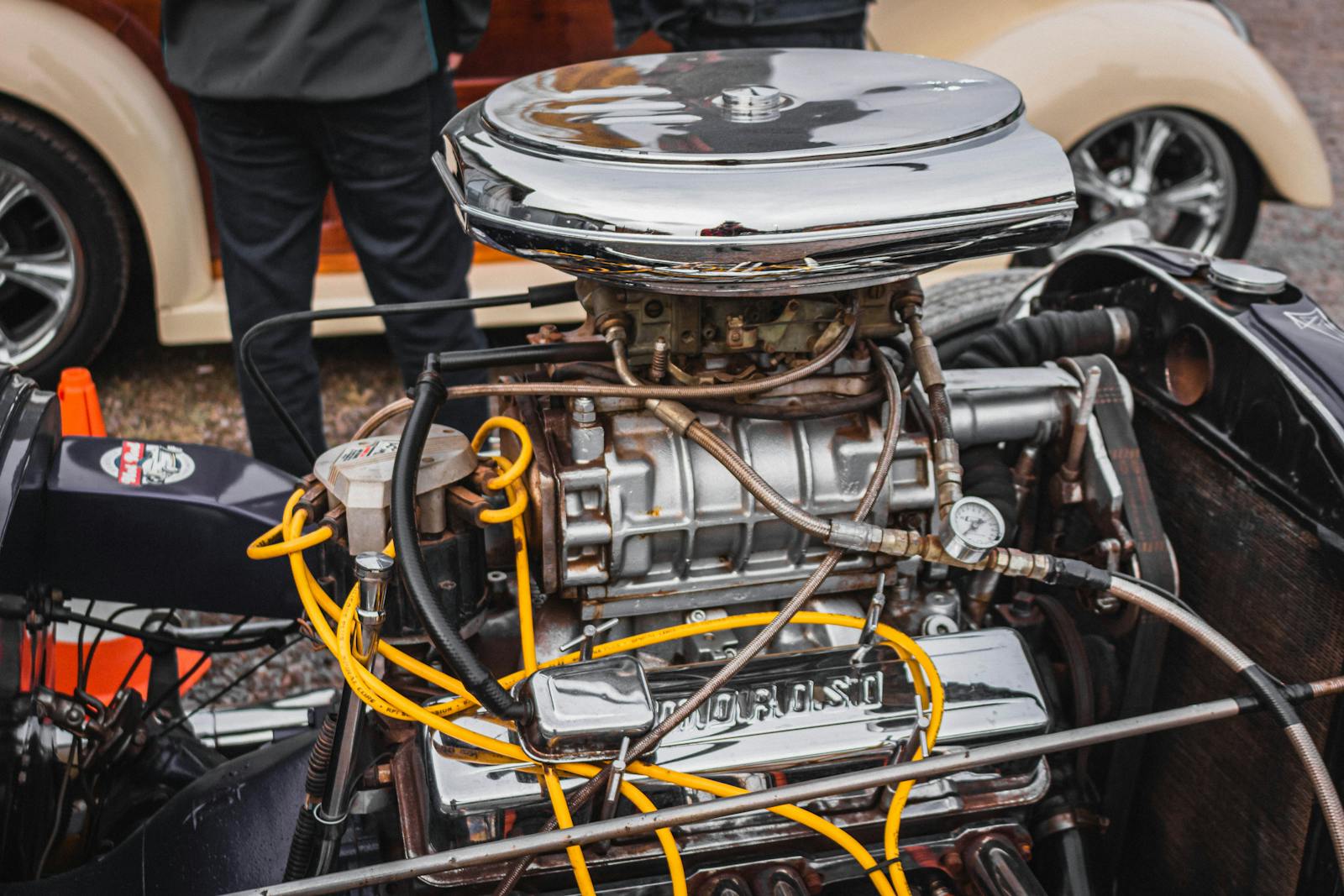
He’d been building the car in his head for years, the kind of build where every bracket and finish has a reason. Not “close enough,” not “looks like,” but the real-deal vibe—what guys would’ve bolted on when the car was still new enough to smell like factory paint. So when the time came to finally hunt down a “period-correct” Tri-Power setup, he treated it like he was buying jewelry, not carburetors.
Fourteen grand later, he had a box of history sitting in his garage: three carbs, correct tags, the right linkage, all the little bits people always forget. The seller had talked a big game about date codes, castings, the whole ritual, and the hot rodder bought it because it sounded like the seller spoke the language. He didn’t even rush—he did the slow, careful kind of unboxing where you lay parts out on clean cardboard like you’re doing surgery.
Then he got it bolted up, stepped back, and that’s when the feeling hit. Something wasn’t wrong in the obvious way—no stripped studs, no missing pieces—but it didn’t sit right. It was the same sensation as noticing your “original” gauge cluster has a font that’s just slightly too crisp.
The $14,000 handshake
The setup came from a guy who’d been around the scene long enough to have stories about shows from the ’90s like they were ancient history. He wasn’t some anonymous listing with three blurry photos; he had a name, a reputation, and the kind of confidence that makes buyers relax. When he said “period-correct,” he didn’t mean “repop that looks decent”—he meant the stuff collectors whisper about.
The buyer did his homework the way people do when they’ve been burned once already. He asked for close-ups of the carb tags, casting marks, and those little details you only care about if you’ve spent too many nights staring at forums. The seller sent photos that looked legit: tags with the right stampings, date codes that lined up, and surfaces that had that soft, old-aluminum look.
There was still the awkward money part, the part where you wire an amount that could’ve bought an entire running project car. The seller kept things friendly, almost casual—like this was just swapping parts between enthusiasts instead of a four-figure trust fall. When the box arrived, it was packed well enough to suggest the seller actually cared, which only made the buyer feel safer.
The install that felt too easy
Tri-Power setups are supposed to be fussy in a way that makes you earn them. Linkage alignment, throttle plates, fuel lines that want to fight you—most people expect at least one moment of “who designed this?” He didn’t get that; everything lined up a little too neatly, like the parts wanted to be there.
He chalked it up to luck and good parts. He mocked up the fuel lines, cycled the linkage by hand, and watched the center carb move like it was on bearings. It looked gorgeous sitting on the intake, that classic three-carb silhouette that makes even a quiet garage feel louder.
But as he leaned in, he noticed the castings were… crisp. Not clean, not restored—crisp in a way old aluminum usually isn’t, even after blasting and refinishing. The edges had that sharpness you see on new parts, the kind that hasn’t had decades of heat cycles and wrench slips rounding everything off.
The date codes that didn’t add up
He started with the normal collector paranoia: checking tags against known references, matching numbers, comparing the tiny details that only exist because some engineer in the ’60s had to catalog parts. The tags looked right, and at first glance the date codes seemed to agree with the story. But the more he stared, the more the date codes looked less like cast marks and more like something that had been… added.
It wasn’t the numbers themselves. It was how they sat on the metal. Cast-in date codes have a certain softness to them, like they grew out of the part because they literally did. These looked like they were pressed in afterward—too uniform, too perfect, and slightly out of character with the surrounding texture.
He pulled one of the end carbs back off and flipped it into the light, taking the kind of photos you take when you’re trying to convince yourself you’re not being ridiculous. That’s when he noticed the tell: two of the carbs had reproduction castings, and the “date codes” weren’t part of the casting at all. They were stamped on, the way you’d stamp a metal tag, not the way time stamps an original part.
The center carb looked like what he’d paid for. The two end carbs were the problem, which is almost worse than if all three had been fake. It created this messy, half-authentic thing that could pass at a glance but fell apart under actual scrutiny—exactly the kind of setup that sells for big money because people want to believe.
The first message and the slippery explanations
He didn’t explode right away. He did what people do when they’re trying to be “reasonable,” even while their stomach is turning—he reached out politely, with photos, asking if there’d been a mix-up. He kept the tone calm because he wanted a solution, not a fight, and because the seller had seemed like a real human, not a scam bot.
The seller came back with the first layer of deflection: plenty of parts “got restamped,” plenty of people “did that back in the day,” and repro castings “aren’t a big deal if they function.” It was a subtle shift from “period-correct” to “period-style,” and the buyer felt it immediately. You don’t drop $14,000 for “function.”
Then came the insistence that the buyer must be misunderstanding what he bought. The seller leaned on the idea that “everyone knows” you’re paying for the setup as a whole, not each individual carb’s purity. That’s the kind of argument that only works if the listing language was vague, but it hadn’t been vague—at least not in the way the buyer remembered it.
And there was this extra sting: the seller didn’t sound surprised. He sounded annoyed, like the buyer was being difficult for noticing. That’s when the buyer’s politeness started to look less like maturity and more like he was giving the seller room to wiggle.
Receipts, experts, and the quiet humiliation
The buyer went back through everything: screenshots, saved photos, messages, the exact phrasing the seller used. It’s always weird doing that because you catch yourself thinking, “How did I not see this coming?” even when you really did everything you could. The seller’s wording now looked like it had been engineered to sound bulletproof while still leaving an escape hatch.
He also did the thing that makes these situations escalate fast: he brought in other eyes. Not a mob, not a public callout—just a few people who knew the difference between cast-in markings and stamped-on theater. The responses came back consistent: two carbs were definitely reproduction castings, and the date codes looked added later to mimic the right era.
Now he was stuck with the worst kind of proof: enough to be confident, but not the kind that automatically forces a refund. Because repro parts aren’t illegal, and “period-correct” can be stretched by someone who’s motivated. It turned into an argument about intent, and intent is always the part you can’t put in a box and ship back.
He asked for a partial refund—something that matched reality instead of the fantasy price tag. The seller didn’t outright refuse, but he started acting like the buyer was trying to renegotiate after the fact, like this was buyer’s remorse dressed up as expertise. And that’s a brutal angle to be hit with when you know you’re not the one playing games.
The buyer could send it all back and risk getting into a long, ugly fight over what condition it returned in. Or he could keep it and swallow the fact that he’d paid original-money for a setup that was part costume. Either way, he’d have to look at those carbs every time he popped the hood and remember the moment the numbers stopped feeling like history and started feeling like marketing.
That’s where the story sat: a Tri-Power gleaming on the intake, technically “done,” but poisoned by two stamped-on date codes that turned the whole purchase into a trust issue. The seller still had his reputation and his smooth explanations, and the buyer still had a $14,000 lesson bolted to the top of his motor. The worst part wasn’t even the money—it was that the build he’d been dreaming about now had a question mark right in the center of it, and there’s no tuning that out.