

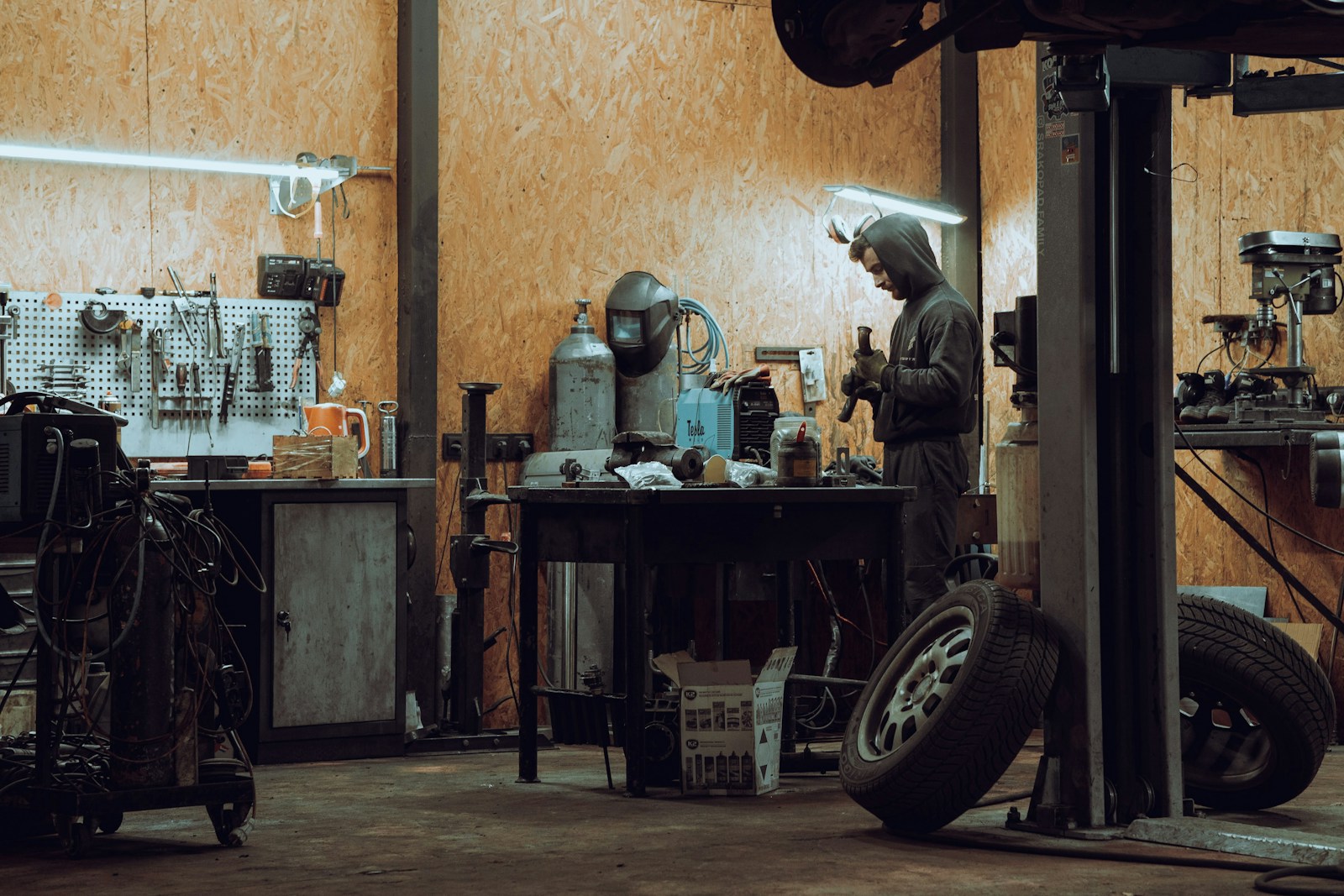
He’d been chasing a noise that wasn’t even a noise yet. The rear end was still on stands, the driveshaft was out, and the only soundtrack in the garage was the click of a torque wrench and the occasional, too-long exhale of a guy trying to convince himself he was “taking his time on this one.”
The mechanic—home-garage type, not a shop—had the differential laid out like a careful autopsy. Pinion, carrier, shims, a little pile of crushed shop towels, a tube of marking compound with the cap glued on by dried purple goo. He’d told everyone who’d asked that he was doing it right: new bearings, new crush sleeve, proper preload, and a pinion depth set “by the book.”
Two weekends later, he was still “setting pinion depth,” which is the kind of phrase that sounds responsible until you realize it usually means you’ve assembled and disassembled the same gearset so many times you can do it blindfolded. That’s when the small detail surfaced—the one that made his stomach drop—because it wasn’t a tricky shim stack or a finicky pattern. It was a bearing, pressed on backwards.
The Plan Was Simple: Quiet Diff, Clean Install, No Shortcuts
It started as a preventative rebuild, the kind that feels like self-care for people who keep gear oil on their hands year-round. The diff wasn’t grenaded, nothing was howling down the highway, but the car was getting more power soon and he didn’t want the rear end to be the weak link. He’d already bought the master install kit, printed out torque specs, and lined up every tool like he was prepping for surgery.
He’d done diffs before, too, which made the confidence a little louder. The kind of confidence that lets you say stuff like, “I’m gonna actually dial in the pattern this time,” as if last time had been a crime. He had setup bearings ready, or at least he thought he did, and he was determined not to be the guy who slaps it together and hopes the whine is “normal for 4.10s.”
The first day went the way you want these projects to go: productive, a little grimy, no surprises. He got the old bearings off without turning the pinion into scrap, cleaned the housing until it looked too nice for its own good, and dry-fit everything like he was showing off for an imaginary audience. By the time he closed up the garage that night, he felt ahead of schedule.
The Pattern Wouldn’t Behave, and That’s When the Loop Started
On the second weekend, he got into the part that eats time and patience: reading the contact pattern. He’d paint the ring gear teeth, spin it through under load, and stare at the smear like it was going to confess. Except the pattern kept landing in the wrong spot—too deep one time, too shallow the next, never that centered, even oval he was chasing.
He did what every careful person does at first. He rechecked backlash, verified torque, made sure the carrier caps were oriented correctly, and swapped shims in tiny increments like he was tuning a radio dial. He’d make a change, tighten everything, rotate it through, wipe the compound off, repaint, repeat.
After the third or fourth teardown, the garage vibe shifted from “patient craftsman” to “man trapped in a ritual.” The parts were warming from constant handling, the bolts were starting to feel like they had opinions, and his nice organized tray had turned into a scatter of washers and shims that all looked identical. At some point he stopped saying “pattern” and started saying “this stupid thing.”
He was still being methodical, but you could tell he was paying a tax now—every move cost him a little pride. He’d catch himself staring at the pinion like it was personally disrespecting him. And because he was trying to do it right, he wouldn’t let himself call it good enough and move on.
The “One More Time” Weekend: Pressed-On Bearing, Real Preload, Real Stakes
By the time the next weekend rolled around, he’d convinced himself the issue had to be pinion depth. Not the big stuff. Not carrier alignment. Not a wrong part. Depth. So he did the thing everyone dreads: he committed to pressing the bearing on “for real,” not just with a setup bearing that slips on and off.
Once you press a bearing on the pinion, you’ve raised the stakes. Getting it back off means pullers, heat, risk, and usually a fresh bearing if you slip. But he wanted to eliminate variables, so he went in: bearing on, crush sleeve in, yoke on, nut torqued down carefully while watching rotational drag like it was a heart monitor.
He even had a moment of relief when the preload came in smooth. No crunchy spots, no binding, nothing that screamed “you’ve ruined it.” For an hour or two, it felt like the hard part was behind him, like all the earlier struggle had been the necessary suffering before the breakthrough.
Then he did the pattern again, and it still wasn’t right. Not “a little off,” either. It was consistently wrong in a way that made his previous adjustments feel meaningless, like the diff was stuck in an alternate reality where shims didn’t matter. That’s when the frustration stopped being loud and started being quiet—the kind where someone gets very calm because they don’t want to admit what they’re thinking.
The Backwards Bearing Discovery: One Glance, Instant Sickness
The realization didn’t hit him mid-swear or in a dramatic snap. It came from a small, almost bored moment of double-checking: he had the pinion out on the bench again, turning it in his hands, looking for anything he could blame that wasn’t “me.” His eyes caught the bearing, then the way the bearing sat, then the orientation of the cage and the chamfer, and his brain did that awful slow click.
Bearing on backwards. Pressed. Fully seated. Not a “maybe.” Not a “could be.” Backwards in a way that meant the geometry was wrong from the start, and every single pinion depth measurement he’d taken was built on a foundation that wasn’t even flat.
He didn’t start yelling. He just stopped moving for a second, like the garage had suddenly gone silent even though nothing had changed. Then he did this little laugh—more air than sound—and sat down on the creeper like it was a bench.
The worst part wasn’t the mistake itself. It was the calendar math that instantly followed: two weekends of teardown and setup, plus that moment when he decided to press it “for real,” and now he was staring at a job that required undoing all the progress just to get back to where he’d been before he escalated. It wasn’t just coming apart. It was coming apart with consequences.
Everything Had to Come Apart Again, and the Garage Got Tense
Once he admitted it, the process turned from diagnostic to demolition. The yoke came back off, the pinion nut surrendered, the crush sleeve was now trash, and the fresh bearing—fresh, expensive, newly installed—became a problem he had to remove without destroying other parts. He tried to be careful, but “careful” is a different emotion when you’re furious at your own hands.
He didn’t have the perfect puller for it, which became its own side quest. There was a round of measuring and staring, then rummaging through drawers, then the moment where he considered, seriously, whether he could cut the bearing race without nicking the pinion. That’s the point where a lot of garage projects stop being fun and start feeling like you’re wrestling your own decision-making.
Someone else drifted into the garage at some point—maybe a buddy who’d been promised “it’ll be done today,” maybe a partner who’d heard too many impact gun bursts and wanted to know what was happening. The mechanic gave the shortest possible explanation, the kind that’s technically honest but emotionally evasive. You could tell he didn’t want sympathy; he wanted time travel.
He kept working, but the mood stayed heavy. Every tool set down sounded deliberate. Every part cleaned felt like penance. And hovering over everything was the annoying fact that he’d been doing “the right way” the whole time—marking compound, specs, patience—while the real issue was a basic orientation mistake that could’ve been caught in the first ten minutes with a second set of eyes.
By the end of that day, he wasn’t done. He was just… back in it, staring down another cycle of setup, pattern, backlash, and preload, now with the added pressure of wasted parts and a bruised ego. The diff didn’t care about his feelings, and the garage didn’t offer refunds for time spent learning the same lesson twice; it just sat there, open and waiting, while he recalculated whether he could stand to do “one more pattern check” without losing his mind.