

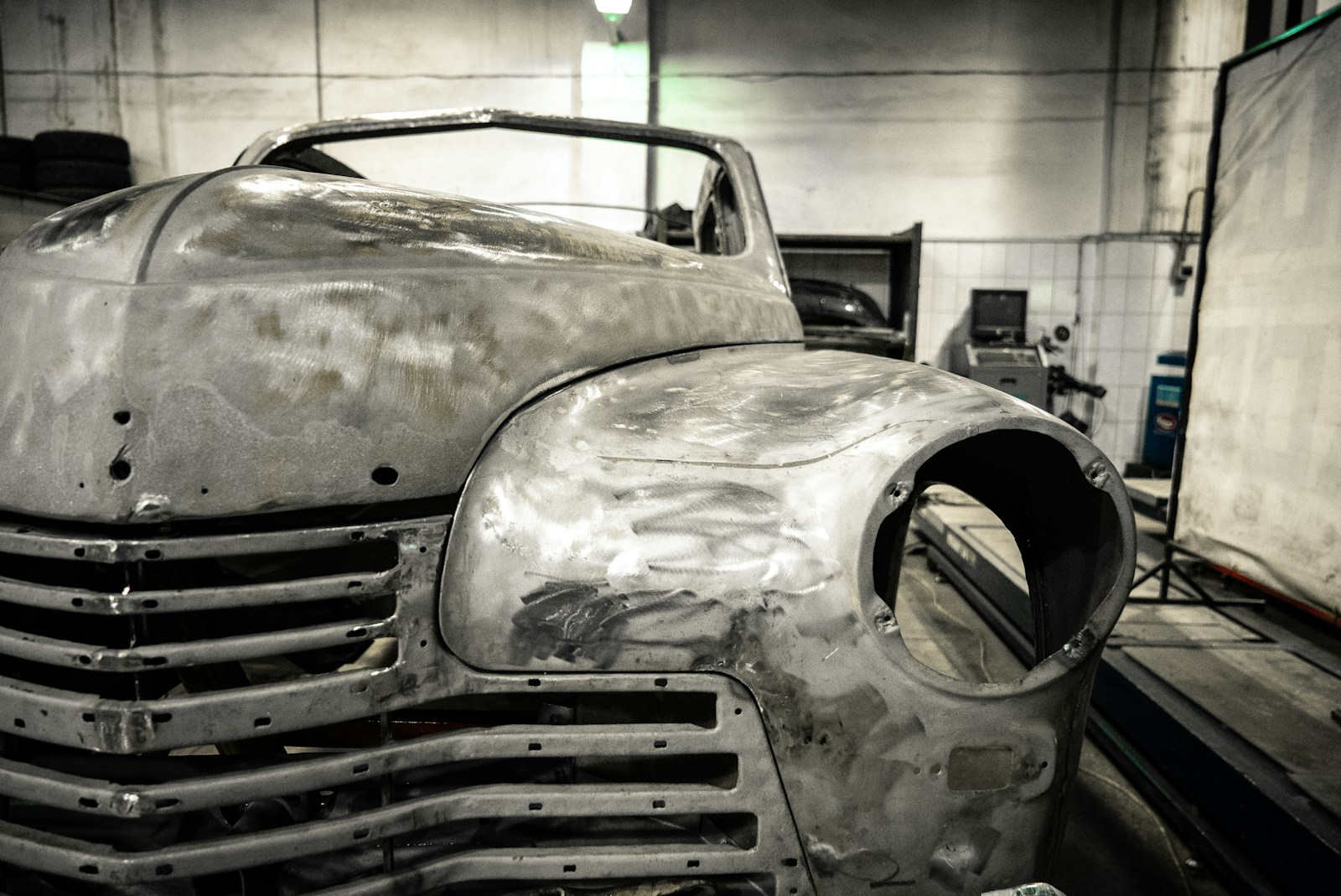
He’d spent weeks telling anyone who’d listen that he was finally doing it “the right way.” Not just patch panels and spray paint—an actual body-off restoration, frame bare, everything cataloged, cleaned, and rebuilt like the build threads he’d been doomscrolling at midnight. The car was an old coupe that looked decent from ten feet away and photogenic from the right angles, which is exactly how he’d justified the purchase.
The seller had called it “solid.” The photos showed shiny paint, straight doors, and an engine bay that looked like it had been hosed down for the occasion. The new owner—first-time restorer, first-time body-off guy—knew enough to be nervous, but not enough to be paranoid. He figured the horror stories were for people who bought basket cases, not for a car that started, idled, and didn’t immediately leak everything it owned onto the driveway.
So on a Saturday morning, with a couple friends bribed by pizza and the promise of “it’ll be easy,” he unbolted mounts, labeled bags, and set up a makeshift lifting rig in the garage. The plan was simple: lift the body, roll the chassis out, and spend the afternoon taking triumphant photos of a naked frame. He got the camera ready before he got the body off.
The Lift That Looked Perfect… for About Ten Seconds
At first, it went exactly like all the videos. The body rose slowly, evenly, a few inches at a time, and everyone watched for the little stuff—wires still connected, a forgotten bolt, a steering column snag. There were the normal creaks and pops, the kind you try to convince yourself are just old rubber letting go. He was grinning, because the scariest part of the job was behaving.
Then the cowl made a sound that didn’t match any tutorial. Not a squeak or a groan—more like a dull, wet crunch. One of his buddies stopped talking mid-sentence, and the guy on the jack instinctively froze with his hands still on the handle.
The owner stepped closer, thinking maybe a seam sealer line cracked or an old spot weld complained. He put one hand on the cowl—just to steady it, just to feel for movement—and it moved too much. The whole front edge of the body shifted like it had lost its spine.
He didn’t yank on it. He barely leaned. And still, the cowl buckled in his hands like a soda can, the metal folding inward with this awful, gentle ease. The kind of ease that tells you it wasn’t strong metal that failed; it was metal that was already gone, pretending.
Finding the Disappearing Floor, One Flake at a Time
They lowered the body back down, but it didn’t settle right. The door gaps changed in real time, the body settling into a new shape it apparently preferred. He stood there staring, palms still up like he was holding an invisible piece that used to exist.
He crawled under with a flashlight, expecting to find a cracked mount or a rotten body bushing. What he found was daylight where there shouldn’t be daylight, a jagged outline under the floor where something structural had simply stopped. The sub-rails—those boxed sections that are supposed to run beneath and give the body its strength—were missing in the way teeth are missing when they’ve been pulled clean out.
At first he thought he was looking at a panel that had been removed at some point, like maybe someone had started a repair and never finished. But the edges weren’t cut. They were gnawed. Rust had eaten through so thoroughly that the remaining steel looked like crispy paper, layered and delaminated, ready to crumble if you breathed on it.
He found the worst spot near where the drain plugs should’ve been. Except the plugs weren’t plugs anymore. They were circles of paint, perfectly smooth, like someone had just sprayed right over the holes and decided that was the same as sealing them.
The Painted-Over Drain Plugs and the “Solid Car” Argument
That’s when the story stopped being a “whoops, old cars have rust” situation and turned into a personal one. Painted-over drain plugs aren’t an accident you make with a brush on a lazy afternoon. It’s the kind of choice you make when you don’t want water to leave and you also don’t want anyone to see where it’s supposed to leave.
The owner started tracing it like a detective, following the damage out from those painted circles. Water had obviously sat where it shouldn’t, trapped under whatever filler and undercoat had been slapped on. The sub-rails were eaten through in a line that looked almost intentional, like rust had followed the path of least resistance until it found something important.
He found evidence of “work,” too. A patch panel that wasn’t welded so much as glued and sculpted with filler, the texture hidden under thick paint. There were areas where undercoating looked fresh but didn’t actually cover anything structural, just a black blanket over a void.
His friends did that thing where they get quiet and start cleaning up tools, because they can feel a mood turning. One of them muttered, “Man… you can’t even jack it like this,” and nobody argued. The owner wasn’t yelling yet, but he had that tight, concentrated silence like he was trying to decide whether to be angry at the car, himself, or the person who sold it.
The Seller Call: “It Was Fine When I Had It”
He called the seller while still laying on the cold concrete, because adrenaline makes people do weird things. He tried to keep it calm at first—just questions, just “hey, did you ever notice…”—but his voice kept climbing every time he looked back at the cowl sitting slightly wrong. The seller answered like someone who’d already rehearsed the conversation.
“It was solid when I had it,” the seller said, and that was basically the whole defense. He suggested maybe the new owner did something wrong lifting it, maybe he missed a bolt, maybe the car got tweaked. He kept saying “these old cars flex” like flexing and folding are the same thing.
The owner explained the drain plugs painted over, the missing sub-rails, the way the cowl buckled under hand pressure. The seller didn’t deny the paint. He just acted like it was irrelevant, like paint was paint and everyone paints stuff. Every sentence had that slippery quality of someone trying to win an argument by never admitting the premise.
At some point the owner stopped asking questions and started listing facts, like he was building a case out loud. The seller got colder and more annoyed, and then he went for the classic: the car is old, it’s sold as-is, what did you expect. When he finally hung up, it felt less like a conversation ended and more like a door being shut hard.
The Messy Reality: It’s Not Just Rust, It’s a Rebuild or a Loss
With the phone call over, the garage got quiet in a different way. The owner went back under the car and poked the sub-rail remnants with a screwdriver, just to confirm the nightmare was real. It went through like damp cardboard, and a small shower of flakes fell onto his face.
He started doing the math, because that’s what people do when they’re panicking but trying to look rational. Sub-rails aren’t “buy a patch and weld it in over the weekend” parts. They’re alignment, bracing, measuring, door gaps, cowl position—basically the bones that make the whole body behave like one piece instead of a stack of panels.
He could pay someone, but then he’s paying someone to undo someone else’s bad choices before the real restoration even begins. He could learn to do it, but learning to do it on a body that already folded once is like learning to skateboard by jumping down stairs. And every hour he spent staring at the damage, he kept thinking about the photos from the listing—how clean everything looked, how the light and angle hid the rot that was literally holding the car up.
Later that night he went back out alone, not to work, just to look. The cowl still sat wrong, a tiny buckle that now felt huge, like a scar you can’t stop touching. He wasn’t crying or throwing things; he was just stuck in that bitter zone where the excitement hasn’t worn off, but now it’s attached to regret.
What kept chewing at him wasn’t just that the sub-rails were gone. It was the feeling that someone had known they were gone and decided paint was a replacement for structure, and that “solid” could be negotiated into meaning “holds together if you never disturb it.” The body-off restoration he’d been proud of starting had done the one thing a quick flip never does: it forced the truth into daylight, and now he had to decide whether he was fixing a car or paying tuition for trusting the wrong shine.