

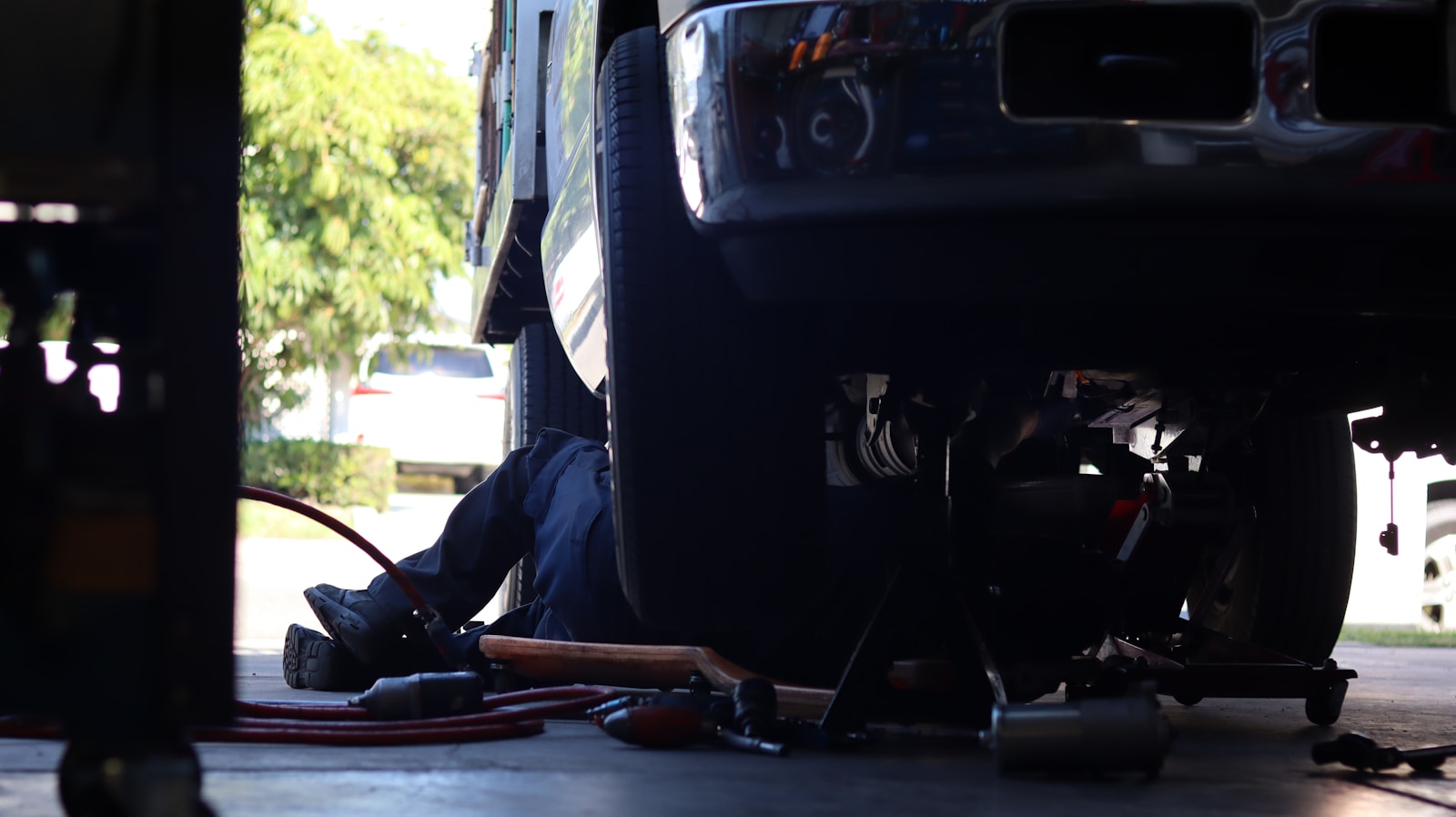
He’d been in that sweet spot of a project where the hard parts are finally on the stand and the little stuff starts feeling doable. The car was up on jack stands in a cramped garage, the kind with one good light and two bad ones, and he was working alone because his buddy had bailed “for an hour” three hours ago. He was under the transmission tunnel with a ratchet, talking to himself the way people do when they’re trying not to get annoyed.
The plan was simple: pull the trans crossmember, drop the tail of the transmission a few inches, and make room to snake the exhaust and replace a couple crusty lines. Nothing exotic, nothing that should surprise you. He’d already loosened the mount, supported the transmission with a jack, and he was feeling pretty confident about it.
Then he cracked the last bolt free and watched the entire engine lurch forward like it had decided to try walking out of the bay. Not a little flex. Not a polite inch. The whole assembly pitched, the fan shroud kissed the radiator area, and the jack under the trans suddenly felt like it was holding a different car than the one he started with.
The “That Shouldn’t Move Like That” Moment
For a second he just froze under there, half expecting something to fall on him. He slid out fast, stood up too hard, and stared into the engine bay like it was going to explain itself. The motor sat cocked forward, and the transmission tail was hanging at a weird angle even though it was still on the jack.
He did the quick mental checklist everyone does in that moment: Did I miss a strap? Did I loosen something I shouldn’t? Is the jack slipping? But the jack was fine, the crossmember was already out, and nothing else should’ve allowed that kind of movement if the engine mounts were doing their job.
So he grabbed a flashlight and did the thing you do when you don’t want to be right: he looked closer anyway. From above, the mounts looked… normal-ish. Dirty, black, aged. The brackets were there. Nothing screamed “broken” until he leaned in and noticed the rubber didn’t look like rubber so much as a blackened, textured blob.
The Black Spray Paint That Made Everything Worse
He reached down and put a hand on the front mount, expecting to feel that familiar firm squish of old rubber. Instead, his fingers found a seam that wasn’t supposed to be there. It was like the mount had been glued together by optimism and overspray.
When he hit it with the flashlight at an angle, it clicked. Someone had rattle-canned the mounts. Not “freshen up the bay” paint—this was a thick, lazy coat of black that hid everything from a casual glance. The kind of paint job you do when you want a part to stop looking suspicious in photos.
He poked again, harder, and a chunk of paint flaked off like a sunburn. Under it, the metal plate on the mount wasn’t just cracked. It was sheared. The mount had separated at some point and been sitting there as two pieces, “aligned” only because the engine’s weight kept it roughly in place and the crossmember in the back had been acting like the last line of defense.
He checked the other side, hoping it was only one. Same story. Two broken front mounts, both disguised under the same fresh black spray paint like someone had tried to make “catastrophic” look like “well-maintained.” It was the kind of discovery that makes your stomach feel hollow, because it doesn’t just mean a repair—it means someone chose this.
Tracing It Back to the Last Guy
The car wasn’t some mystery barn find; it came with a story and a seller who wouldn’t shut up about how “solid” it was. The builder had bought it as a running project, not a trailer queen, and the previous owner had done the classic tour: start it up, rev it a couple times, point at the new-ish parts, and talk fast while you’re trying to listen for knocks. The engine bay had looked clean in that suspicious way, like it had been detailed for a date.
There’d been little hints, in hindsight. The throttle had a weird tug to it sometimes, like the drivetrain was shifting under load. The shifter feel wasn’t consistent. Once, under braking, the fan made a faint tick that he couldn’t reproduce when the hood was up.
Back then those felt like normal project quirks. Now they read like a confession. If the front mounts were sheared, the engine had been rocking forward and back every time the drivetrain loaded and unloaded, and the transmission mount and crossmember had been eating forces they weren’t meant to handle. Pull the crossmember and you remove the last thing keeping the whole assembly from trying to exit stage left.
He scrolled back through the photos he’d taken when he bought the car, zooming in on the mounts. They were black in the pictures too, but everything in the bay was black—hoses, brackets, covers. That spray paint had done its job: it made “broken” blend into “old.”
The Text Message Thread Nobody Enjoys
He did what most people do when they find something like that: he got mad, then he got cautious, then he got mad again. He didn’t post a dramatic accusation. He sent a tight, controlled message to the seller with a couple clear photos: mount plate separated, paint flaking off, engine sitting forward. He asked a simple question that wasn’t really a question: “Did you know these were broken?”
The seller’s reply came back with that slippery tone that sets your teeth on edge. Lots of “I never had a problem,” and “it ran fine,” and the classic “must’ve happened after you got it.” He suggested maybe the builder did something wrong pulling the crossmember, as if removing a bolt had magically sheared two mounts that had been carefully painted black.
That’s where it got personal. The builder wasn’t claiming the car should’ve been perfect; he was claiming someone hid a safety-critical failure. And the seller wasn’t outright admitting anything, but he wasn’t surprised either. He didn’t say, “Oh no, that’s scary.” He said, “Not my issue.”
The builder pushed once more, still trying to keep it civil, pointing out that the mounts were painted and the breaks were old—rusted edges under paint, not fresh shiny metal. The seller stopped responding for a while, then came back with a short line about how it was an “as-is project” and he’d “knocked the price down already.” The kind of message that isn’t an argument so much as a door being closed.
The Garage Fallout: Fixing It Isn’t the Hard Part
Back in the garage, the builder had to undo his own momentum. The crossmember was out, the drivetrain was unstable, and now every move needed to be slow. He ended up rigging a second support under the engine, using blocks and a jack in a way that felt sketchy even when it was technically correct.
Once everything was supported, he could see what had been happening. The engine had been resting forward just enough that the mounts looked “installed” until you relieved the rear support. The broken metal plates had been sitting against each other like misaligned puzzle pieces, and the spray paint had basically acted like a stage curtain.
Replacing mounts is annoying but not complicated: support engine, unbolt, wrestle, swear, reinstall. What messed with him wasn’t the labor. It was the realization that if he’d driven it hard—if he’d done a pull, hit a pothole, or braked hard with that crossmember compromised—something could’ve shifted violently. Radiator, fan, shroud, lines, wiring, maybe even the hood if it got dramatic enough.
He also had to accept that the car’s “mystery issues” weren’t mysterious anymore. That weird tug? Engine movement. The inconsistent shifter feel? Drivetrain position changing. The tick? Fan getting closer than it should. Every little annoyance suddenly had a cause, and that cause was “someone let it be broken and covered it up.”
He wasn’t just annoyed at the seller. He was annoyed at himself for being fooled by a clean bay and confident talk. It’s a uniquely sour feeling, realizing you didn’t miss a hidden crack—you missed a choice someone made to hide it.
By the time he got the new mounts lined up and the engine sitting where it belonged, the garage was quiet in that exhausted way. The car looked normal again, which somehow made it worse. Because now he knew how easy it was for it to look fine while being one bolt away from doing something violent.
The seller never offered anything beyond that “as-is” shrug, and the builder didn’t really get the satisfaction of a confession. He got a couple blurry photos, a new set of mounts on order, and a mental highlight reel of the engine lurching forward the moment the crossmember came free. The part that stuck wasn’t the mechanical failure—it was the black spray paint, and the uncomfortable thought that someone stood in front of that bay, shook a can, and decided this was good enough to hand off to the next guy.