

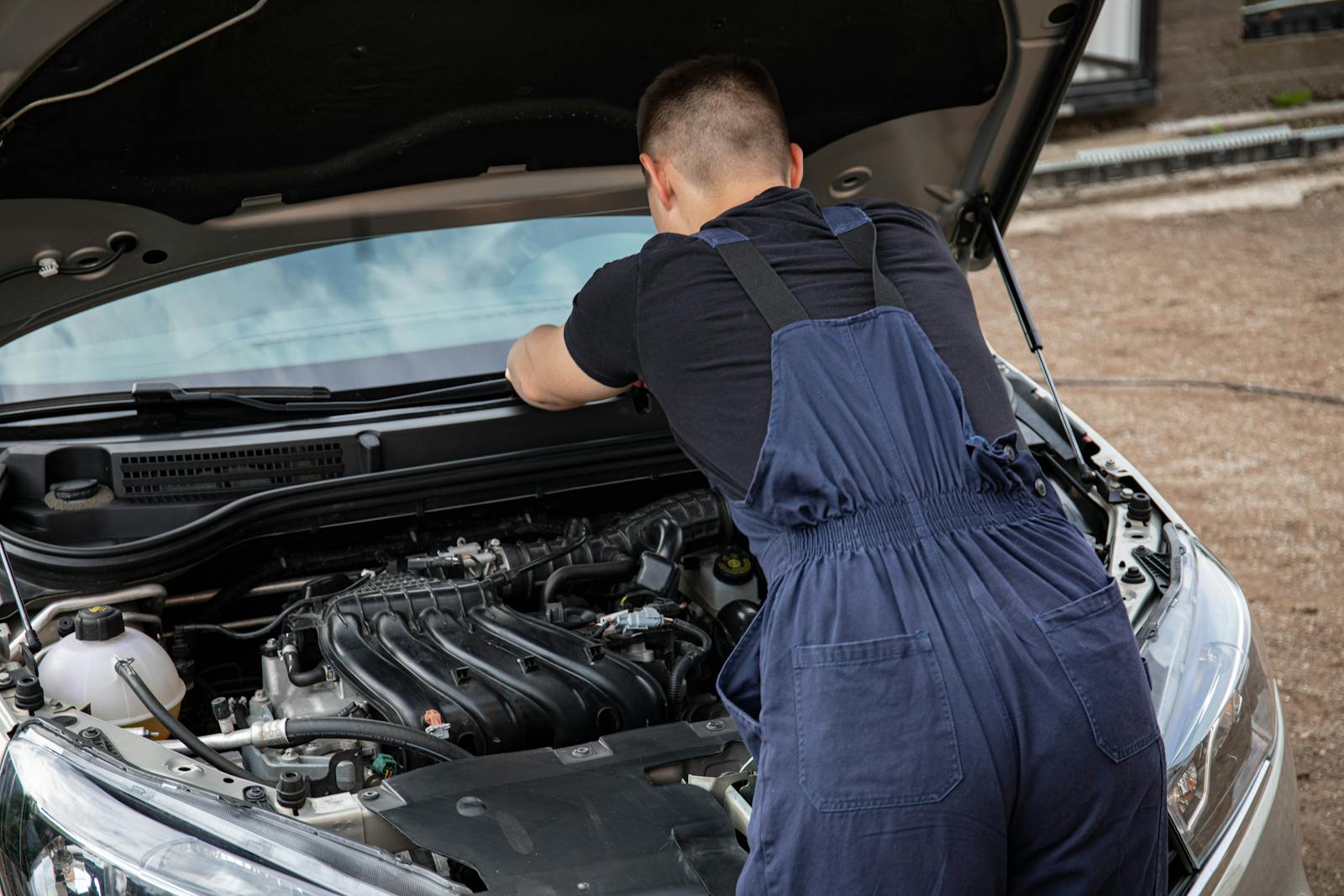
He’d been talking about the cam swap for weeks like it was going to be the moment his backyard build finally stopped feeling “almost fast.” The engine wasn’t exotic, just a well-worn V8 that lived on the edge of respectable, with valve covers that had been on and off enough times to round a few bolt heads. He had the cam, the springs, the gaskets, and that stubborn confidence you only get after watching three late-night videos in a row.
The driveway looked like a parts counter exploded: cardboard boxes, a torque wrench, rags that had already given up, and a magnetic tray holding bolts in a pattern only he understood. His buddy was there too, leaning on a fender and playing hype-man, the kind of guy who says “send it” whenever a job starts to feel delicate. Somewhere inside that mix was the real problem—this was a cam swap being done by vibe and momentum, not by checklist.
By midafternoon, the old cam was out, the new one was in, and he was riding that familiar high where everything looks clean because you haven’t started it yet. The timing cover was back on, the intake was cinched down, and the last of the coolant had stopped dripping onto the driveway. He wiped his hands, stared at the engine bay like it owed him something, and said the words every experienced wrench hears as a warning: “All right, let’s just crank it and see.”
The Swap Looked Clean—Too Clean
He’d done enough work on the car that the neighbors had basically accepted the soundtrack of ratchets and profanity. The plan was simple: new cam, fresh lifters, button it up, fire it, do the break-in, and enjoy the chop at stoplights like a reward for suffering. He’d even bought break-in oil, which later became part of the argument because in his mind, buying it counted as using it correctly.
The cam itself wasn’t some wild race grind, but it was aggressive enough to need a real break-in routine. That meant pre-lubing, assembly lube on the lobes, priming the oil system, the whole ritual that old-school flat tappet guys treat like religion. He had the little tub of sticky cam lube sitting right there on the workbench, the lid off, like it was waiting for its cue.
When his buddy asked if he’d lubed everything, he gave the kind of answer that sounds true if you don’t look too closely. “Yeah, yeah, it’s oiled,” he said, meaning he’d poured oil into the valley and wiped a little on the lifters with his fingers. In his head, oil was oil, and the engine would take care of itself once pressure came up.
The First Crank Was a Bad Kind of Quiet
They hooked up the battery, turned the key, and the engine spun like it wanted to live. It coughed once, then caught, and for half a second he looked relieved—like the hard part was over. Then the sound changed, not a dramatic bang, but a dry, ugly scrape buried under the idle like someone dragging a shovel across concrete.
He blipped the throttle once, instinctively, because people do that when they’re nervous and want to feel in control. The idle didn’t sound crisp; it sounded strained, like it was struggling to climb out of itself. His buddy’s face tightened, and he leaned in toward the engine bay, head cocked like he was listening for a specific rattle he didn’t want to confirm.
About a minute in, the oil pressure gauge climbed and steadied, which should’ve been reassuring. Instead it created this weird, false permission to keep going—like the engine had signed off on the plan. He started talking about how it “just needed a second,” and you could almost watch the decision get made: keep it running, let it warm up, don’t admit anything might be wrong yet.
At around the ninety-second mark, it started missing. Not a gentle hiccup—a hard, uneven stumble that shook the whole car. He killed the ignition fast, and the silence that followed felt heavier than the engine ever had.
They Opened It Up and the Smell Gave It Away
He popped the hood like the answer would be visible from above, like maybe a plug wire was off and they’d laugh about it. But the smell hit first: overheated oil mixed with that metallic, burnt friction scent that doesn’t belong in a fresh top end. His buddy didn’t say “told you so,” but he didn’t need to.
They pulled a valve cover, then the other, and immediately the rockers told a story. A few weren’t moving like they should, not smoothly, not evenly. He rotated the engine by hand and you could see it—three valves barely lifting, like they were stuck in a lazy half-commitment.
That’s when the denial finally snapped. He stood there with a ratchet in his hand, staring down at the valvetrain, and you could tell he was doing the math in real time. He’d just spent a whole day wrestling gaskets and torque specs, and now he was looking at the same job again, only worse.
The Confession: No Pre-Lube, No Prime, Just Hope
The argument didn’t start as yelling. It started as that quiet, sharp kind of back-and-forth where every sentence is a disguised accusation. His buddy asked, very directly, if he’d used assembly lube on the cam lobes, and he hesitated long enough for the truth to land before he even spoke.
He admitted he hadn’t. He said he figured the break-in oil would “handle it,” and that cranking would build pressure fast enough. Then he said the part that made it worse: he’d been in a hurry because he wanted to hear it run before it got dark.
It wasn’t just the mistake—it was how avoidable it was. The little tub of cam lube was still on the bench, untouched, like a prop in a tragic scene. His buddy pointed at it, not theatrically, just with this exhausted disappointment, and the mechanic did that thing where he started defending the indefensible because the alternative was admitting he’d burned money for nothing.
They went from diagnosing to bargaining. Maybe it was a lifter issue. Maybe the rockers just needed adjustment. Maybe it would “wear in.” But deep down, both of them knew what wiped lobes look like, and they were already seeing the outline of the next six hours in their heads.
Top End Comes Back Off, Same Day, Same Sweat
He started pulling parts like he was trying to erase the last two hours. Intake bolts came out, coolant spilled again, and the gasket he’d just installed peeled off like a cruel joke. Every step was familiar, except now it came with that bitter undercurrent: he was undoing his own work because he couldn’t slow down for ten minutes at the right moment.
When the lifters came out, three of them looked wrong immediately. The faces weren’t smooth anymore; they had that scuffed, dull pattern that says they’ve been grinding themselves into dust. He lined them up on the bench, and the difference between “new” and “ruined” was so obvious it felt insulting.
Pulling the cam confirmed it. Three lobes were visibly wiped down, edges chewed, the profile flattened like someone had taken a file to them. He kept turning it in his hands like maybe the next rotation would reveal it wasn’t as bad as it looked, but metal doesn’t negotiate.
He went quiet after that, the way people do when they’re trying not to explode at themselves. His buddy stopped giving advice and just handed him tools, because there wasn’t anything clever left to say. The driveway lights clicked on as it got dark, and the project that was supposed to be “done by dinner” turned into a grim, oily postmortem.
The Fallout Wasn’t Just Mechanical
By the time the parts were laid out, the financial damage started stacking up in plain sight: a cam that was now scrap, lifters that couldn’t be trusted, gaskets that had been crushed once and were now trash. Someone mentioned metal shavings, and you could see his eyes flicker toward the bottom end like he was afraid to look. The question wasn’t only what failed—it was what got contaminated during that ninety seconds of dry friction.
He started making phone calls, not dramatic ones, just tense, clipped conversations with parts stores and buddies who might have spares. The tone had shifted from excitement to damage control, and that’s where the personal side bled through. He didn’t want to admit it, but he wasn’t just embarrassed—he was angry that his “quick win” had turned into the exact kind of drawn-out ordeal he’d promised everyone it wouldn’t be.
What lingered wasn’t the ruined cam so much as the moment right before the key turned, when he could’ve done the boring, correct thing and didn’t. He’d wanted the sound, the payoff, the instant proof that the day wasn’t wasted, and he’d traded all of that for a teardown under driveway lights. When he stood there staring at the wiped lobes on the bench, you could feel the unresolved tension hanging in the air: not whether he could fix it, but whether he’d trust his own impatience the next time the job demanded ten extra minutes he didn’t want to give.