

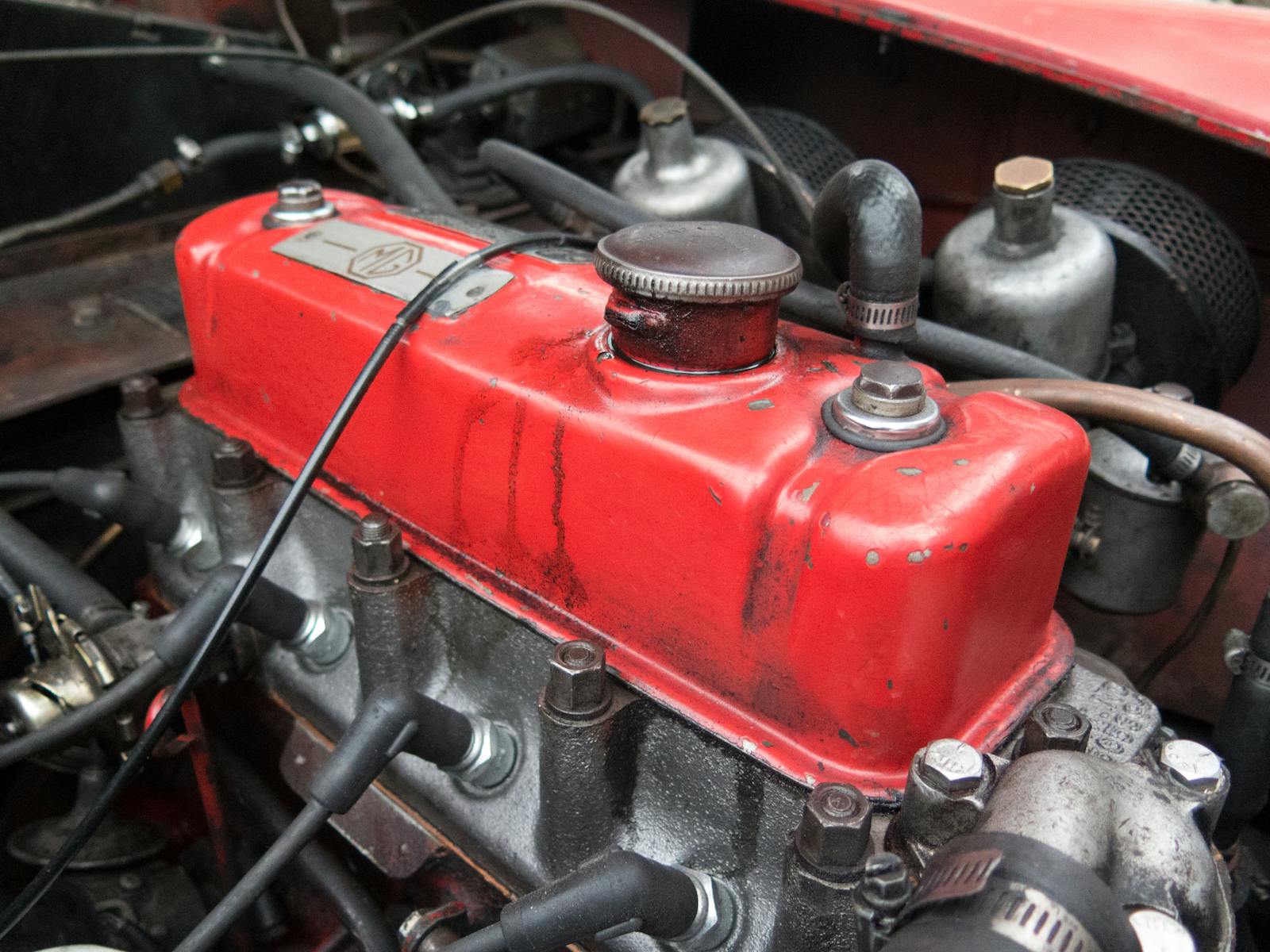
The half-ton pickup rolled into the shop like any other weekday problem child: a little noisy up top, a little sluggish, and throwing a code that wouldn’t stay gone. The owner—mid-30s, work boots, ball cap that looked permanently bent—kept saying it was “probably just lifters” and that he didn’t want anything crazy. He hovered at the counter the way people do when they’re trying to act laid-back while silently calculating the cost of bad news.
The tech who ended up on the job wasn’t new, but he had that calm, methodical vibe that makes customers relax without realizing it. He asked the usual questions, wrote down the symptoms, and eventually got the green light to pop the valve cover and take a look. Nothing about it sounded like a story anyone would repeat later—just another afternoon with a truck that had seen too many commutes and not enough oil changes.
Then he pulled the cover, leaned in with his light, and froze for a second like his brain had to re-check what his eyes were reporting. Sitting up on top of the cam—right there in the open, where it absolutely shouldn’t be—was a wedding ring. Not a random washer, not a dropped bolt, not one of those little magnetic pickup tools someone forgets and hopes no one notices. A gold ring, just lounging like it paid rent.
The diagnosis that turned into a “hold on… what?” moment
At first the tech did what any tech does when something doesn’t compute: he assumed it was going to turn out to be something boring. Maybe it was a cheap ring from a keychain, maybe it fell in during some previous repair, maybe someone was messing around. He didn’t even touch it immediately, just shifted the light around and watched how it sat on the cam gear area without getting chewed up.
It wasn’t wedged deep or jammed into timing components. It was perched in a spot that looked impossible and yet, there it was, with a thin film of oil like it had been living in there awhile. The valve train had been slinging oil for who knows how long, and the ring was dirty but not mangled, not flattened, not cracked in half the way you’d expect if it had made a serious tour through the engine.
He called over another tech—half curiosity, half “tell me I’m not losing it.” The second guy peered in, made the same face, and said something along the lines of, “No way,” but quieter, because it wasn’t their truck and shops are full of customers who can hear tone even when they can’t hear words. The first tech snapped a quick photo for the work order, because nothing sounds real until you can show it.
The awkward walk to the counter
Now they had a decision: pull it out and bag it like found property, or bring the owner back first and let him see it in place. Shops have a sixth sense for when something is about to turn into a whole thing, and this had “whole thing” written all over it. So the tech wiped his hands, walked up front, and asked the owner if he could come back for a second.
The owner followed, trying to play it cool but clearly expecting a lecture about maintenance. When the hood went up and the tech pointed down into the open engine, there was a pause where the owner’s face did that slow change from confused to focused to unsettled. He stared longer than someone stares at a bolt or a gasket.
“Is that… a ring?” he asked, like it couldn’t possibly be what it looked like. The tech didn’t do the dramatic reveal thing, just said, “That’s what it looks like,” and explained they found it when they pulled the valve cover. The owner’s first reaction wasn’t excitement—it was a tight, suspicious little laugh, like he was already bracing for a prank or a scam.
Then he asked the question that made the air go weird: “What kind of ring?” And that’s when the tech leaned in again, used a pick to rotate it carefully, and noticed there was engraving inside. Not fully readable in that moment, but visible enough to suggest it wasn’t costume jewelry.
“My wife’s been missing hers for four years”
The owner went from skeptical to pale in about two seconds. He didn’t do the big soap-opera gasp; he just went quiet and did that thing where you can see a memory replaying behind someone’s eyes. He said his wife lost her wedding ring a long time ago—four years, give or take—and it had turned into one of those small household mysteries that never resolves.
They’d torn through couch cushions, checked bathroom sinks, gone through the laundry like they were mining for gold. They’d even done the uncomfortable “could it have been stolen?” dance without ever accusing anyone directly. Eventually his wife replaced it with a simple band, but the missing ring still came up every once in a while in that half-joking, half-sad way couples have when something sentimental disappears.
The owner said something like, “There’s no way,” but he was already pulling out his phone. Not to film, not to make content—just to call his wife, because if this was her ring, he couldn’t sit on it. He stepped away from the engine bay like he didn’t trust himself not to knock something over.
When she picked up, he didn’t ease into it. He asked her what the engraving said inside her ring, and apparently she answered immediately, like that detail was welded into her brain. He repeated it out loud to the tech, and the tech, with that careful “I’m not touching your life drama” gentleness, angled his light again and confirmed he could make out the same letters and date through the oil.
How a ring ends up on a cam (and why that matters)
That’s when the practical questions started piling up, because finding a ring is weird; finding a ring in an engine is a whole different kind of weird. The owner kept asking how it could even get there. The tech’s best guess was that it fell in through the oil fill at some point—maybe during a top-off, maybe during a rushed moment in the driveway, maybe when someone set it down “for a second” and forgot.
The kicker is that the engine had apparently been running with it in there for years without grenading itself. That’s not a testament to good luck so much as a reminder that some engines have little pockets where debris can hide without immediately becoming shrapnel. The ring had probably been bouncing around until it found a spot it couldn’t escape from, then just sat there while oil washed over it like a slow tide.
But that explanation raised its own uncomfortable side plot: the wife didn’t do the oil changes. The owner did, or he took it to quick lube places where he hovered and watched. So if it fell in during a top-off, it most likely happened on his watch, and that means the ring didn’t vanish in some mysterious public place. It vanished in their driveway, right next to a vehicle he’d been inside a hundred times.
He started replaying the last few years out loud: the camping trip where they checked oil before leaving, the winter day the truck wouldn’t start and he swapped the battery, the time he’d been late for work and spilled half a quart. He wasn’t confessing to anything; it was more like his brain couldn’t help searching for the exact moment the ring crossed over from “on a finger” to “inside a motor.”
The phone call fallout in real time
When the owner got his wife back on speaker, the tone shifted. At first she sounded like she thought he was messing with her, the way you would if someone told you your lost ring was in a truck engine. Then she asked him to stop joking, and he had to swear he wasn’t, and the tech awkwardly introduced himself like, “Hi, I’m the one who found it,” which is not a sentence you expect to say at work.
Her reaction wasn’t instant relief. It was a mix of disbelief and irritation, because four years is long enough for a missing item to collect emotional baggage. She started asking questions that weren’t about the ring at all, like when it could’ve happened and why they never found it if it was “right there.” The owner kept saying he didn’t know, that it made no sense, that it must’ve slipped off somehow.
And then came the part that made the tech wish he could teleport back to his toolbox: the wife asked who else had been working on the truck around the time it went missing. Not accusing any one person outright, but circling the idea. The owner got defensive fast, said nobody was stealing anything, and that if the ring was in the engine, it wasn’t in anyone’s pocket.
The tech pulled the ring out carefully and dropped it into a clean parts bag like it was evidence. It clinked softly, which somehow made it feel more real. He told the owner they’d document it on the work order and keep it in the office safe until the truck was done, partly for professionalism and partly because nobody wanted this thing disappearing again and turning the shop into the villain.
By the time the call ended, the owner wasn’t smiling. He kept looking at the bagged ring like it was a magic trick that had gone wrong. He muttered something about how his wife was going to be “mad in a very specific way,” which is the kind of line that lands because it’s too accurate to be funny.
What stuck with everyone afterward wasn’t the novelty of “ring in engine,” though that’s the hook people latch onto. It was the way the ring didn’t resolve anything as cleanly as you’d expect; it just moved the mystery from “where did it go?” to “how did it get there, and what does that say about those four years?” The truck still needed fixing, the valve cover still had to go back on, and now there was a small gold circle in a plastic bag that somehow carried more weight than any part in that bay.