

It started the way a lot of car trouble starts: with someone trying not to make it a whole thing. The customer had noticed a faint sweet smell after parking and a couple dried green specks on the driveway, the kind you can wipe with your thumb and pretend isn’t a sign of anything serious.
They didn’t want a full diagnostic, didn’t want to leave the car for a day, didn’t want the phone call that turns into a four-figure estimate. So they swung by a local shop they’d used once before and asked for a “quick look” at a possible coolant leak. Just peek it over, tell them if it’s a hose or a cap, and they’d decide what to do next.
The service writer did the practiced smile-nod thing and said sure, no problem, they’d squeeze it in. The customer handed over the keys and waited in that lobby purgatory where the coffee tastes burnt and the daytime TV is permanently tuned to something loud. Fifteen minutes felt like a win—until the call came.
The call that went from “small leak” to “catastrophe”
The shop called like it was an emergency room update. The tech had “found the source,” and it wasn’t a hose or a clamp like the customer had hoped. According to the voice on the phone, coolant was “pouring from the block.”
Not seeping. Not dripping. Pouring. The kind of word that makes you picture a movie scene where the car is hemorrhaging neon-green liquid while ominous music plays.
The service writer slid right into the next part: if coolant’s coming from the block, the engine could be compromised, and driving it could destroy it. The customer was told to come down as soon as possible to “go over options,” which is shop-speak for, prepare to be talked into a big repair or a replacement engine.
In the bay, the story doesn’t quite match the puddle
When the customer got there, the vibe had changed from casual to grave. The car was already up on a lift, belly exposed, with a bright wet mess underneath. The tech pointed up with a gloved hand like a prosecutor showing the jury the crime scene.
Coolant really was coming down. It wasn’t a gentle drip, either—it was steady, fast enough to create that splattery, constant patter on the shop floor. And with the lift up, the customer could see what the tech wanted them to see: liquid running down the side of the engine area and pooling on the tray.
The explanation came fast. “It’s the block,” the tech said, meaning the engine block. That word carries weight even for people who aren’t car nerds. Blocks crack, blocks warp, blocks are where repairs go to die.
But the customer’s eyes kept snagging on something else: the stream looked like it was coming from lower than “the block” in the way most people imagine it. It was down near the oil pan area, near where you’d expect a drain point, not high up where you’d blame a head gasket or a cracked casting.
The suspicious detail: a drain plug that shouldn’t be involved
The customer asked if they could see exactly where it was coming from. The tech did that half-second hesitation people do when they’re deciding whether to keep it simple or get defensive, then angled a light and pointed to a plug near the bottom.
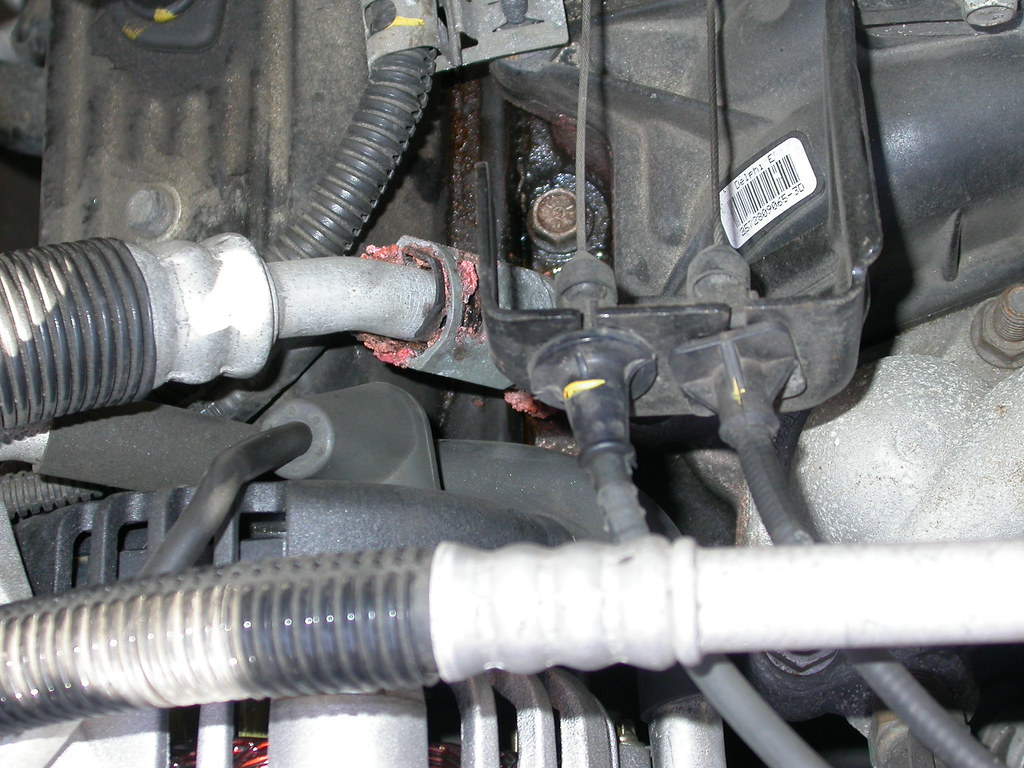
It wasn’t a radiator drain cock up front like you’d expect with a normal coolant drain. It was a drain plug on the engine block itself—something most people don’t touch unless they’re doing a full coolant service or you’re following a manual to the letter. The customer hadn’t asked for a coolant flush. They hadn’t asked for anything that would require opening a drain plug anywhere.
And the plug looked… wrong. Not “old car crusty” wrong. More like “recently disturbed” wrong: faint shiny edges, a smear where a tool had grabbed it, and it wasn’t seated. You could actually see the slow shimmer of coolant threading around it as if it was loose just enough to leak but not loose enough to fall out.
That’s the part that set the customer’s stomach on fire. A cracked block doesn’t politely route coolant around a single plug. But a loosened plug? That’ll give you a dramatic “pouring” effect all day long.
The awkward back-and-forth when the customer pushes
The customer didn’t accuse them outright, at least not at first. They asked a question that was pointed but still polite: why would that drain plug be loose if nobody had touched it? The service writer did the classic shrug-by-proxy—maybe it was like that, maybe it vibrated loose, maybe the car had been worked on somewhere else.
The customer hadn’t. They’d done oil changes elsewhere, sure, but coolant work? No. And even if some other shop had touched it, it would’ve been leaking earlier, not suddenly turning into a waterfall right after a “quick look.”
The tech’s tone shifted. Instead of explaining, he started narrowing the conversation. He repeated that coolant was “coming from the block” and that it was “bad,” and then tried to steer it back to repair options. The customer asked if tightening the plug would stop it, even temporarily, just to confirm the source.
That’s when it got weird. The tech said something like, “We can’t just tighten it; if it’s cracked you’ll still leak,” which didn’t answer the question. The customer asked again, more directly. The service writer stepped in with the kind of calm voice people use when they want you to stop asking questions.
Finally, the customer insisted: tighten it. Right now. They weren’t authorizing a teardown, they weren’t authorizing a block test, they wanted to see if a half-turn changed the “pouring.”
The moment the leak “mysteriously” changes
The tech grabbed a tool and, in front of everyone, gave the plug a careful turn. It wasn’t seized. It wasn’t rounded. It moved like a plug that had been loosened recently and left there on purpose.
As soon as it snugged up, the dramatic stream changed. The steady pour slowed to a messy dribble. Another small turn and it dropped again—still wet, still leaking a bit, but the theatrical “the engine is dying right now” effect was gone.
The customer didn’t have to say much after that. The air in the bay did that thing where it gets heavier, like everyone can feel the implication but nobody wants to name it out loud. The service writer stared at the floor for a beat and then started talking about how “sometimes these things happen” and how “it might’ve been on the edge.”
The customer asked if the plug had been loosened during the inspection. The tech said no. The customer asked how the plug had tool marks on it. The tech said it could’ve been from before. The customer asked why the leak suddenly started pouring only after the car was brought in. No real answer, just a lot of “hard to say.”
Trying to leave turns into a different kind of confrontation
Now the customer didn’t just want a diagnosis—they wanted out. They asked for the car to be lowered and the keys returned. The service writer’s politeness got thin, the way it does when a script stops working.
There was talk of “liability” and “we can’t let you drive it like this,” even though “like this” had been created by a loose plug that had just been tightened. The customer wasn’t buying it. They said they’d sign whatever waiver, take it somewhere else, and that was that.
While the car was coming down, the customer took photos. Not dramatic, not sneaky—just openly documenting the plug, the wet trail, the puddle, the tool marks. That alone seemed to change the shop’s posture more than any argument.
Suddenly, the conversation got softer. The service writer offered to “take another look” and maybe it was “just a plug issue” and they could “clean it up and pressure test.” The customer heard the backpedal for what it was: the moment the shop realized the story wasn’t holding and the customer wasn’t going to quietly accept a catastrophic diagnosis.
The customer left without authorizing anything major, but they didn’t leave with closure either. They drove away with a car that might still have a real coolant issue—or might not—and a sour certainty that someone in that bay had been willing to manufacture panic to sell a repair. And the part that stuck wasn’t even the money; it was the ease of it, how quickly “quick look” turned into “your engine is pouring coolant,” and how one small turn of a plug made the whole disaster story wobble without anyone admitting what that meant.