
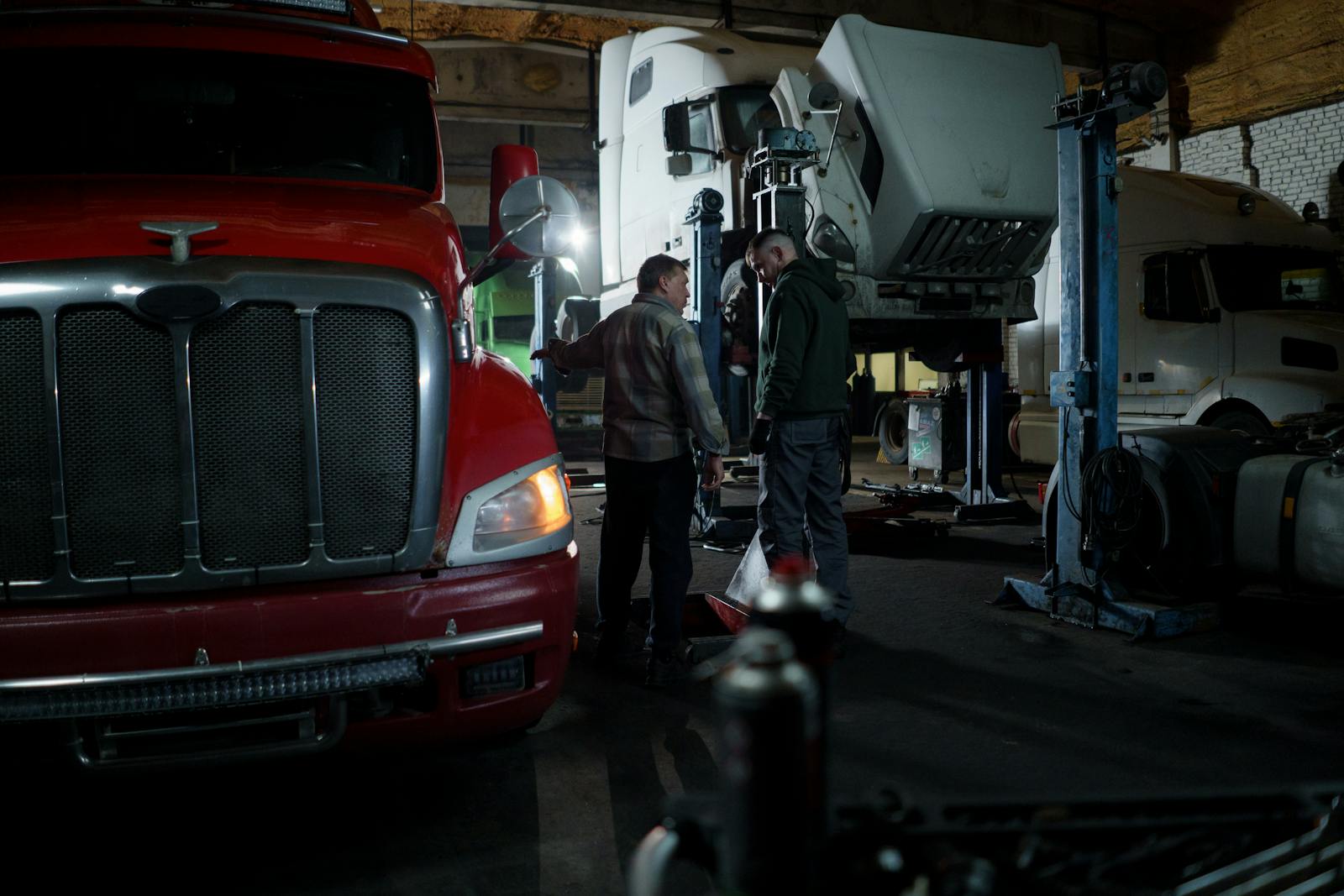

The shop owner was standing in the doorway of his office with a half-cold coffee and that look managers get when they’ve decided to “just keep an eye” on something. Out in bay three sat a heavy-duty diesel—one of those work trucks that looks like it spends its life dragging trailers and eating potholes for breakfast. The customer had dropped it off with a simple complaint: front brakes were grinding, pulling a little, nothing exotic.
What made the owner hover wasn’t the truck. It was the tech.
The senior guy—ten-plus years, confident stride, the kind of mechanic who doesn’t ask for a second opinion because he is the second opinion—had already pulled the wheels. He had parts lined up on a cart like he was filming a “quick pad slap” tutorial. The owner watched him reach into the boxes, and right there, in a move that looked normal if you weren’t paying attention, he grabbed the wrong brand of pads.
The “We’ve Always Used These” Moment
This shop stocked a couple brands on purpose: one for the lighter passenger stuff, another for the heavier trucks that actually punish their brakes. The boxes were similar, the pads were similar, and if you squinted at the part numbers long enough, you could convince yourself they were “close.” That’s the trick with brake pads—close is how you end up buying a caliper later.
The owner didn’t jump in immediately because the senior tech had that aura of “I’ve done this a thousand times, don’t micromanage me.” Plus, there was a customer at the counter and a phone ringing and the usual small chaos that makes people delay small confrontations. By the time he walked over, the pads were already out of the box, backing plates shining, clips ready.
He did the gentle version first. Something like, “Hey, those for the diesel?” Not accusatory, just a check. The senior tech barely looked up and gave the classic non-answer: “Yeah, they’re the ones we use.”
The owner didn’t love that reply, because it was technically untrue and emotionally final at the same time. He pointed at the box and said, “That’s the other line.” The senior tech waved him off, smiling like the boss was being cute, and said the words that always make owners’ stomachs drop: “They fit.”
The Install That Felt Too Easy
On paper, he wasn’t wrong. The pad shape matched, the ears slid into the bracket, and the pins went in without a fight. That was part of what made it so dangerous—no immediate resistance, no obvious “this is wrong” signal, just the illusion of compatibility.
The owner noticed little things, though. The friction material looked slightly thinner than what he was used to seeing on these trucks, and the chamfers were different. It’s the kind of detail you only care about if you’ve eaten a comeback before and you still remember the taste.
He hovered again, watching the senior tech compress the caliper piston. The piston went back smoothly, almost too smoothly, like it had been retracting for a living. The tech slapped everything together with that fast, practiced rhythm: bracket bolts, caliper bolts, wheel on, zip the lugs with an impact, move to the other side.
Halfway through, the owner tried again, a little firmer: “I want the heavy-duty pads on that truck.” The senior tech finally looked up, annoyed now, and said, “These are fine. If you want to waste money, order the other ones.”
That’s when it stopped being about pads. It was about who got to be right in front of the younger guys. The owner could feel the bay shift into that quiet attention where everyone pretends they’re not listening while hearing every word.
The Test Drive That Went Sideways Fast
They finished the job and did the normal procedure: pump the pedal, check for leaks, quick visual. The pedal felt okay. The owner still had that nagging sense that something was off, but the truck rolled out of the bay like any other day.
The senior tech insisted on doing the test drive himself, like he was proving a point. He backed out, eased down the frontage road, tapped the brakes a few times. For the first minute, it was quiet enough that he probably felt vindicated.
Then, on a slightly harder stop—nothing crazy, just the kind of brake application a heavy diesel sees all day—there was a sound that didn’t belong. Not the normal squeal or grind. More like a sharp crack followed by a quick, ugly metal clatter that made both of them sit up straight.
The truck lurched and pulled hard. The steering wheel yanked like the front end had suddenly decided to pick a side. The senior tech got it slowed down and limped it back toward the shop with that stiff, tight posture of someone trying to act calm while calculating what this is going to cost.
When they got back into the lot, the owner was already walking out, eyes locked on the front wheel. You could smell it before you even saw anything—hot brake smell, that acrid cooked friction odor mixed with something sharper, like fresh metal.
The Friction Plate Let Go
They pulled the wheel and the story got worse immediately. One pad wasn’t just worn or glazed; the friction plate had sheared off the backing like it had been snapped with pliers. The chunk wasn’t sitting neatly in place either—it had shifted and chewed itself into the caliper.
The caliper piston was the real nightmare. Instead of sitting proud and intact, it looked like it had been taken with the pad’s failure like a prize. The piston edge was damaged and the seal area had been compromised, the kind of destruction that doesn’t come from “normal wear” but from something binding and then releasing violently.
There was a moment where nobody said anything. The owner just stared, then slowly turned his head toward the senior tech. The tech’s face had that blank, locked expression people get when their brain is trying to negotiate with reality.
The owner didn’t yell right away. That’s what made it tense. He asked one question, quiet but heavy: “What pads are those?”
The senior tech tried to stall, like the brand name was suddenly hard to remember. He mumbled something about the supplier and availability, tried to shift it into a normal “parts mix-up” story. The owner reached over, grabbed the empty box off the cart, and read it out loud.
It was the wrong line. The one meant for lighter vehicles, the one with a different bonding method and different heat tolerance. On a heavy diesel with bigger brakes and higher loads, it was basically an invitation for the friction material to separate when it got hot and stressed.
The Blowup in the Bay
That’s when the owner finally snapped, not into a screaming fit, but into that tight, controlled anger that makes everyone uncomfortable. He told the senior tech he’d flagged it, he’d asked twice, and he’d been brushed off. The senior tech fired back that the pads “fit” and that the shop shouldn’t stock confusing brands if they didn’t want mix-ups.
The owner didn’t let him hide behind that. He pointed at the ruined caliper and said, basically, “This is why we don’t do ‘fit’ on heavy trucks.” The younger techs in the neighboring bays suddenly got real interested in their toolboxes.
Then came the part nobody likes: the customer call. The truck belonged to a guy who used it for work, and now it wasn’t just a brake job—it was a caliper replacement at minimum, possibly a rotor if it got scored, and a question of whether the other side was safe or contaminated by heat. The owner paced for a minute, phone in hand, clearly weighing how much truth to put into the first sentence.
When he finally called, he didn’t sugarcoat the consequence, but he didn’t fully throw his tech under the bus either. He said they found a problem during testing and the truck needed additional parts due to a failure. You could tell from his tone he was bracing for the “So you broke it?” response.
After he hung up, he turned back to the senior tech and told him he was done touching that truck. No more “I know better,” no more shortcuts. The senior tech looked humiliated and furious at the same time, like he’d been publicly demoted without a formal announcement.
The owner ordered the correct heavy-duty pads, a new caliper, and whatever hardware looked even slightly compromised. He didn’t trust anything that had been heated and hammered by that failure. The senior tech stood there for a minute, then drifted off to another bay like nothing happened, but it was obvious the shop’s mood had changed.
The truck got fixed—fixed correctly this time—but the interesting part wasn’t the repair. It was the quiet afterward: the owner watching his senior guy with new eyes, the senior guy moving like he had something to prove, and everyone else in the shop pretending they hadn’t witnessed a tiny disaster that could’ve been a roadside wreck. The caliper piston on the bench looked like a warning that didn’t need words, and the tension wasn’t about the money anymore—it was about whether the owner could keep trusting the person who refused to be corrected until metal literally tore itself apart.
More from Steel Horse Rides: