
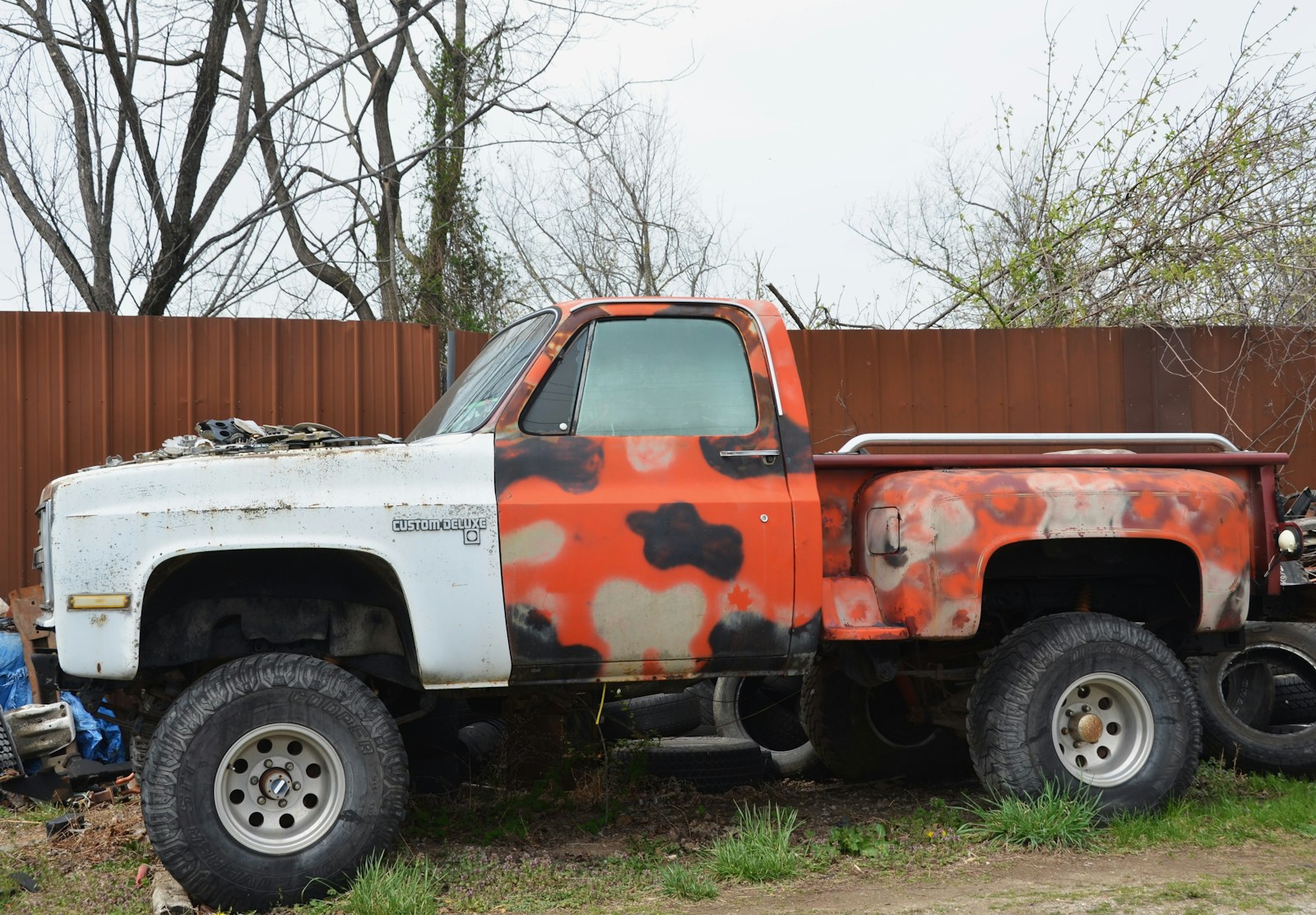

He’d been hunting for a square-body project for months, the kind of truck you can wrench on in your driveway without needing a laptop and three subscriptions. When the listing popped up from a seller two states and a whole time zone away, it hit all the right notes: “solid,” “minimal rust,” “spray-in liner everywhere,” “ready for restoration.” The photos were artfully dim and always a little too close, but the cab corners looked fine, the rockers weren’t obviously bubbling, and the bed was coated like a black swimming pool.
The buyer was the classic backyard mechanic type—patient, handy, the guy who keeps old coffee cans full of bolts and actually labels them. He asked the normal questions, got the normal confident answers, and wired the money like he was buying a used refrigerator from a cousin. Shipping took a week, and when the truck finally rolled off the trailer and onto his driveway, his neighbors drifted over like it was a parade float.
It fired up. It moved under its own power. The interior smelled like dust and old vinyl, not swamp. The spray-on liner was everywhere—bed, floor, maybe even up the kick panels a bit—and it gave the whole thing a “this has been handled” vibe. He figured he’d scored a decent starting point, and the plan was simple: pull the cab, clean the frame, do mounts and bushings, start from a good foundation.
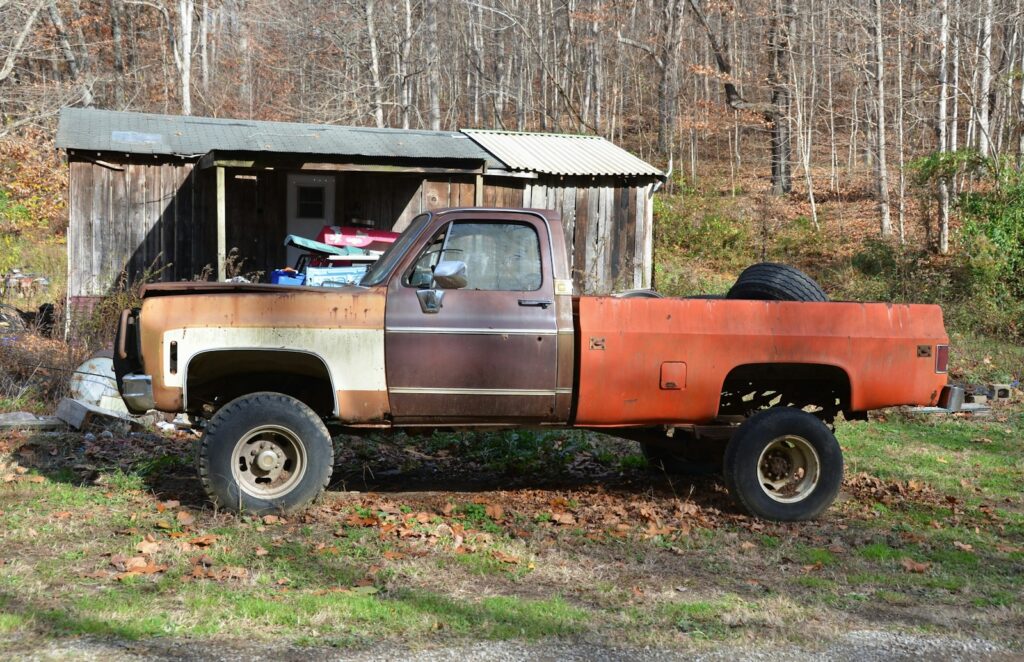
The “Solid” Pitch and the Cross-Country Trust Fall
The seller had been friendly in that quick, transactional way. He talked like someone who’d sold a few vehicles before—always had an answer, never had to “check” on anything, never paused long enough to sound unsure. When the buyer asked about rust, the seller didn’t get defensive; he got breezy. “It’s a truck, it’s got some,” he said, but then followed it with “floors are good” and “the liner keeps it protected.”
There were small tells the buyer noticed only in hindsight. The seller refused to do a live video walkaround, blaming bad signal and a busy schedule, but he’d happily send another batch of photos. Those photos were heavy on the bedliner and light on the pinch seams. Every picture looked like it was taken after a quick rinse—wet plastic, shiny black coating, nothing lingering in corners.
Still, the buyer rationalized it the way people do when they want a project to be real. He wasn’t expecting a museum piece; he wanted a platform. He told himself the liner meant someone cared enough to protect it, and he focused on the fact that it started, stopped, and didn’t look like it was folding in half.
First Weekend Home: The Little Red Flags
On day one, the buyer did the usual ritual: crawl around it, poke at obvious spots, make a mental list. The cab mounts looked crusty but present. The door bottoms had some scabs. The bedliner, though, was so thick in the cab floor that it looked like it had been poured in, textured like asphalt.
He pulled the rubber floor mat at the edges and found… more liner. Not overspray—actual sprayed coating wrapped up under the mat like someone had intentionally entombed the sheet metal. That’s when he got the first uncomfortable thought: people don’t coat factory floors like that unless they’re either extremely enthusiastic or hiding something they don’t want you to see.
He grabbed a screwdriver and did a gentle tap test around the seat mounts. It thunked in some places and rang in others. One spot near the driver’s heel sounded suspiciously hollow, but the liner was so thick it just dented and bounced back like a tire.
By that night, the plan shifted from “tear down at a comfortable pace” to “get the cab off and know what I’m dealing with.” Once you’ve had that thought, you don’t sleep until you’ve answered it. The truck sat in the driveway like it was smirking.
The Cab Lift: When the Floor Stopped Pretending
He spent the next morning unbolting the usual suspects: steering shaft, brake lines, harness connectors, fuel filler neck. The bolts fought like every old truck bolt fights—some came out with groans, some snapped and gave him that tiny burst of rage you can’t explain to people who don’t wrench. He set up an engine hoist and a couple of straps, planning to lift slowly and roll the chassis out.
At first, everything looked normal. The cab rose a half inch, then an inch, and he watched for the usual binding. Then he heard it—not a bolt snapping, not a creak, but a dry crackle like stepping on a pile of dead leaves.
He paused and leaned in, expecting to see something snagged. Instead he watched the floor flex under the straps, the liner stretching like tough skin over something soft. Another inch up, and the “skin” started to split at the seams around the mounts.
That’s when the floor gave up the performance. A section near the driver’s side mount sagged, tore, and then simply dropped away in chunks. Not clean rust holes—more like the metal had been converted into brown flakes and held in place only by the liner’s grip and a few stubborn spot welds that were now ripping free.
The Bedliner Reveal: A Black Bandage Over Rot
With the cab hovering, he could finally see the underside properly. The liner hadn’t just been sprayed on; it had been used like a structural bandage. It bridged gaps where metal should’ve been, spanning from what used to be floor to what used to be a brace, forming a tough membrane that made everything look “sealed” from above.
Where the liner had cracked, the rust underneath looked old and confident, not recent. The edges were layered like tree rings, suggesting it had been creeping for years. Someone had cleaned it just enough to spray over it, locking the decay in like a time capsule.
The buyer did what any backyard mechanic does when he’s equal parts furious and fascinated: he started picking at it. He peeled back a flap of liner and the metal underneath turned to powder with a thumb press. It wasn’t “needs patch panels” rust; it was “this cab is a suggestion” rust.
He climbed into the cab while it was still supported, just to see how much was left. Under the pedals, the floor wasn’t connected to the tunnel in a meaningful way. The seat mount area looked like it had been reinforced with liner and hope, and he suddenly understood why the listing photos had been taken from certain angles.
Messages, Excuses, and the Awkward Math of Being Stuck
He texted the seller a few photos, starting polite because that’s what people do before they admit they’re about to lose it. “Hey, I pulled the cab and the floors are basically gone,” he wrote. “The liner was hiding everything.” The seller’s first response was quick: he claimed he “never knew it was that bad” and insisted the truck had been “solid when he had it.”
That’s when the buyer’s tone changed. He pointed out the liner under the factory mat, the way it had been wrapped up the edges, the thickness around the mounts like someone had tried to build a new floor out of rubber. The seller pivoted to technicalities—he’d said “minimal rust,” not “no rust,” and it was a “project,” and the price reflected that.
The buyer pulled up the listing screenshots and found the phrase that now felt like a dare: “floors are good.” He sent that back, followed by a photo of daylight coming through where the seat should bolt. The seller went quiet for a while, then offered a small partial refund that sounded less like an apology and more like a bribe to stop the conversation.
But shipping had already eaten a big chunk of the budget, and sending the truck back wasn’t realistic unless the seller wanted to pay both ways and coordinate pickup. The buyer ran the numbers out loud to a friend in the driveway, doing that bitter laugh where you can’t decide whether it’s funny or cruel. He could take the refund and keep a rolling chassis with a cab that needed major surgery, or he could fight and probably spend months arguing with payment processors and freight companies.
Over the next few days, the truck sat with the cab still half-separated, like an autopsy paused mid-cut. The buyer started finding more: inner rockers that crumbled when touched, braces that were more rust than steel, the kind of decay that spreads into areas you can’t easily fabricate. Every new discovery made the seller’s “I didn’t know” line feel less believable, but proving what someone knew is its own exhausting hobby.
In the end, the ugliest part wasn’t even the rust—it was the way the liner had created a fake sense of certainty. The buyer could’ve handled visible rot; that’s what projects are. What stuck in his throat was realizing the truck had been made to look “solid” long enough to cross state lines, and now it lived in his driveway as a very expensive lesson wrapped in textured black coating, with the seller still insisting it was just “normal old-truck stuff” and the buyer staring at a floor that had literally fallen out the moment it stopped being supported.
More from Steel Horse Rides: