
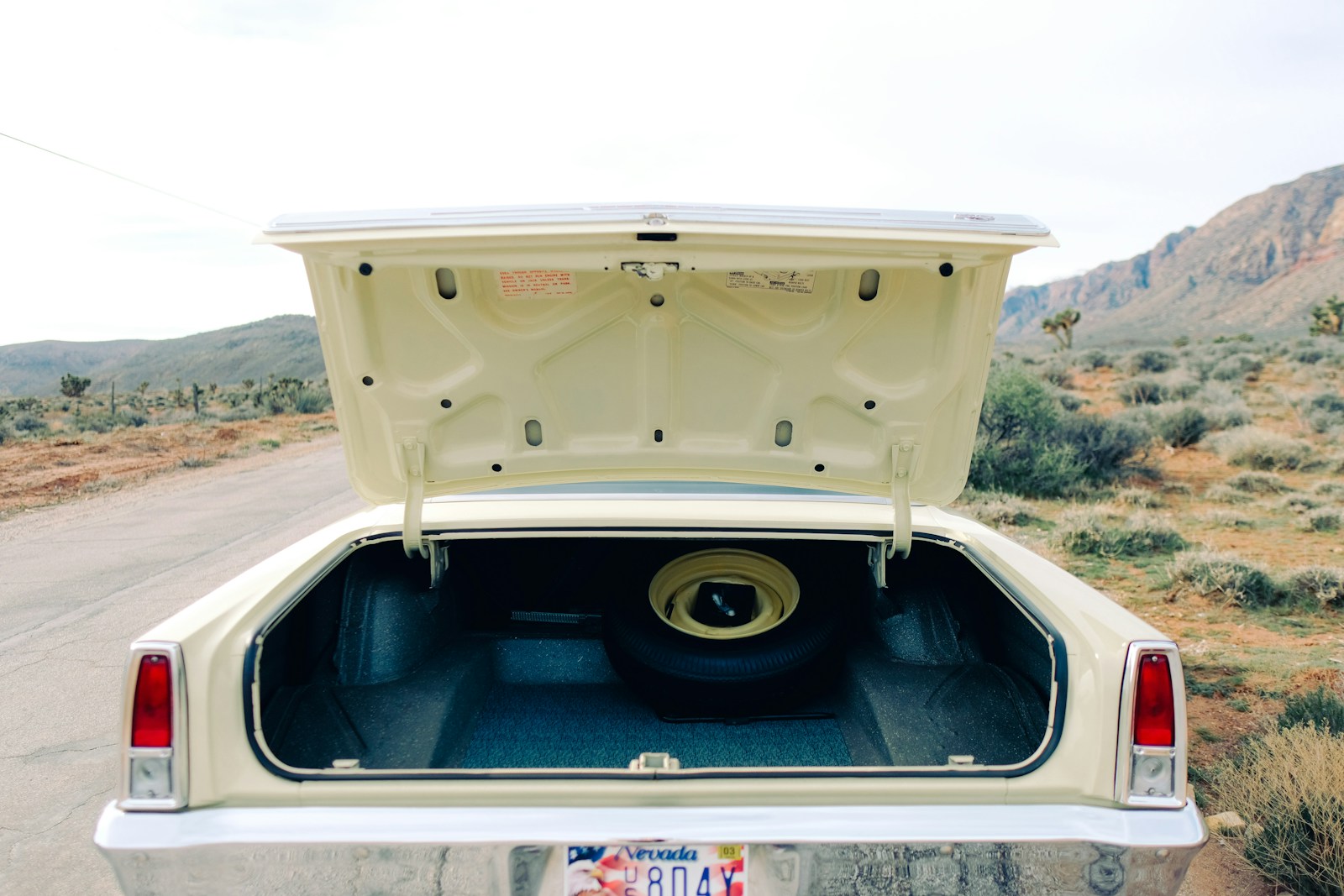

He’d been looking for a clean roadster for months, the kind you could drive on a Saturday without spending Sunday chasing oil leaks. The listing read like a lullaby for anyone who’s ever owned old metal: “frame-off restored,” “rust-free,” “laser-straight body,” “no expense spared.” The photos were glossy, the gaps looked even, and the seller had the easy confidence of someone who’d said the same lines a hundred times.
The buyer wasn’t some wide-eyed kid with a fresh license, either. He restored cars on the side, did his own metalwork, and knew how sellers talked when they wanted you to stop asking questions. Still, the roadster started, idled, and drove like it had been loved, and it came with a binder of receipts thick enough to double as a wheel chock. He handed over the money, loaded it up, and told himself he’d scored one of the rare ones: a project someone else already suffered through.
For a couple weeks, it played the part perfectly. Friends complimented it, strangers asked what year it was at gas stations, and the paint looked deep under streetlights. Then he did what restorers always do once the honeymoon wears off—he started poking around for the stuff nobody photographs.

The “Just Checking Something” Phase
It began with little tells. The trunk lid sat a hair proud on one corner, not enough for most people to care, but enough to nag at someone who’s spent hours chasing panel alignment. There was also a faint smell in the trunk when it had been sitting in the sun, like chemicals warming up, not the usual old-car mix of fuel and dust.
He told himself it was probably nothing. Maybe the weatherstrip was new and off-gassing, maybe the trunk had been detailed with something aggressive. But the more he stared at that one corner of the trunk opening, the more he felt the urge to pull things apart instead of admiring them.
So one evening, he opened the trunk, took out the spare, and peeled back the carpet. It was the kind of carpet kit people install to make things look finished without actually finishing the metal underneath. He expected to see neat paint, maybe some seam sealer, maybe a few honest imperfections—normal stuff.
The Foam That Wasn’t Supposed to Be There
What he saw wasn’t neat paint or seam sealer. It was spray foam. Not a small bead around a gap, not a dab used to keep a wire from rattling—full-on expanding foam, like someone had tried to insulate the quarter panel from the inside.
He pressed it with a finger and it gave that sickening, crumbly resistance, like stale bread. The foam had been trimmed flush in a couple spots, as if somebody cared about it looking tidy under carpet. It was a weird choice on a car that was supposedly stripped to a bare frame and rebuilt correctly.
He got a plastic scraper and started peeling. Under the foam was metal that didn’t match the surrounding area, slightly different texture and thickness, with edges that didn’t look like factory stamping. The deeper he went, the clearer it became: something had been patched, and the foam wasn’t insulation—it was filler for a void that shouldn’t exist.
At that point he stopped being curious and started being careful. He grabbed a flashlight and looked along the inside lip of the quarter panel, expecting to find welds from inside the trunk area. Instead, he saw almost nothing where there should’ve been stitching or plug welds tying inner structure together.
Welds on the Wrong Side of Reality
He crawled around the rear of the car, traced the area from the outside, and that’s where it got ugly. The welds were on the outside of the quarter panel, ground down and smeared over with filler, then buried under paint. It was the kind of work that makes a panel look smooth until you tap it and hear the difference between steel and hopes.
From a distance, it was “straight.” Up close, in the right light, he could see the faint ripple where the metal had been heated and pulled, then disguised. It wasn’t just sloppy—it was backwards. You weld patches properly from the inside when you can, you treat the seams, you protect the backside, you don’t leave an entire structural section relying on expanding foam and a prayer.
He found more clues as he kept stripping. There were grinder marks that ran in long arcs, like someone had been in a hurry to erase evidence rather than shape metal. In one corner, the seam sealer looked like it had been brushed on over dust. None of it screamed “frame-off,” unless “frame-off” meant the car was off the frame long enough for someone to hide things they didn’t want seen.
And the part that really got under his skin was how deliberate it felt. The carpet wasn’t just there for looks; it was the curtain. The foam wasn’t an accident; it was the plug. Someone had built a little stage set inside that trunk so the roadster could play “restored” long enough to change hands.
The Call to the Seller
He didn’t call immediately. He took photos, then more photos, then video, narrating what he was looking at like he was documenting a crime scene. He measured the patch, pointed to the foam, and zoomed in on the weld line from the exterior where it had been feathered into the panel.
When he finally called the seller, he kept his voice calm, which made it more tense. He didn’t start with accusations; he started with a question: did the seller know there was spray foam inside the quarter panel holding a section together? There was a pause long enough to hear the seller decide what story to use.
The seller went for the classic move: minimize and redirect. He said it must’ve been done by “the guy before him,” and anyway it “wasn’t structural,” and the car “drives fine.” He tossed in the word “cosmetic” like it was a spell that could turn foam into steel.
The buyer pushed back, still calm, and that’s when the seller got prickly. Suddenly the seller wanted to talk about the price, about how the buyer “got a deal,” about how old cars “are never perfect.” He suggested the buyer was being picky, like expecting metalwork not to be made of insulation foam was some kind of luxury standard.
The Receipt Binder and the Lies Between the Lines
After the call, the buyer went back to the binder of receipts with a different set of eyes. There were invoices for paint materials, a charge for “body labor,” and vague notes about “repair as needed.” Nothing explicitly described replacing a quarter panel section, nothing showed metal being cut out and welded properly, and there were no in-progress photos like you’d expect from someone proud of a frame-off job.
He looked closer at dates and names. A shop listed on one invoice didn’t match the seller’s story about who did the work, and a phone number on another receipt went to a disconnected line. It wasn’t a clean paper trail; it was paperwork arranged to look like a story.
Meanwhile, the roadster sat in his garage like a beautiful liar. From the side, it still looked fantastic. From the trunk, it looked like a set piece built for a quick sale, and he couldn’t unsee it.
He priced out what it would take to fix it right: cutting the patch out, inspecting the inner structure, fabricating or sourcing proper metal, welding from the correct side, treating the backside, repainting, blending. It wasn’t impossible, but it wasn’t small, either—and the scariest part was the question he couldn’t answer yet: if this was hiding in the trunk, what else was hiding under shiny paint?
He tried the seller again with a simple ask—help cover the repair, or unwind the deal. The seller didn’t like either option, and the conversation got colder. It slid into that familiar stalemate where one person has evidence and the other has deniability, and both know lawyers cost money that could be spent on actual metalwork.
So the roadster stayed there, half trophy and half warning. He could fix it and swallow the cost, or chase the seller and spend months arguing about definitions of “frame-off restored.” Either way, every time he looked at the car, he wasn’t thinking about weekend drives anymore—he was thinking about the sound spray foam makes when it breaks apart, and how carefully someone had hidden it under carpet, counting on the next owner to never, ever pull it up.
More from Steel Horse Rides: