

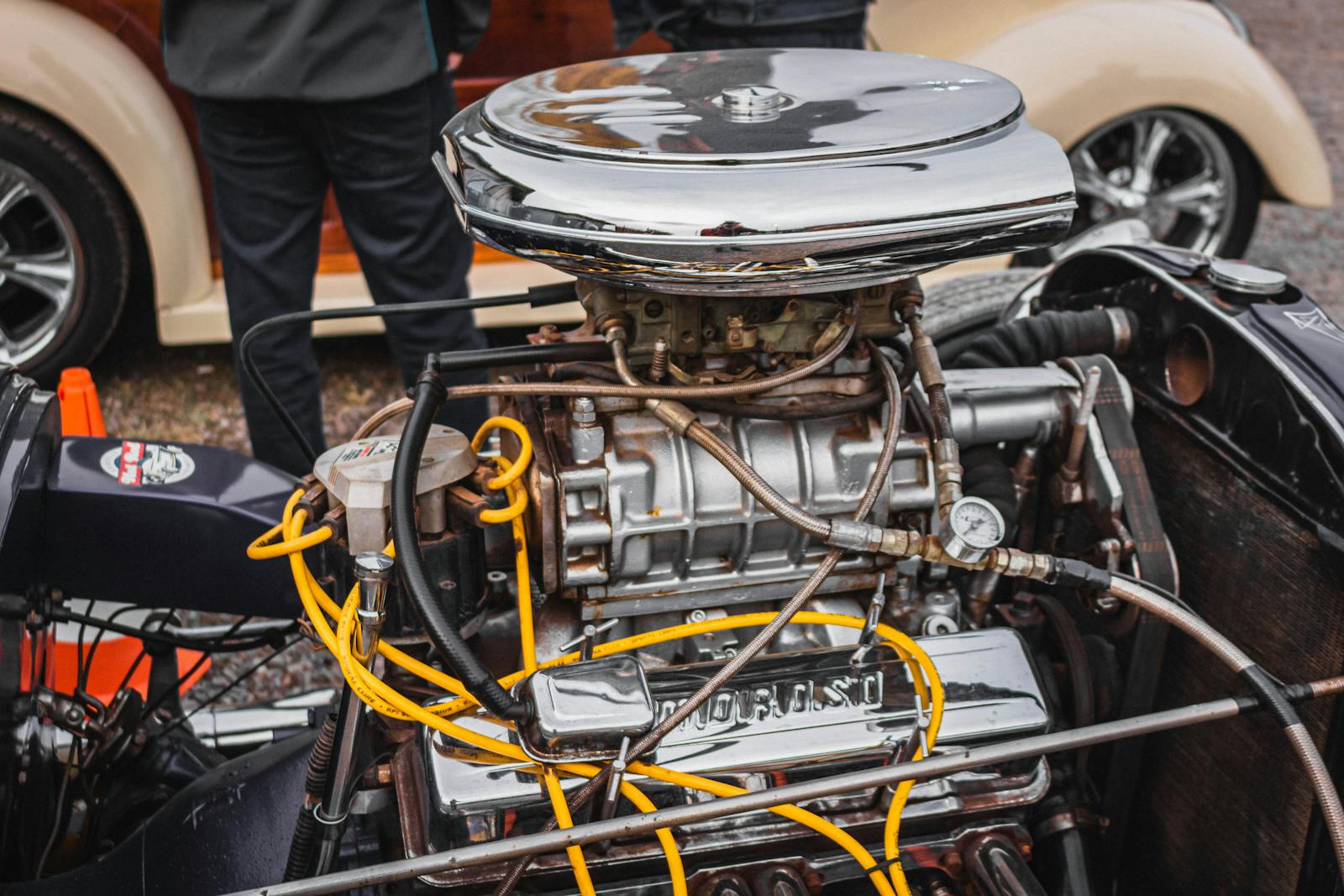
He’d been talking about it for weeks: the first carb swap, the first real “hot rodder” step beyond bolt-ons and plug-and-play stuff. The car was an older small-block build that still smelled like fresh gasket sealer and old fuel, and he’d been treating the new four-barrel like it was a trophy. Saturday morning, garage door up, hoodie on, tools laid out like he was filming a how-to video for someone.
The friend who’d been helping—older, more patient, the kind of guy who keeps spare vacuum caps in his pocket—kept saying the same thing: take it slow, double-check everything. The hot rodder nodded, half-listening, already mentally hearing the engine snap to attention. He wanted that clean, crisp first start that makes you forget the scraped knuckles and late-night parts runs.
Instead, he got a backfire so violent the air cleaner lid punched the hood liner like it was trying to escape.
The “It’s Basically Bolt-On” Phase
The carb itself wasn’t some mysterious relic pulled from a field. It was a shiny unit he’d bought because it looked straightforward and had the right CFM number on the box, plus a handful of people online had said it was “easy to dial in.” He’d installed it with a new gasket, snugged the nuts down, and run the fuel line in a neat arc like he cared about engine-bay aesthetics.
The older friend hovered around the passenger fender, pointing at little things—throttle return spring angle, a vacuum port that was capped but not clamped, the choke linkage moving a little stiff. The hot rodder kept brushing it off with that restless energy you get when you’ve been waiting to hear an engine run. He’d already bolted the air cleaner on because, in his mind, the “hard part” was over.
They did the usual pre-flight ritual: check for leaks, check timing light hookup, make sure the distributor wasn’t loose. The hot rodder worked the throttle by hand a few times, watching the linkage like it was a magic trick. Nothing seemed wrong, at least nothing obvious enough to slow him down.
The Smell Nobody Wanted to Talk About
The first sign that something was off wasn’t a bang, it was the smell. Raw fuel has that sharp, cold stink that cuts through everything, and it started showing up like a bad thought you can’t shake. The older friend said, casually but not really, that it smelled “a little rich.”
The hot rodder laughed it off and said it always smells like gas when you’re setting up a carb, like that was just part of the vibe. He pumped the throttle again and looked down the throat like he’d seen other people do, expecting to see a nice little squirt. What he didn’t say out loud—what he maybe didn’t realize—was that it looked like more than a squirt.
The older friend asked if the float levels had been checked before install. The hot rodder hesitated for half a beat and then said the carb was “new,” which was his way of saying he didn’t touch it. It wasn’t defensive exactly, more like he didn’t want to reopen the box he’d mentally sealed as “ready to run.”
Crank, Catch, and Then Violence
They went for the first start with the hood down but not latched, because everyone does that when they’re expecting to pop it back up ten times. The hot rodder slid into the driver’s seat and turned the key, and the starter rolled the engine over with that familiar, optimistic rhythm. For a moment it sounded like it wanted to catch—one cylinder, then another—just enough to make him grin.
Then it coughed the wrong way. The backfire wasn’t a little pop, it was a blunt, concussive slam that made both of them flinch like someone had set off a firecracker in a mailbox. The air cleaner lid jumped so hard it smacked the hood liner, leaving a fresh dented circle where it hit and a dust halo like a cartoon punch.
The hot rodder jerked the key back to off so fast it was almost comical, like he could un-ring the bell by sheer reflex. The older friend was already moving, hand on the hood, lifting it carefully like there might be flames waiting. For a second the garage went dead quiet except for the tick-tick of hot metal, and the hot rodder just stared at the hood liner like it had personally insulted him.
The older friend said, flat and controlled, “Don’t crank it again.” That sentence carried the weight of someone who’s seen a lot of dumb garage fires start the same way. The hot rodder tried to joke—something about the engine “having an attitude”—but it came out thin.
“Why Is It Wet in Here?”
With the hood up, the evidence stopped being subtle. The carb area looked damp in a way it shouldn’t, and the smell was suddenly overwhelming, like someone had spilled a gas can but didn’t want to admit it. When the older friend popped the air cleaner lid off, the underside was misted, and the base had that shiny, wrong look.
He shined a light down into the carb and the plenum, and that’s when the mood really shifted. The plenum wasn’t just “wet.” It had pooled raw fuel sitting in it, reflecting the flashlight like a nasty little mirror, as if the engine had been slowly filled like a bowl.
The older friend didn’t yell, but he did that disappointed exhale thing that’s somehow worse. He asked, again, about float settings, needle and seat, whether the fuel pressure had been regulated. The hot rodder’s shoulders came up tight, and he said he’d just run it the way it came because everyone said it was fine out of the box.
It turned out the float bowl was stuck open, which meant the fuel kept coming like it had a mission. The needle wasn’t sealing, and the carb just happily flooded the intake until the engine gave it a spark at exactly the wrong time. The backfire wasn’t random drama; it was the inevitable result of an intake that had become a fuel tank.
The Fight Wasn’t About the Carb
This is where it got messy in a personal way. The older friend started listing the steps they should’ve done—fuel pressure gauge, verify float drop, crack the bowls and confirm levels, check for debris in the seat—and the hot rodder heard it as a lecture. He snapped back that he’d watched plenty of videos, that he wasn’t an idiot, that nobody warned him it could do that.
The older friend pointed at the hood liner dent and said, “That’s the warning.” He wasn’t trying to be mean; he was trying to get the hot rodder to feel the gravity of how close this was to a fireball. But the hot rodder was embarrassed, and embarrassment makes people reach for pride like it’s a shield.
They went quiet for a while, both of them doing that fake-busy thing—wiping tools, moving parts from one spot to another, looking for rags that were already right there. The older friend pulled the fuel line off and plugged it, making the area safe before anything else. The hot rodder kept staring at the carb like it had betrayed him personally, like he’d been promised a clean start and got slapped instead.
When they finally talked again, it was more tense than before. The hot rodder wanted to yank the carb off immediately and return it, as if that would erase the moment. The older friend wanted to tear it down on the bench and find out what exactly was stuck, because returning parts doesn’t teach you why your engine almost tried to explode your hood.
They ended up in that classic garage standoff: one guy chasing a quick fix, the other trying to build the habit of checking everything even when it’s new. Neither one of them was completely wrong, which is why it felt so sharp. The hot rodder wasn’t just dealing with a mechanical failure; he was dealing with the fact that he’d wanted this to be his victory lap.
The last thing that stuck with people wasn’t the dent in the hood liner or the gas-soaked plenum, even though both were ugly reminders. It was the way the hot rodder kept glancing at the air cleaner lid like it might jump again, and the way the older friend kept his voice calm but didn’t soften it. The carb could be fixed—needle, seat, float, whatever—but that shaky moment after the backfire, when they both realized how close it came, hung in the garage longer than the fuel smell did.