

He bought the truck the way a lot of people buy used trucks now: a couple quick messages, a short test drive around a neighborhood that didn’t have any potholes, and a handshake that felt a little too casual for the amount of money changing hands. It was a mid-size pickup, clean enough to look “owned by a guy who changes his oil,” not “owned by a guy who smokes in it and never checks the coolant.” The seller had a tidy folder with a bill of sale and a title that looked normal at first glance.
The buyer wasn’t naïve. He knew the market was full of patched-together stuff and “just needs a sensor” fairytales. But the truck started right up, the frame looked straight, and the interior didn’t have that swampy, sour smell that screams trouble. He’d even done the usual flashlight-under-the-car routine and left feeling like he’d actually won one for once.
It wasn’t until the following weekend—when he pulled the front bumper off to run wiring for a stereo upgrade—that the whole thing turned into one of those stories you only believe because the details are so stupidly specific.
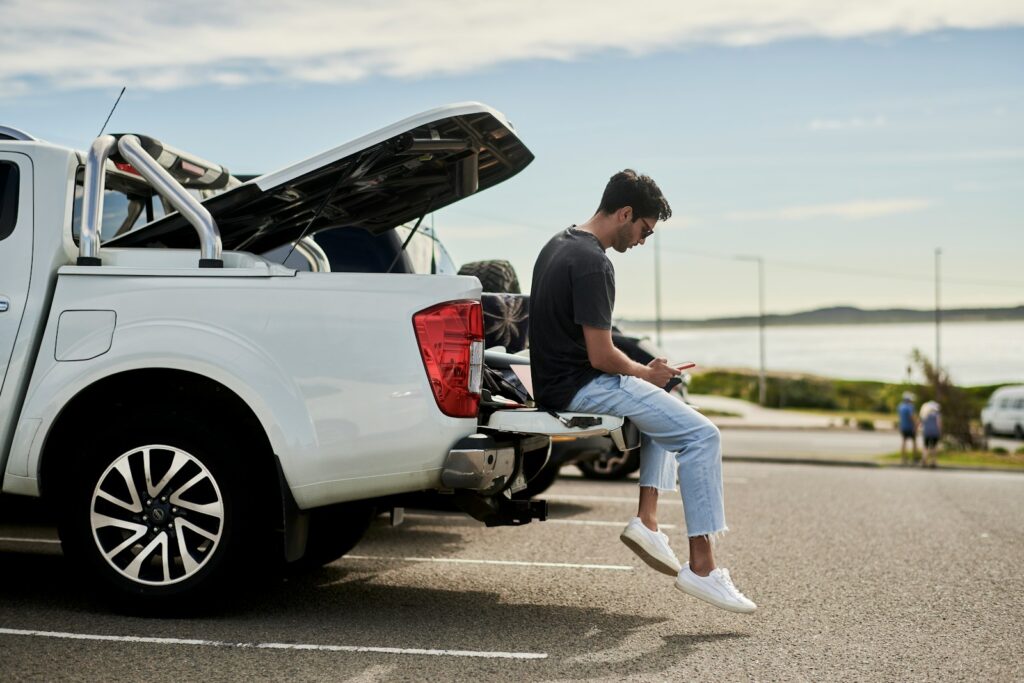
The kind of truck problem that starts with “I’ll just…”
He wasn’t tearing the truck apart because it was broken. It was more like, “I’ll just swap the head unit and add an amp,” the kind of project that starts with a 20-minute plan and ends with you sitting on the driveway at midnight googling trim clip sizes. The bumper had to come off because he wanted to run power cleanly through the firewall and mount a small sub and amp with a proper fuse, not a sketchy poke-through-the-door-jamb setup.
So he pops the hood, pulls the grille clips, and starts unbolting the bumper like he’s done on other vehicles. Nothing seems odd at first. The bolts are a little crusty, but it’s a used truck, and the front end gets everything the road can throw at it.
Then, when the bumper’s finally loose and he’s tugging it forward, he notices something wedged deeper than it should be—like a bit of trash that got trapped during assembly. It isn’t a plastic bag or a leaf pile. It’s paper, tightly rolled, stuffed into an opening in the frame rail like somebody hid it there on purpose.
A rolled-up receipt that didn’t make any sense
He fishes it out with needle-nose pliers, expecting a crumpled fast-food receipt or a random shop invoice from the previous owner. But it’s stiff, like it dried out after getting wet and then getting baked again. When he unrolls it, the paper crackles and holds its shape in a way that immediately makes you think: this has been through something.
It’s an auction receipt. Not a generic “vehicle purchase” piece of paper either—one of those detailed line-item prints with lot numbers, fees, and a big, unmistakable note about the title status. Right there in plain language: “Flood Title.”
He reads it twice because his brain won’t accept it the first time. The seller had pitched the truck as clean-title, well-kept, no major issues. Now he’s holding a receipt that basically says this thing was written off at some point as flood-related and ran through an auction system that tends to deal in cars with stories.
At first he tries to be rational. Maybe it’s old. Maybe it’s from a different truck and got shoved in there by accident. But the lot listing on the receipt includes a VIN—partial, but enough digits that he can compare it to the one on the dash.
That sick feeling when the timeline snaps into place
Once the VIN matches, the buyer’s whole mood shifts from “fun weekend project” to “I might have just bought a problem that can eat my savings.” He goes back out to the truck and starts noticing things he didn’t clock before. A little silt packed into seams that should be clean. A faint line of discoloration on the seat brackets. Corrosion on fasteners in spots that don’t usually rust unless they’ve been submerged or soaked.
The weird part is the truck still looks good. Whoever had it before him didn’t just wipe it down—they detailed it like they were trying to erase evidence. The carpets are clean, the interior plastics are shiny, and the headliner doesn’t sag. It’s the kind of presentation that makes you trust it, which in retrospect is exactly the point.
He runs a quick online vehicle history check, expecting it to confirm what the seller said. Instead, it’s messy. One report doesn’t show much beyond routine registration updates, while another includes an insurance event and an auction sale around the same period as the receipt. The buyer realizes he’d been leaning on that comforting idea that “if it was bad, it would show up cleanly,” and that’s not how this works.
Now he has the receipt in his hand and a bumper half-off the truck. He takes photos of everything—the receipt, the VIN, the frame rail where it was stuffed—because he knows the second he confronts the seller, the story will start changing.
The call that turned into a dance of denial
He calls the seller, trying to keep it calm and straightforward. He doesn’t scream or threaten; he just says he found something inside the frame while working on the truck and asks why there’s an auction receipt showing a flood title. There’s a pause long enough to feel like the seller is deciding which version of himself to be.
The first move is confusion. The seller claims he has no idea what the buyer is talking about and says he bought it from “a guy” months ago. Then it’s dismissal: receipts get left in cars all the time, doesn’t mean anything. The buyer pushes back—this wasn’t in the glove box, it was stuffed into the frame behind the bumper like someone tried to hide it.
That’s when the seller’s tone changes. He gets a little sharper, a little offended, like the buyer is accusing him of a crime instead of asking a fair question. He insists the title he handed over is clean, says he never had any water issues, and asks what the buyer wants from him.
The buyer says what he wants is obvious: unwind the deal. He offers to bring the truck back as-is, with the same cash, minus nothing, because he’s not trying to negotiate—he’s trying to erase a mistake. The seller doesn’t agree. He starts talking about “as-is,” how the buyer test drove it, how he can’t control what some auction house printed on a receipt.
Digging deeper, and the truck starting to feel haunted
After the call, the buyer does what people do when they feel cornered: he starts digging. He pulls trim panels and checks wiring connectors under the dash. He looks for that chalky residue that shows up when water gets into places it shouldn’t, then dries. In a couple spots, he finds corrosion that looks too advanced for the truck’s age, especially on connectors that should be tucked away from weather.
It’s not a dramatic “the truck is dripping river water” situation. It’s worse in a quieter way. It’s the kind of evidence that suggests the truck could run fine for months and then start having bizarre electrical issues that nobody can reproduce on command—random sensor faults, intermittent no-starts, modules that fail one at a time until you’re throwing parts at it.
He calls the DMV to ask about the title branding and what “flood” means in his state. He learns that branding can follow a vehicle, but paperwork gaps happen, especially if vehicles move across state lines or get retitled through certain channels. He also learns that proving what the seller “knew” is its own battle, and battles cost time and money.
The buyer considers small claims court, but the numbers don’t make it simple. He considers calling the police, then realizes this isn’t the kind of clean fraud case where someone is caught on camera swapping VIN plates. The seller gave him a title that looks legitimate, and the truck physically exists. The receipt feels like a smoking gun, but smoking guns don’t always fire in a courtroom.
Meanwhile, he still has a truck in his driveway that he doesn’t trust. Every time it starts normally, it feels less reassuring and more like a countdown timer. He can’t enjoy the stereo project anymore because the whole front end is now a reminder of what he found behind it.
He tries one more time to contact the seller, this time sending photos of the receipt and the matching VIN. The response is short and defensive, basically a refusal wrapped in indignation. No apology, no negotiation, just a wall: sold as-is, not his problem.
The buyer puts the bumper back on, not because he’s done, but because it’s easier to think when the truck looks whole again. He’s left with a folder of documentation, a rolled-up receipt that feels like a prank from the universe, and a decision that all somehow cost more than the truck did: fight, flip it and disclose everything, or keep driving and hope the ghost in the wiring never wakes up.
What makes the whole thing stick in people’s heads isn’t just the “flood title” part. It’s the image of somebody taking the time to roll that receipt tight and stuff it into the frame like a secret they didn’t want found, but couldn’t bring themselves to throw away. The buyer has proof that the truck’s story didn’t start where the seller claimed it did—and now he’s stuck living in the gap between what he can demonstrate and what he can actually make right.
More from Steel Horse Rides: