

By the time her phone buzzed with the first “AirTag Found Moving With You” alert, she’d already done the hard part of the breakup: blocked the late-night “u up?” texts, returned the hoodie, and stopped rereading old arguments like they were scripture.
She was just trying to run errands in peace. Grocery store, post office, then the gym—same boring loop she’d done a hundred times. But the alert didn’t feel boring. It felt like someone quietly stepping into the frame of your life after you thought you’d shut the door.
She shrugged it off at first because who wants to be the person spiraling in a parking lot over a notification? Still, once the message appeared again the next day—same phrasing, same creepy calm—she started to realize this wasn’t a glitch. Something small was following her, and it was attached to her car.
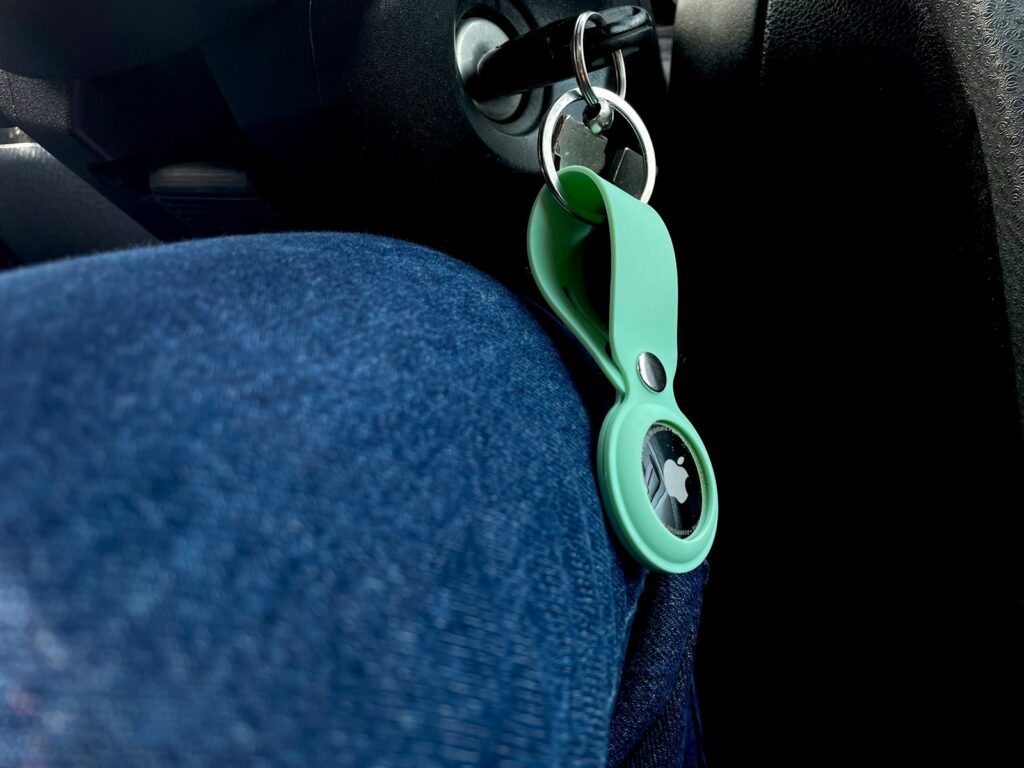
The breakup was “amicable” until it wasn’t
On paper, the split had been clean. They’d dated long enough to have routines and mutual friends, but not so long that the breakup came with shared leases or lawyers. He’d even acted weirdly supportive at first, like a guy determined to be remembered as “mature” even while getting dumped.
Then the little frictions started piling up. He kept finding reasons to swing by—dropping off a random item, asking for a charger he swore was his, checking if she still had a key. He’d pepper in comments that didn’t sound like questions but landed like hooks: “You’ve been going out more lately, huh?” and “I thought you worked late on Tuesdays.”
She didn’t want to think about it too hard, because thinking about it too hard meant admitting he’d been monitoring her in some way. And the only options there were “coincidence” or “something darker,” and neither felt great. So she did what a lot of people do—she kept things polite, kept interactions short, and told herself it would fade.
The alert showed up, and suddenly her car felt like a suspect
The AirTag notification didn’t just say an accessory was nearby. It specified it had been detected moving with her over time, and it offered the option to play a sound. The more she looked at the map of pings, the more her stomach tightened: it lined up with her day like a receipt.
She tried the “play sound” feature while sitting in her car with the doors closed, listening like a kid playing hot-and-cold. Nothing. Either the tag’s speaker was disabled, the battery was dying, or it was tucked somewhere sound wouldn’t carry.
At home, she started searching in the obvious places—glove compartment, center console, under the seats. She pulled out old receipts, a hair tie, and the pen she’d lost months ago. No AirTag. The alert kept insisting it was there, like her phone was calmly gaslighting her with data.
That’s when the paranoia got practical. She remembered that he’d had access to her car while they were together—he’d driven it, cleaned it once, even took it to get gas when she was running late. She also remembered how he’d offered, after the breakup, to “help” her with a weird rattle under the hood she hadn’t even mentioned to him.
The search got real when a mechanic found it
She didn’t want to call him and ask directly because asking directly meant giving him a chance to lie smoothly. Instead, she went to a local mechanic and tried to make it casual: could they check if there was a tracking device on the car? She expected an awkward look or a “we don’t do that.”
Apparently, it wasn’t that unusual. The guy didn’t make her feel crazy; he just asked where she’d seen alerts and whether she suspected anyone. He lifted the car and started checking places most people would never think to look unless they’d watched a few too many true crime episodes.
They found it tucked up near the rear bumper area, not inside the cabin at all—secured in a way that suggested someone had planned for it to survive potholes and rain. Tiny, clean, and stupidly easy to miss. When she saw it in the mechanic’s hand, the situation snapped from “maybe” into “oh, wow, this is happening.”
She took a photo. Not a dramatic one, just the kind you take when you know you’ll need it later: clear shot of the AirTag, the casing, the placement. Then she did the thing people always argue about—she didn’t go straight to the police first. She confronted him.
His explanation was “safety,” delivered like a favor
She texted him a picture with a simple question: “Why is this on my car?” The message sat unread for a little while, long enough for her to imagine him seeing it and deciding which version of himself to play. When he finally responded, he didn’t deny it.
He went straight into a justification. He said he was “just making sure she was safe,” that she’d been “acting different,” that the world was “crazy,” and he worried about her driving alone. It wasn’t an apology. It was framed like a thoughtful gesture she was supposed to appreciate if she weren’t being so emotional about it.
When she pushed—asked why he hadn’t told her, asked why he put it somewhere hidden—he pivoted. He said he didn’t want to “freak her out,” which landed like an insult because clearly the secrecy was the entire point. Then he tried another angle: he claimed couples do stuff like this all the time and she was making it “weird.”
She told him they weren’t a couple, which is the kind of sentence that should be obvious after a breakup but somehow still needs saying. That’s when his tone shifted from faux-concern to irritation, like she was being ungrateful about his “help.” He even asked if she’d really gone to a mechanic over it, as if she’d wasted professional time on a little misunderstanding.
He wanted the AirTag back, and that’s when it got uglier
After the safety spiel failed, he started focusing on the object itself. He said the AirTag was his property and he wanted it returned. Not “I’m sorry,” not “I crossed a line,” just a request like she’d borrowed a tool and forgotten to give it back.
She didn’t refuse right away; she asked what he’d been tracking. He said he “barely checked it,” which is a sentence that’s supposed to soothe but actually paints a clearer picture: he checked it enough to know he could. He said he’d only looked “a couple times,” which raised the obvious question—what did he see that made him keep going?
He also let something slip that she couldn’t stop thinking about afterward. He referenced a place she’d gone recently, a quick stop that wasn’t part of their old routine and that she hadn’t mentioned to mutual friends. It came out in the middle of an argument like an accidental confession: proof that the AirTag wasn’t some unused safety blanket, it was active information.
When she called him out on that, he turned it into an accusation. Who was she seeing? Why was she “lying” about where she’d been? The conversation stopped being about the tracker and became an interrogation, like the AirTag had given him the right to cross-examine her life. And that’s when she realized the “safe” story was never for her—it was for him.
Fallout looked like logistics: locks, screenshots, and constant second-guessing
She didn’t feel dramatic calling it stalking, but she also didn’t feel calm enough to pretend it was nothing. She saved the messages, the photo of the AirTag, the mechanic’s receipt, and anything else that built a timeline. She changed passwords, checked her Apple ID, and started thinking about every other place he’d ever had access to—spare keys, old devices, even her apartment building’s garage.
There was also the social mess. Mutual friends didn’t know what to do with the information because it didn’t fit neatly into “he’s a jerk” or “they’re both messy.” Some people instinctively softened it—maybe he meant well, maybe it was a misunderstanding—until she asked them, very plainly, whether they’d be okay with an ex secretly tracking them.
He didn’t go away quietly. He kept texting about the AirTag like it was the real issue, as if returning it would reset everything back to normal. When she didn’t respond, he alternated between “I’m worried about you” and “You’re overreacting,” which felt like emotional whiplash packaged as concern.
What stuck with her wasn’t just the fact that he’d hidden a tracker. It was how quickly he tried to rewrite it as romance, then as practicality, then as her fault—anything but what it was: a violation. And even after the AirTag was gone, the lingering part was harder to remove, because now every unexpected coincidence—seeing his car across town, getting a message at the exact wrong time—felt like it could be proof that he’d found another way to keep a finger on the map of her life.
More from Steel Horse Rides: