

He’d been looking forward to the kind of boring evening that barely deserves a memory: pick up dinner, get the kids home, maybe squeeze in a cartoon before bedtime. The only thing on his mind was the turn into his neighborhood and whether the fries would still be warm by the time they got to the table.
But a few minutes earlier, at a busy intersection, he’d accidentally stepped into someone else’s bad day. Not with a brake-check or some dramatic cut-off—more like a clumsy merge where he didn’t realize how fast the car behind him was coming up. He corrected, gave the “my bad” hand, and kept moving, thinking that would be the end of it.
It wasn’t. The other driver latched onto him like the mistake was a personal insult, and by the time he turned onto the street where his kids knew every mailbox and cracked sidewalk, the guy was still there, glued to his bumper like a threat that had decided to follow them home.
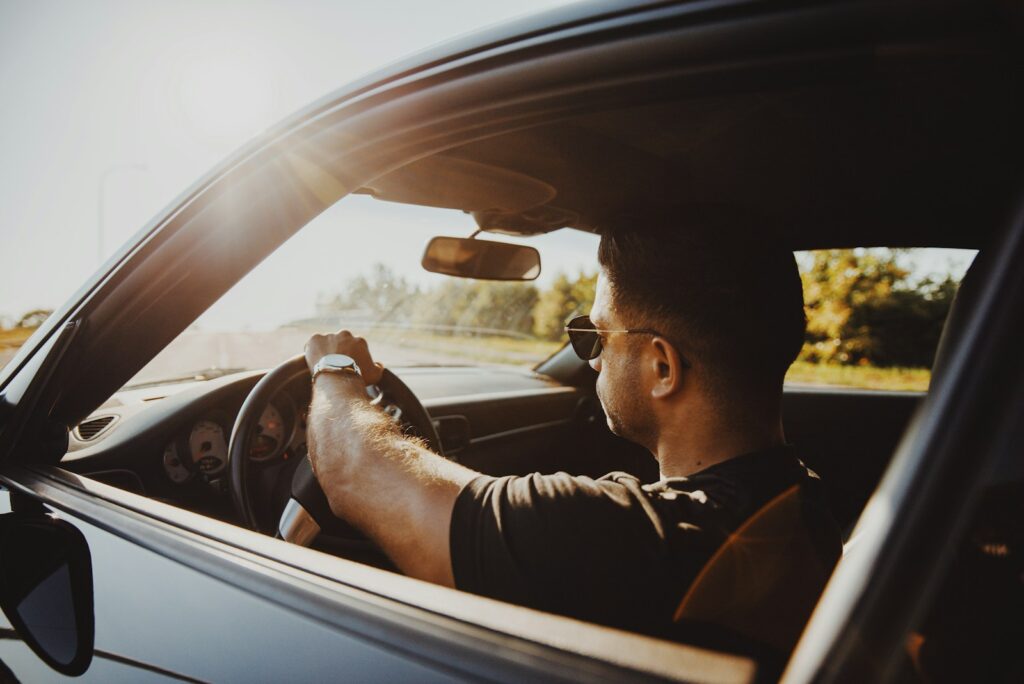
The tiny mistake that flipped a switch
From the way he described it, the trigger was almost disappointingly normal. He’d been in a left-turn lane that splits into two, realized too late he was in the wrong one, and eased over when there was room. No screeching tires, no inches-from-disaster moment—just a “whoops” move that happens to everyone once in a while.
The driver behind him didn’t see it that way. The moment he merged, the other car surged forward like it wanted to climb into his trunk, then swerved out and back in, hovering at that aggressive distance that makes your rearview mirror feel like a surveillance camera.
At the next light, the guy pulled alongside and started gesturing hard, the kind of sharp, angry chopping motions that don’t really translate into words. The dad kept his eyes forward because his kids were in the backseat, and he didn’t want to teach them that you engage with strangers having a meltdown at a stoplight.
When the tailgating turns into following
He tried the usual de-escalation stuff without making it obvious: slower, steadier driving, staying with traffic, not giving the other guy any fuel. The other car kept crowding him, then falling back, then crowding again, like it was trying to intimidate him into doing… what, exactly? Pulling over? Apologizing again? Fighting?
Then came the first moment where he realized this wasn’t going to end at the next turn. He took a route home that wasn’t his normal route—one extra right, one extra left—just to see if the car would peel off. It didn’t.
His stomach dropped in that quiet way it does when you’re trying to stay calm for your kids while your brain runs a highlight reel of worst-case scenarios. The kids, sensing the vibe shift, got quieter, their questions turning into that soft, uncertain chatter: “Dad, why is that car so close?” and “Is he mad?”
He told them it was fine, because that’s what you tell kids when you’re not sure it’s fine. But he also started thinking through options—drive to a police station, circle a busy area, don’t go straight home. And then, almost on autopilot, he turned into his neighborhood anyway, probably because home is where you expect safety to be waiting.
The driveway block and the “get out” moment
He pulled up to his house and felt a flash of relief—until the other car followed him right into the cul-de-sac. Before he could even fully process what was happening, the guy swung his car in behind him at an angle that made it impossible to back out, basically pinning him in the driveway like it was a parking lot dispute.
That’s when the shouting started. The stranger threw open his door and came stomping up, not just yelling in general but yelling directly at the driver’s window: “Get out of the car!” over and over, like that was the only script he’d brought.
The dad didn’t open the door. He didn’t roll down the window much either—just enough to tell the guy to back up, that his kids were in the car, that he wasn’t getting out. The stranger didn’t care, or acted like he didn’t hear it, his voice climbing higher as he leaned toward the glass and pointed at him like he was calling him out for a duel.
In the backseat, the kids were watching this adult stranger rage inches from their dad’s face. It’s one thing to hear “road rage” in the abstract; it’s another to be trapped in your driveway with someone trying to drag your parent out of the driver’s seat.
Trying to keep it from turning physical
The dad’s brain went into that split mode where you’re both parenting and managing danger. He told the kids to stay buckled and keep their heads down, which is a sentence no one plans on saying on a random weeknight. With one hand, he fumbled for his phone; with the other, he kept the doors locked and his posture still, trying not to show panic.
He said the stranger kept circling between the driver’s side and the front of the car, like he was deciding whether to block the hood or try the handle. At one point, the guy slapped the side of the car—hard enough to make the whole vehicle shudder—and the kids flinched in unison.
There was also that weird performative aspect some angry people get, like they’re playing to an imaginary audience. He paced, he shouted, he pointed at the house as if he’d already claimed it as his stage, and he kept repeating “Get out” like it would magically force compliance.
The dad told him he was calling the police. Whether he actually did in that moment or was buying time, it didn’t matter—the stranger’s reaction was the same: he got louder, like the threat of consequences offended him. And that’s when the dad realized this wasn’t about the merge anymore, if it ever had been.
The neighbors, the retreat, and the part that sticks
Eventually, someone noticed. Maybe it was the yelling, maybe it was the car parked sideways like a barricade, but a neighbor stepped outside and hovered at the edge of their driveway with that cautious “do I intervene or just witness” stance people get when a situation feels volatile.
The presence of another adult seemed to change the temperature. The stranger didn’t instantly calm down, but he hesitated more, glancing around like he’d just remembered the world can see you when you act like this. He threw out a few more insults, did one last “get out of the car” like a closing argument, then stomped back to his vehicle.
He didn’t apologize. He didn’t explain. He just peeled away, tires chirping as he left the cul-de-sac, like the neighborhood was something he’d conquered rather than a place he’d terrorized for five minutes because his ego got bruised at an intersection.
After the car disappeared, the dad finally exhaled, the kind of breath you don’t notice you’ve been holding until it’s shaking on the way out. The kids started talking all at once—questions, fear, that jittery laughter kids sometimes use when they’re trying to shake something off without understanding it.
And the part that lingered wasn’t even the yelling, or the blocked driveway, or how fast it escalated from a traffic mistake to a stranger on his property. It was the fact that the guy knew where they lived now, even if it was only because the dad made the mistake of driving home instead of somewhere public. That’s the thing he couldn’t unsee later: his own front yard didn’t feel like a boundary anymore, just another place a furious stranger could decide to make a point.
More from Steel Horse Rides: