

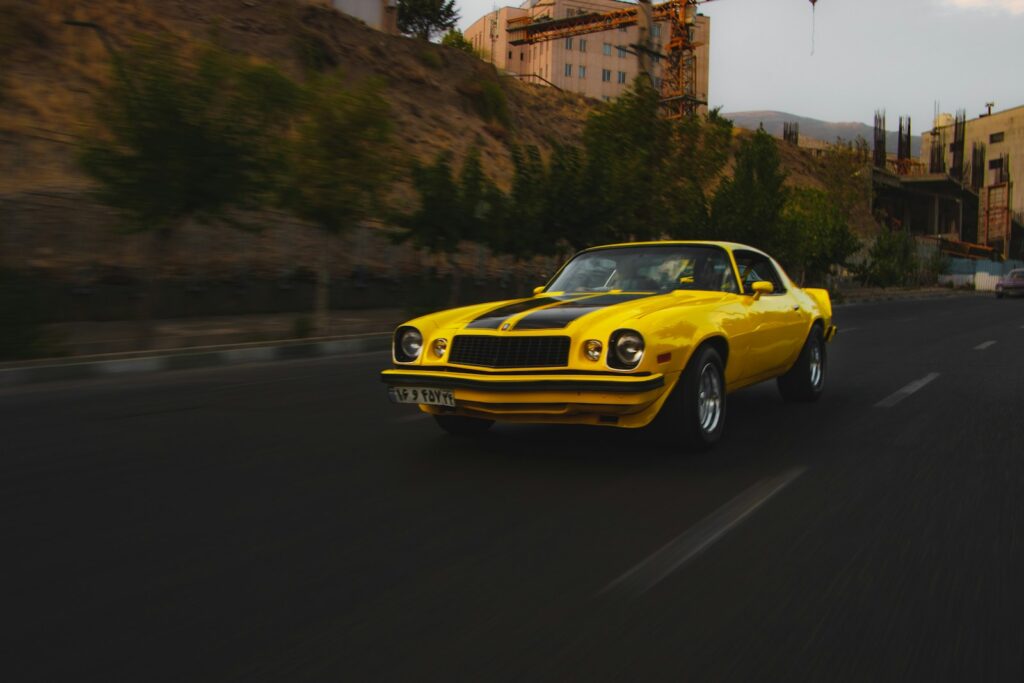
He knew something was off the second he stepped into the garage and saw an empty rectangle of oil-stained concrete where his classic Camaro was supposed to be. Not “maybe I parked it somewhere else” off. More like the kind of quiet, stomach-sinking wrongness you feel before you’ve even checked your pockets for the keys.
The Camaro wasn’t just a weekend toy, either. It was the thing he babied—fresh fluids, trickle charger, the cover folded just so, a little ritual every time he put it away. He’d spent years piecing it together, one expensive, hard-to-find part at a time, and he didn’t let people drive it. Not friends, not cousins, and definitely not his brother, who had a long history of treating “ask first” like an optional feature.
He called his brother right away, partly because he was hoping to be wrong and partly because, deep down, he already knew. The brother didn’t pick up at first. When he finally did, he sounded winded and casual in that very specific way people sound when they’re trying to act like they’re not currently doing the exact thing you’re accusing them of.
The Camaro Rule Everyone Knew
The rule had been established a hundred times: don’t touch the car. The owner had said it in a joking tone at cookouts, in a serious tone when his brother lingered too long in the garage, and in a dead-eyed tone after a previous “quick borrow” incident involving a different vehicle and a mysteriously curbed wheel. Everyone in the family knew the Camaro wasn’t communal property.
But his brother had this habit of treating boundaries like dares. He’d always been the type to say, “Relax, I’ve got it,” while already doing the thing you told him not to do. If there was a locked door, he wanted to know what was behind it; if there was a rule, he wanted to see what happened if he ignored it.
So when the owner asked, “Where’s my car?” his brother didn’t say, “What car?” or “It got stolen.” He went with a third option: a long pause, then, “It’s fine. I’m bringing it back.” Like that settled everything, like it was a library book he’d checked out without scanning.
The owner told him to pull over and bring it back immediately. The brother laughed—actually laughed—and said he was “almost done” and didn’t want to “waste the trip.” That’s when the owner stopped thinking in terms of inconvenience and started thinking in terms of damage.
A Joyride Disguised as an Errand
The brother eventually explained his story, and it kept changing depending on which part he was trying to justify. First it was an “errand,” then it was “just taking it around the block,” then it became “I needed something reliable.” The Camaro, of course, wasn’t the reliable choice; it was the flashy choice.
The brother had taken it because it was there, because he knew where the keys were, and because he wanted to feel what it was like to drive it. He framed it like he was doing the owner a favor—“I warmed it up,” “I made sure it ran,” that kind of nonsense. The owner could practically hear the smirk through the phone.
When the owner asked how he even got in, the brother breezed past the question. The owner didn’t even have to see him to picture it: the brother rummaging for the spare key like it was a scavenger hunt prize, telling himself the owner would never notice if he put everything back. He wasn’t borrowing the car; he was borrowing the feeling of getting away with it.
By the time the brother said he was on his way back, the owner was already standing in the driveway, arms crossed, staring down the street like he could will the car into reappearing. He wasn’t worried about a speeding ticket or a little extra mileage. He was worried his brother had no idea how to drive a manual without treating the clutch like a punching bag.
The Return: Smell First, Then the Evidence
The Camaro finally rumbled into view, and the owner’s first reaction was relief—until it got close enough for the smell to hit. It wasn’t subtle. It was that sharp, hot, chemical stink that clings to the back of your throat and makes your brain flash the word “clutch” in neon.
The brother pulled into the driveway like nothing was wrong, killed the engine, and hopped out with a little swagger. He was smiling, doing the “what’s the big deal?” routine, already halfway into a speech about how great the car felt. The owner didn’t even let him finish.
He asked, calmly at first, “What did you do?” The brother did the classic dodge: “What do you mean?” The owner pointed at the hood, the air around the car, the fact that it smelled like someone had been doing hill starts for sport.
Then the owner looked inside and noticed the gas gauge sitting way lower than it should’ve been. Not “I drove it to the store” lower. More like “I took the long way, then took the long way again” lower, as if the brother had treated a half tank like part of the admission fee.
Burnt Clutch, Empty Tank, and the Casual Shrug
The brother’s explanation was basically a string of excuses stitched together with confidence. He insisted the smell was normal—“old cars smell like that”—and said the fuel gauge must be “inaccurate.” When the owner asked why the clutch pedal suddenly felt different, the brother claimed he didn’t notice anything and suggested the owner was “being paranoid.”
That’s the moment things got ugly, because the owner wasn’t guessing. He knew the feel of his own car. He knew how it engaged, where the bite point was, and how it sounded when it shifted clean. Now it felt spongier, like something had been overheated and punished, and the smell wasn’t fading the way it should after a normal drive.
The owner pushed back harder, and the brother’s attitude changed from breezy to irritated. He started acting like the owner was accusing him of something unfair, like it was a personal attack rather than a direct consequence of taking someone’s car without permission. He said, “I brought it back, didn’t I?” as if returning stolen property cancels out the theft.
They went in circles in the driveway, the owner demanding the truth and the brother refusing to admit he’d done anything wrong. The brother wouldn’t even apologize in a real way. He offered the kind of apology that’s basically a complaint: “Sorry you’re mad, but I didn’t do anything.”
And then, because families are never simple, the owner’s phone started buzzing with texts from other relatives. Somebody had already heard a version of the story where the brother “borrowed” the Camaro for a “quick thing” and the owner “freaked out.” The owner hadn’t even decided what to do yet, and the pressure to let it go was already showing up, uninvited.
The Fallout Isn’t Just Mechanical
The owner did what car people do when they’re trying not to lose their mind: he started checking things. He looked under the hood, sniffed around the wheel wells, and tried to test the clutch carefully without making it worse. The brother hovered nearby, arms crossed, acting wounded, as if standing there was proof of innocence.
At some point the owner mentioned the cost—what a clutch job could run, how it wasn’t just a “quick fix,” how parts and labor add up fast on an older car. The brother scoffed and said the owner was exaggerating, then pivoted to money in the same breath: he couldn’t cover it, he was “tight right now,” and besides, there was “no proof” he’d done anything.
That line—no proof—landed like a slap. Because the whole situation was proof: the missing car, the smell, the half-empty tank, the brother’s own phone call admitting he had it. But the brother was treating it like a courtroom, like if he didn’t confess to riding the clutch, it didn’t count.
The owner wasn’t just mad about the mechanical damage. He was furious at the entitlement, the way his brother slid right past consent and then tried to gaslight him into doubting his own senses. It wasn’t a one-time mistake; it was a pattern with a classic-car-shaped bullseye.
By the end of it, the owner had his car back, but he didn’t have closure. He had a Camaro that now felt like a question mark and a brother who was acting like the victim because he’d been told “no” after the fact. And the worst part was knowing that even if he fixed the clutch and refilled the tank, he’d still be left with the same problem sitting in the family group chat: a person who thinks other people’s prized possessions are his to test-drive, and a family that keeps asking everyone else to keep the peace.
More from Steel Horse Rides: