

He’d been working on the car in the slow, stubborn way project cars usually get done: a couple nights a week after work, a Saturday here and there, a parts run that somehow turned into an all-day ordeal. The thing sat in his driveway like a half-finished promise—older coupe, faded paint, mismatched wheels, the hood popped more often than not. It wasn’t pretty, but it was his, and it was exactly where it was supposed to be: on his property.
Then one afternoon he walked outside and found a bright orange sticker slapped on the driver’s window. “ABANDONED VEHICLE,” it said in big block letters, with a phone number and a warning about towing if the car wasn’t moved. For a second he honestly thought it was some prank, like a neighborhood kid trying to be funny. But the sticker had a city logo, and the little boxes were filled out in pen.
What made his stomach drop wasn’t even the sticker—it was the date written on it, and the fact that somebody had gone out of their way to report it. The car was registered. It was insured. It was in his driveway, not rotting on the curb. Yet someone had called it in like it was trash.
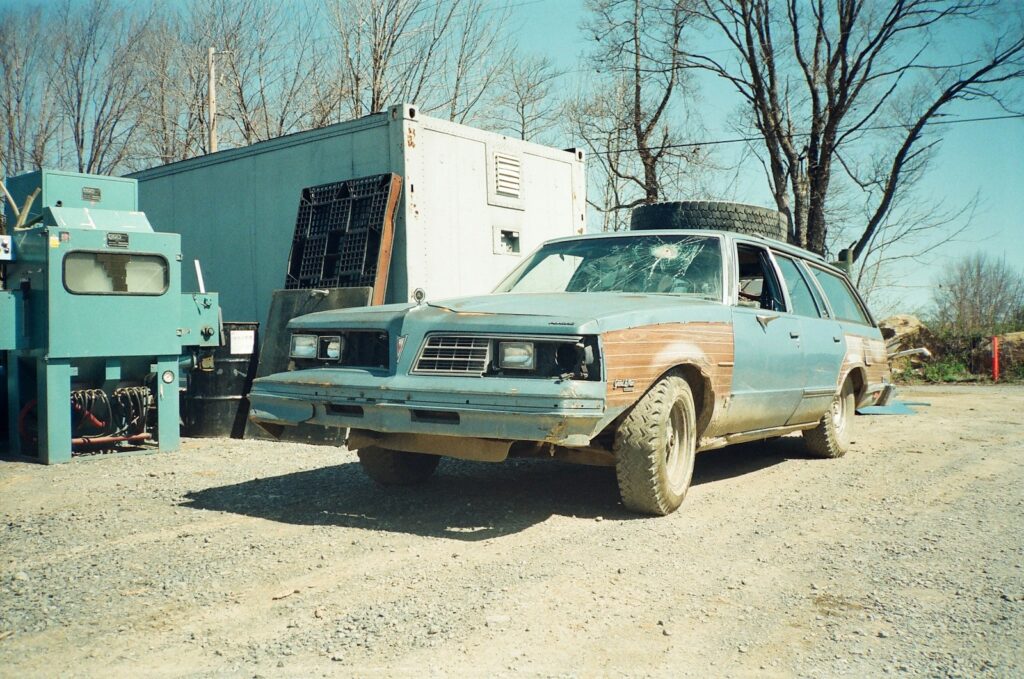
The project car that offended the wrong person
He wasn’t one of those guys with a spotless garage and a lift, so the car lived outside. He kept it covered when he remembered, but between test-fitting parts and crawling under it, the cover was always coming off and going back on. The driveway looked like a normal working-class driveway: a daily driver up front, the project car off to the side, and the occasional cardboard box from an auto parts store waiting to get broken down.
The neighbor next door had opinions about everything, the kind of person who acted like they’d been appointed unofficial mayor of the block. Trimmed hedges, immaculate lawn, trash cans rolled in precisely on schedule—fine, whatever, people are allowed to be neat. But he’d also throw little digs over the fence when the project car was up on jack stands. “You ever gonna finish that thing?” and “Looks like it’s been sitting a while,” delivered with that tight smile that doesn’t reach the eyes.
The car owner tried to keep it civil because he still had to live there. He’d nod, give noncommittal answers, and keep wrenching. He figured the neighbor was just irritated by the look of it, and as long as nothing spilled into the street, it would stay in the category of annoying-but-manageable.
The orange sticker and the first phone call
When he called the number on the sticker, he got a city office that treated him like he’d been caught doing something wrong. The person on the phone asked for the plate number and then casually said, “We have a report of an abandoned vehicle.” He explained, calmly at first, that it was registered and insured and parked in his driveway.
There was a pause, then the bureaucratic version of a shrug. The report had been made, which triggered the inspection, which triggered the sticker, and now he had to “comply” by demonstrating it wasn’t abandoned. They told him he could remove the sticker after he proved the registration, but the inspection note mentioned the car “appears inoperable.”
That phrase—“appears inoperable”—was where it started feeling personal. He could almost see the neighbor describing it with a little flourish: doesn’t move, looks like junk, probably abandoned. The city worker didn’t care about neighborhood politics, only paperwork, and that meant the burden landed on the guy who actually owned the car.
Proof doesn’t stop a tow truck
He walked inside, pulled up the registration, dug out the insurance card, and took photos: the plate, the tags, the VIN through the windshield, the car sitting clearly behind the edge of the sidewalk. He emailed everything, thinking this would be the end of it. It wasn’t like he was arguing about an unpermitted structure or blasting music at midnight; this was a car in a driveway.
Two days later, he came home and saw the same orange sticker again. Not just still there—another one, freshly applied like a petty receipt. The first one had been peeled off, and now the window had a new notice with a new date, like someone was trying to reset the clock and keep pressure on.
This time he didn’t even go straight to the phone. He stood there in the driveway, staring at his own car like it had betrayed him. Then he looked next door and noticed the neighbor’s blinds twitch, just a little, like somebody trying to watch without looking like they were watching.
The awkward confrontation over the fence
He waited until the neighbor was outside—because of course he was, doing something with the yard—and walked over. No yelling, no chest-puffing, just a direct question: had he reported the car as abandoned? The neighbor didn’t deny it so much as he justified it, launching into a speech about “property values” and “how it looks” and “it’s been sitting there forever.”
There was something almost surreal about hearing “abandoned” applied to a car that was literally in use as an ongoing project. The owner pointed out that it was registered and insured, and the neighbor responded with a variation of, “Well, I didn’t know,” delivered like that was the end of the discussion. Except it wasn’t believable—because the neighbor had been commenting on it the whole time, asking when it would be finished, acting irritated whenever it was up on stands.
The conversation didn’t explode, but it curdled. The neighbor’s tone shifted into that smug, rule-enforcer mode, the vibe of someone who thinks the city is a weapon they can pick up whenever they don’t like something. The owner walked back to his driveway feeling like he’d just learned the actual temperature of the relationship, and it was colder than he’d been admitting.
The city’s “process” becomes the real problem
He called the city again, this time sharper, and asked why the sticker kept reappearing. The answer was maddening: each report created its own case, and the system didn’t automatically connect them. So even if one was closed out, another could open right behind it if someone kept calling. It was less “one misunderstanding” and more “death by a thousand complaints.”
They told him he could request a supervisor, file a dispute, maybe even ask for an officer to come verify it wasn’t abandoned. But nothing in their tone suggested they were eager to stop the cycle. The city wasn’t picking sides; the city was processing inputs, and his neighbor had figured out how to keep feeding the machine.
So he started doing what normal people do when they realize they’re trapped in somebody else’s pettiness: documenting everything. Photos with timestamps, copies of emails, notes of who he spoke to and when. He even started moving the car slightly within the driveway—rolling it forward, then back—just so nobody could claim it “never moves,” like he was performing mobility for an audience of one.
A driveway becomes a battleground
The next week he noticed other little things that hadn’t been there before. The neighbor suddenly cared about where the trash cans sat. The neighbor cared about how close the daily driver was to the property line. It was like the abandoned-car report had opened a door, and now every minor annoyance was a potential complaint.
The car owner didn’t want to turn into the same kind of person—calling the city over every fence board and leaf pile—but he also didn’t want to be bullied into selling the car or paying for off-site storage just to keep the peace. Friends told him to put up cameras, to catch the neighbor coming onto his property. Others told him to talk to a lawyer about harassment, because repeated false reports can cross a line.
What ate at him was how the project car, which used to be his decompression hobby, started feeling like a liability. Every time he picked up a wrench, he wasn’t thinking about the engine or the suspension anymore. He was thinking about that orange sticker and the possibility of coming home to an empty driveway and a towing bill that would be a nightmare to fight.
By the time he’d gotten the latest report closed and the city had “noted the file,” he didn’t feel relieved. He felt watched. The neighbor hadn’t apologized, hadn’t backed off, and hadn’t stopped behaving like the driveway was a community display case he had the right to curate. The car was still there, still legal, still his—but now every quiet evening project session carried the same question: how many more calls would it take before the city’s process finally did what the neighbor wanted, whether it made sense or not?
More from Steel Horse Rides:
- 13 Most Powerful Muscle Cars of All Time
- 13 Underrated JDM Cars That Deserve More Love
- 15 JDM Cars That Were Illegal in the U.S.
- 13 SUVs From the ’90s That Are Surprisingly Cool Today