

She’d been broken up with him for a few months, long enough that she’d stopped checking her phone every time it buzzed. The split wasn’t explosive, just draining—one of those slow dissolves where you realize you’re doing all the emotional labor while the other person keeps showing up like a roommate who occasionally kisses you. Still, there were loose ends, and the loosest one was a stupid little spare key.
It was the kind of spare key you don’t think about until you really, really do: the one she’d handed him early on so he could move her car if she was blocked in at his place, or grab something from the trunk, or “help” in the vague way couples help each other. When she asked for it back after the breakup, he gave her this casual non-answer, like it was somewhere in a jacket pocket and he’d get to it eventually. And then he just… didn’t.
She kept working, kept paying her rent, kept trying to make her life feel less tangled with his. Then, on two separate workdays, she walked out to the lot and her car wasn’t where she’d left it. Not stolen. Not smashed. Just moved, like someone had picked up her day and nudged it a few feet to the left to see if she’d notice.
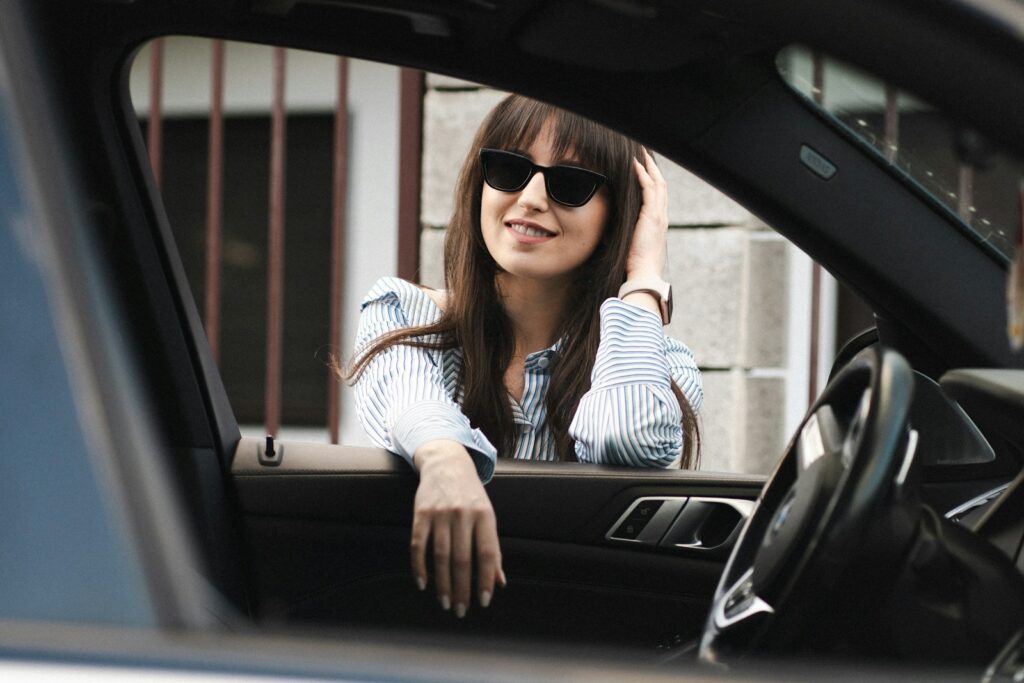
The spare key that wouldn’t come home
When she first asked for the key back, she did it the normal way: quick text, no accusations. “Hey, can you drop my spare key off? Or I can grab it.” He replied like he was doing her a favor by reading it—“Yeah, yeah, I’ll look for it”—and then went quiet.
A week later she followed up, a little firmer. He said he was “pretty sure” it was in his apartment but he’d been busy, and anyway, “it’s not like I’m using it.” That sentence lodged in her brain because it sounded like a dare. Like he wanted her to argue the point so he could act offended that she didn’t trust him.
She tried the polite escalation: offering to meet in a public place, asking if he could leave it with a mutual friend, even suggesting he mail it. Every option got the same slippery response—sure, sure, later. It wasn’t outright refusal, which meant he could always claim she was being dramatic, but it also wasn’t a yes that ended with her key back in her hand.
The first time her car “wasn’t there”
The first incident happened on a Tuesday that was already irritating for unrelated reasons. She’d been stuck in meetings, skipped lunch, and stayed late because a coworker called out. When she finally walked out to the parking lot, she went on autopilot toward her usual spot… and kept walking.
At first she did the thing everyone does when they can’t find their car: hit the key fob and listen for the chirp. Nothing. She tried again, slower, like that would make the signal travel further. Still nothing, just the hum of the street and someone’s cart rattling against the curb.
She circled the lot once, then twice, that low-grade panic rising—the thought of calling the police, calling her insurance, explaining to her boss why she was standing there like an idiot. Then she spotted it, one row over, backed into a space she definitely hadn’t used that morning. It wasn’t just “maybe I forgot.” The angle was different, and she was the kind of person who parked the same way every day without thinking.
Nothing was missing. The doors were locked. When she checked inside, the seat wasn’t adjusted, the mirrors weren’t moved, and there wasn’t some obvious sign of rummaging. It was as if someone had simply relocated it and walked away, leaving her with this dumb, prickly feeling of being watched.
Trying to talk herself out of it
That night she replayed her morning like a security camera in her head. Had she been distracted? Could she have parked in the wrong row because she was running late? She even pulled up the step counter on her phone, trying to match where she’d walked in from.
She mentioned it to a friend in a half-laughing, “I’m losing it” way, and her friend didn’t laugh back. Her friend asked the question she’d been avoiding: “Does your ex still have a key?” The second she said yes out loud, the story stopped being funny.
She texted him again. Not coy this time—direct. “I need my spare key back this week. I’m serious.” He responded with a little burst of defensiveness, the kind that always arrives right on time: he hadn’t moved her car, he hadn’t touched her stuff, she was being paranoid, he was offended she’d even suggest it.
What made it worse was that his denial didn’t come with a solution. No “Come pick it up tomorrow.” No “I’ll drop it at your door tonight.” Just outrage, then silence. She went to bed with her phone face-down, the kind of petty self-protection that doesn’t actually protect you from anything.
The second move, and the moment it clicked
The second time happened a few days later, which is what blew up her ability to rationalize it. Same routine: she parked in her usual spot at work, took a mental note of the pole number beside it because she’d promised herself she’d be more careful, and went inside. She even remembered glancing back at the car as she walked away, like she was proving something to herself.
When she came out after her shift, the spot was empty. The pole number stared back at her like a joke. Her stomach dropped in the same way it does when you realize you left your wallet somewhere—except you can’t cancel a car like a credit card.
This time she didn’t wander around aimlessly. She hit the fob while walking, and after a few seconds, she heard it: a faint chirp from the far side of the lot. Her car was parked near the employee entrance, closer to the building, almost like someone had moved it for convenience. The convenience wasn’t for her, though. It felt like a message: I can do this whenever I want.
She got in and checked everything with shaking hands. No broken glass, no missing items, no obvious “I was here” souvenir. But there was a tiny detail that made her blood run cold: the driver’s seat was nudged back a notch, just enough that she had to scoot forward before she could comfortably reach the pedals.
Calling him out, and the ugly control game
She didn’t wait until she got home to message him. She sent a photo of the empty parking space, then another of where the car ended up. “This happened again. Do not contact me. I’m changing my locks and getting the car rekeyed. If you have my key, return it now.” It wasn’t a negotiation anymore; it was a boundary drawn with a marker he couldn’t pretend not to see.
His reply came fast, almost eager. He said she was accusing him of a crime, he said she was “spiraling,” he said maybe she should “get help.” He also added, almost as an afterthought, that he “couldn’t find” the key and she should stop harassing him about it. It was classic: deny, insult, and then make the missing key sound like a minor inconvenience she was obsessing over.
She called a locksmith about her apartment that night, even though the spare key was for her car, because the thought of him still having access to anything made her skin crawl. For the car, she called the dealership and got hit with the reality tax: replacing a modern key fob isn’t cheap, and rekeying or resetting access can cost enough that you feel punished for wanting to be safe. She started mentally adding up what it would take—money, time, the hassle of explaining to work why she might need a ride.
And then the other problem showed up: proof. She didn’t have footage. Her workplace lot didn’t have cameras pointed at her row, and even if she told security, what was she supposed to say—“Someone is moving my car but bringing it back”? It sounded like a prank until you said the part out loud that made it sinister: the person likely had a key, and the person who had a key was someone who used to know her schedule.
She started taking pictures every morning of the car in its spot, the pole number visible, just to ground herself in reality. She told coworkers to walk out with her at night. She stopped posting any real-time updates on social media, not because she thought he was stalking her page, but because she didn’t want to feel stupid if he was.
The thing that haunted her wasn’t the car itself—it was the intimacy of the intrusion. Someone had opened her door, sat where she sat, touched the steering wheel, and driven her car around the lot like it belonged to them. And whether it was her ex playing dumb, a coworker messing with her, or some stranger who’d gotten hold of the key, the effect was the same: her daily life now came with a shadow of uncertainty attached.
By the time she’d scheduled the car to be rekeyed and had new locks installed at home, she wasn’t expecting a confession or an apology. She mostly wanted the feeling back that her stuff was hers, that her routines were private, that being at work meant she was untouchable for eight hours. But the spare key was still missing, and what lingered—long after the car was back in the right spot—was the idea that someone out there was still holding a small piece of access, waiting to see what else they could move.
More from Steel Horse Rides: