


He’d only gone in for tires. Not a rebuild, not a suspension job, not anything complicated—just four new tires on a regular weekday afternoon, the kind of errand that’s supposed to end with a receipt, a slightly lighter wallet, and the quiet satisfaction of not hydroplaning on the freeway.
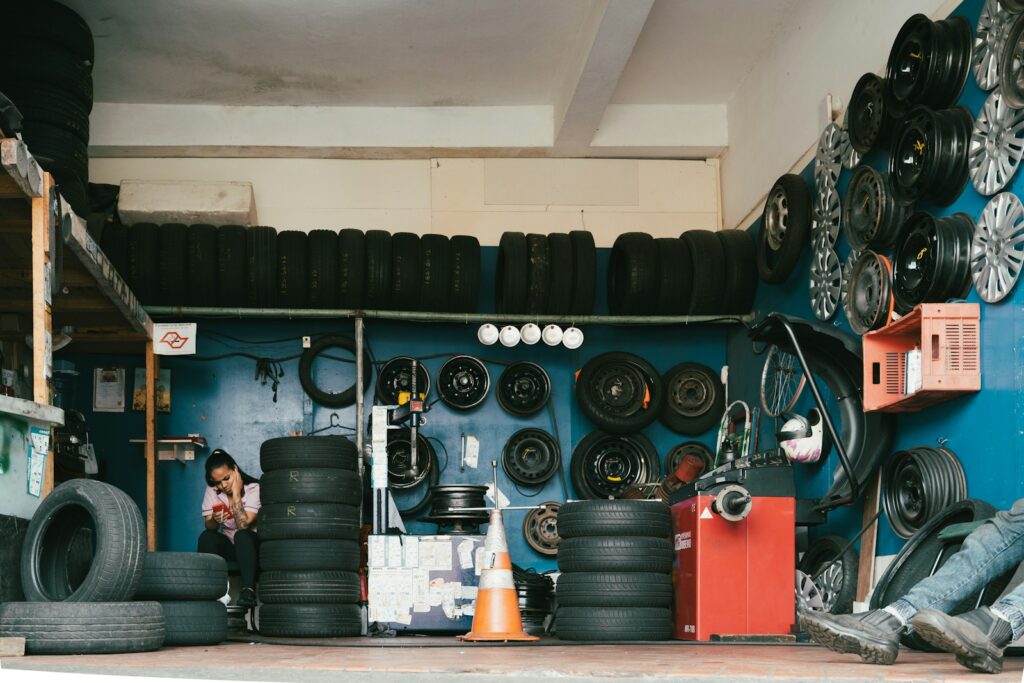
The shop was one of those busy, fluorescent-lit places wedged between a takeout spot and a discount furniture warehouse. The waiting area had a tired coffee machine, a TV stuck on daytime sports talk, and a pile of old car magazines curled at the edges. The customer—mid-30s, practical, not usually paranoid about mechanics—watched technicians hustle cars in and out and figured he’d be on his way in an hour.
What he didn’t know was that somewhere between the impact wrench noises and the half-shouted instructions, his wheel was about to become a future projectile. He found that out only after the car started talking back on the drive home, in that specific, unsettling way that makes you turn down the radio and start listening to your own fear.
The Drive Home Starts Feeling Wrong
At first it was subtle. He pulled out of the lot and the steering felt… off, like the car had picked up a faint wobble it didn’t have when he arrived. New tires can feel different, he told himself, and the road right outside the shop was full of patched asphalt and weird seams that could make any car feel twitchy.
But then it got louder. There was a rhythmic clunk that lined up with the wheel rotation, the kind of sound that makes you picture something loose slapping metal. He eased off the gas, trying to decide whether he was being overly sensitive or whether he was one pothole away from seeing his life flash in the rearview mirror.
He did what most people do when they’re trying not to spiral: he tested it. A gentle brake. A small turn. The clunk turned into a harsher knock, and suddenly the steering wheel felt like it had opinions. That’s when he pulled into a gas station, parked crooked on purpose, and got out to look.
What he saw wasn’t dramatic at first glance. The tire looked fine, no bulges, no shredded rubber. But the wheel itself had a faint gap and a grimy ring where it looked like it had been shifting against the hub, like it wasn’t seated right.
The Moment He Realizes It’s the Lug Nuts
He didn’t have a torque wrench in the trunk, but he did have the factory tire iron and a basic sense of what “tight” feels like. He popped off the hubcap (or stared at the lug area, depending on the wheel style) and put the wrench on the first lug nut. It moved with embarrassingly little effort.
Then the second one moved. And the third. Not a “break the seal and then it resists” move—just loose, like someone had started the job and wandered away. He felt that cold, sour drop in the stomach that isn’t panic yet, but is on its way there with a packed bag.
In his head he replayed the last few miles: the speed limit roads, the short stint where he’d accelerated to merge, the one bump he hit near the intersection. If he’d gone straight to the highway, or if one of those lug nuts had backed off completely… he didn’t even want to finish the thought.
He tightened them the best he could, in a star pattern like every roadside tire-change guide has ever begged people to do. But “best he could” wasn’t the point. The point was that a professional tire shop—one that charges professional prices and wears professional uniforms—had sent him out like this.
Back to the Shop, With the Kind of Anger That’s Too Quiet
He drove back slowly, hazards on for part of it, trying not to load that wheel with any extra stress. By the time he pulled into the shop’s lot again, the anger had settled into something controlled and sharp. Not screaming anger—more like the calm you get when you’re trying to keep yourself from doing something you can’t take back.
Inside, the same front counter guy was there, leaning on the desk like the day was dragging. The customer explained the situation plainly: he’d just been there, he’d just gotten tires, and his lug nuts were loose enough that he could turn them with the tire iron at a gas station.
The front counter guy did the first thing people do when they’re about to defend something indefensible: he blinked like he didn’t understand the words. Then he said something along the lines of, “Huh. That’s weird,” which is a fascinating response to “your work almost caused my wheel to come off.”
They pulled the car back in, and within a minute the customer could hear the familiar buzz of an impact wrench again. One of the techs came out and looked at him with a neutral face that read as bored, not alarmed, like this was an inconvenience on the schedule rather than a safety issue.
The Shop’s “Good News” Spin Starts to Get Under His Skin
Here’s where it stopped being a simple mistake and started becoming a story. Instead of an immediate apology or even a basic “that shouldn’t have happened,” the shop’s tone shifted into this weird, self-congratulatory relief. The message was basically: hey, at least you noticed and came back.
One employee—whether it was the service writer or a manager drifting over after hearing the commotion—framed it like a near-miss that reflected well on them. Like, “Good thing you brought it in, we caught it,” as if the shop had heroically prevented the exact problem it had created. The customer stood there blinking, trying to process the audacity of being treated like he should be grateful.
He pushed back, because of course he did. He pointed out that he caught it, not them, and that he’d only returned because the car was clunking like a shopping cart with a bad wheel. The employee’s face tightened in that way that says, “We’re done admitting anything,” and the conversation drifted into vague language about “settling” and “sometimes wheels can seat after driving.”
That explanation landed like gasoline on a fire. Wheels don’t magically “seat” by loosening lug nuts, and everyone in that lobby—every person who’s ever changed a tire—could feel how hard they were trying to make it sound normal. The customer could tell the shop wanted to slide the whole thing into the category of “one of those things,” sign nothing, apologize for nothing, and move on.
The Awkward Dance: What Does He Even Ask for Now?
Once the lug nuts were tightened properly, the shop seemed to expect the customer to disappear. No paperwork, no incident report, no “let’s check the other wheels,” no offer to re-torque after a few miles, no acknowledgment that this is the kind of error that can kill someone. Just a vibe of, “All set,” like they’d topped off his windshield washer fluid.
The customer asked for a manager directly, not because he wanted a scene, but because the way they were handling it was making him feel crazier than the actual mistake did. The manager—if it was a manager—came over with the posture of someone bracing for an unfair complaint. He didn’t deny that the lugs had been loose, but he talked like the real issue was the customer’s tone.
There was an attempt to reframe it as routine: “We rechecked it, it’s good now,” and, again, that weird implication that the system worked because the customer returned. The customer kept circling back to one point: he shouldn’t have been driving on loose lug nuts in the first place. The manager’s responses stayed slippery, focused on closing the loop rather than owning what happened.
By then, other people in the waiting area had gone quiet in that particular way strangers do when they’re trying not to stare but also can’t not listen. Nobody wants to imagine their own car rolling out of that bay with half-finished work. The customer felt the eyes on him and hated it, but he hated the shop’s casualness more.
He Leaves With Tight Lug Nuts and a Loose Sense of Trust
In the end, he drove away with the wheel properly secured, but the emotional math didn’t balance. The shop had fixed the immediate danger, sure, but they’d done it like they were correcting a typo, not addressing a potentially catastrophic failure. The customer didn’t get the one thing he actually wanted—an honest, straightforward “We messed up, and we’re sorry.”
On the drive home, every little vibration felt suspect. He kept imagining the wheel wobble returning, kept glancing at the dash like it might display a warning for “your tire shop forgot a basic step.” It’s a special kind of rage to realize you can’t even enjoy the relief, because the people responsible acted like you should be thankful they “caught it eventually” when you were the one who caught it before the road did.
And that’s the part that sticks: not just the loose lug nuts, but the shop’s insistence on turning a near-disaster into a customer service win. He left with a receipt that looked normal and a car that, for now, drove normal—yet the whole experience sat in his chest like a rattle he couldn’t tighten, the kind you hear again every time you pass a tire shop and wonder what “eventually” really means.
More from Steel Horse Rides: