

She’d bought the SUV on purpose, the way people do when they’re done pretending practicality is a personality flaw. It was a few years old, clean, paid off, and built like it could survive a minor apocalypse with nothing but regular oil changes and a slightly judgmental dashboard light.
Her boyfriend, meanwhile, had a coupe that looked like it belonged in a music video—low to the ground, shiny enough to reflect your regrets, and loud in a way that made parking lots feel like stages. He loved that car like it was proof he wasn’t “settling,” even when it spent more time needing repairs than actually going anywhere. And he loved teasing her about her “mom car” even more.
It started as a running joke and turned into a weird little power play. He’d smirk when she pulled up, call it her “soccer shuttle,” ask if it came with free orange slices. She laughed it off at first, mostly because she didn’t want to be the person arguing about a vehicle, but the tone always had that edge: he was cooler, she was boring, case closed.
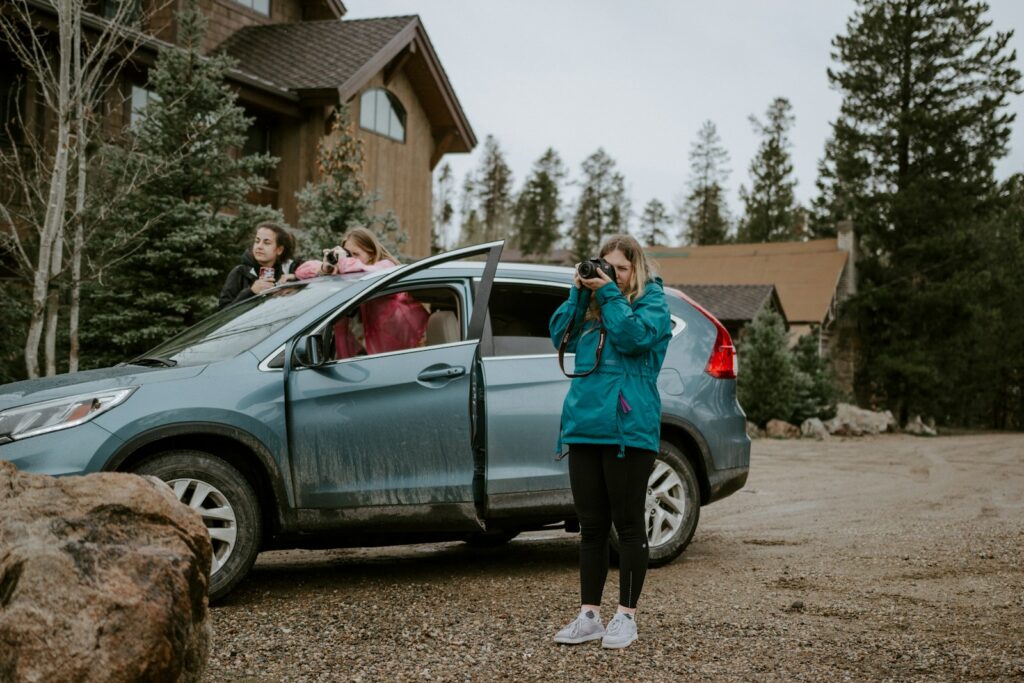
The “Mom Car” Jokes Weren’t Actually Jokes
The boyfriend had a habit of making his opinions sound casual while still making sure they landed. When she’d suggest taking her SUV on trips because it had space and decent gas mileage, he’d wave her off. He’d insist his coupe was “more fun,” even if it meant stuffing bags in the backseat like a game of luggage Tetris.
He wasn’t just teasing the car—he was teasing what it represented. The SUV meant she planned ahead, cared about maintenance, and didn’t get embarrassed by sensible choices. His coupe was all image and impulse, and he acted like her practicality was something she should apologize for.
One night they were out with friends, and someone complimented her on how clean and comfortable the SUV was. The boyfriend immediately jumped in with, “Yeah, she keeps it ready for the PTA meeting,” like he couldn’t stand a moment where her choice looked good. She laughed because people were watching, but she clocked it.
His Coupe Kept “Randomly” Breaking Down
The thing about flashy cars is they look expensive even when they’re cheap, and they break in ways that feel dramatic. His coupe had been towed more than once, always for something he described as “just a quick fix.” He’d say it like the universe was picking on him, not like he’d bought a temperamental car and then ignored half the maintenance schedule.
Every time it happened, it became a small crisis he expected her to help solve. He’d call from the side of the road, irritated and embarrassed, asking what she was doing and how fast she could get there. And every time, she’d show up in the “mom car” that somehow never left him stranded.
After the second or third breakdown, she started noticing a pattern: he mocked her SUV when he felt secure, and he relied on it when he didn’t. If she ever lightly pointed out the irony, he’d shrug and say something like, “Hey, at least your tank can handle it,” as if that was a compliment instead of an admission.
Still, she tried to keep things calm. She liked him, and she didn’t want to turn their relationship into a scoreboard. But the little digs piled up, especially because he never reciprocated the help in a way that felt equal—no “thank you” that actually sounded thankful, no offer to cover gas, no acknowledgement that his attitude was getting old.
The Breakdown That Turned Into a Full-On Request
Then came the breakdown that wasn’t a quick fix. His coupe died in the most inconvenient way possible: mid-errand, on a day he had plans stacked back-to-back, including a work meeting he couldn’t miss. He called her with that tight voice people use when they’ve already decided the situation is someone else’s problem.
He didn’t start with “Can you help?” He started with, “I need your car.” Not “a ride,” not “a pickup,” not “can we figure something out.” Just: he needed her SUV, for the day, maybe longer, because his was going to the shop again and the mechanic was “finally going to figure it out.”
She asked the obvious questions—where he was, what happened, how long he expected to have it. He got impatient, saying she was “making it complicated,” that he didn’t have time for this, and that she could just use his coupe if she needed a car. Which was funny, because his coupe was currently a silent metal sculpture waiting for a tow.
When she hesitated, he tried a softer angle, tossing in a “babe” and a half-laugh like she was being silly. Then he said something that snapped the whole situation into focus: “It’s not like your car is for anything important.” The “mom car,” in his mind, was basically background furniture.
She Didn’t Even Yell—She Just Finally Stopped Playing Along
She didn’t explode. She didn’t scream into the phone or do the dramatic hang-up. She just told him no, she wasn’t lending it out, and he’d need to sort out a rental or a ride-share or call a friend with a car he actually respected.
That’s when he got nasty. He reminded her—out loud—of all the times he’d “put up with” her car, like being seen near it was a sacrifice. He said she was being petty, and that couples help each other out, and that she was choosing a vehicle over him.
She told him she was choosing not to be treated like a backup plan. She brought up the jokes, the comments in front of friends, the way he acted like her SUV was embarrassing until it was convenient. She pointed out that if her car was so lame, he shouldn’t want to be caught driving it to his meeting.
He tried to backpedal, but in that way where the apology is really just irritation wearing a mask. He said he “didn’t mean it like that,” that she was taking everything too seriously, that it was “just teasing.” Then, without missing a beat, he asked again if she could just drop it off because he was running out of time.
The Awkward Fallout Was Louder Than the Engine Ever Was
He found another ride—begrudgingly, through a coworker—and showed up later with a mood he didn’t bother hiding. When she saw him that night, he acted like she’d publicly humiliated him, even though the only thing she’d done was refuse to hand over her keys. He kept making little comments under his breath about “not being able to rely on people.”
She didn’t engage at first, but it was hard not to notice how he talked about the situation like she’d failed a test. He complained about how expensive rentals were and how annoying it was to coordinate rides, clearly hoping she’d feel guilty enough to change her mind the next time. He also, somehow, still managed to insult her SUV—calling it “that tank”—while complaining he didn’t have access to it.
A couple days later, he tried a new approach: sweet, attentive, offering to take her out, acting like nothing happened. Then, right when the vibe started to feel normal again, he slipped in that his car would be in the shop “for at least another week,” and asked if they could “revisit” the SUV situation. It wasn’t a request so much as a negotiation he assumed he could win.
She told him she wasn’t revisiting anything until he addressed the bigger issue: the contempt. Not just the car jokes, but the way he treated her choices as lesser while expecting her to bail him out. He went quiet, then accused her of “overanalyzing,” which was basically his way of saying he didn’t want to talk about it unless it ended with him getting what he wanted.
The last detail that stuck with people was how small the original conflict sounded—just a car, just some teasing—until you zoomed in on the behavior. He’d mocked the thing that made her life easier because it didn’t give him status points, and the second he needed that same thing, he felt entitled to it. And she was left sitting in a relationship where her reliability was treated like a utility, not a trait he actually valued.
By the time his coupe was “almost fixed” again, the real question wasn’t whether it would break down next week. It was whether he’d keep treating her like the unglamorous support system behind his shiny little image, and whether she’d keep pretending that kind of disrespect was just part of dating someone who likes loud cars. The SUV was still sitting in her driveway, perfectly fine, but the trust in the passenger seat didn’t look nearly as sturdy.
More from Steel Horse Rides: