

Michelin’s new airless tires are changing the way people think about flat tires. Unlike traditional tires, these innovative wheels can’t go flat or suffer blowouts because they don’t rely on air to function. This technology offers drivers more peace of mind on the road, especially those tired of dealing with sudden tire failures.
The airless design means fewer interruptions and less maintenance, which can save time and money for everyday drivers and fleet operators alike. Tested on vehicles like the Chevy Bolt EV, these tires are ready to roll out to the public soon, promising safer and more reliable rides.
With major car makers like GM involved and real-world testing underway, Michelin’s airless tires could soon become a common sight on roads everywhere, making flat tires a thing of the past. For anyone who’s ever been stranded by a blowout, this is the kind of innovation worth watching. More details on this breakthrough can be found at Michelin’s official Uptis prototype page.
Michelin’s Airless Tires Hit the Road
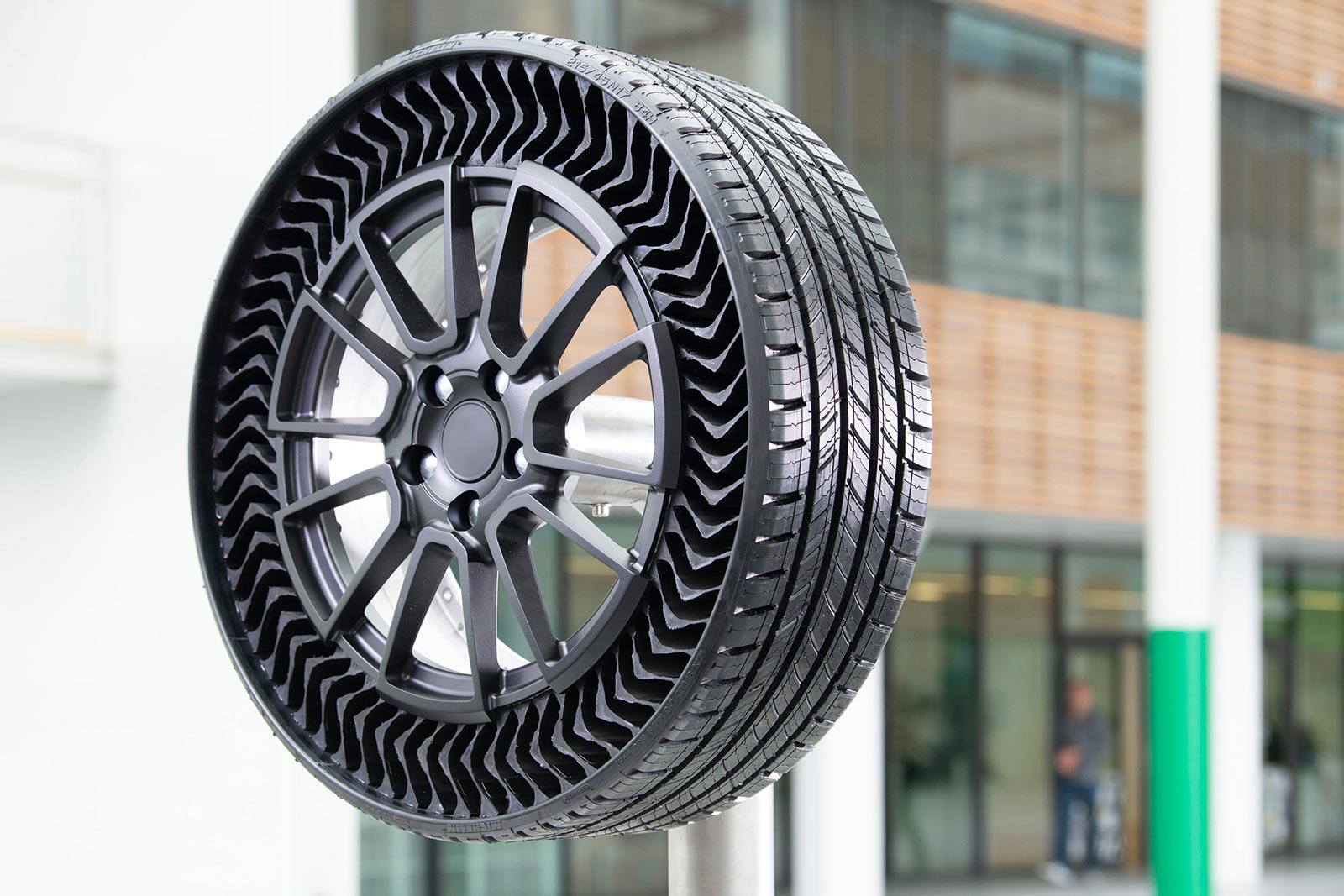
Michelin’s airless tires are a new take on traditional wheels, designed to avoid flats and reduce maintenance. They use a combination of advanced materials and engineering to replace the need for pressurized air inside the tire. This innovation could change how people think about tire durability and performance.
How Airless Tires Work
Unlike regular tires that rely on air pressure to support the vehicle, Michelin’s airless tire uses a solid structure made from rubber and fiberglass. This design eliminates the inner air chamber completely. The tire’s flexible spokes absorb shocks and provide support, keeping the ride comfortable without the risk of punctures.
Because there’s no air inside, these tires can’t go flat or blow out. Instead, they hold their shape and performance over time, even if damaged. The complex geometry of the structure is engineered to distribute weight evenly, maintaining grip and handling similar to traditional tires.
Benefits Over Traditional Pneumatic Tires
One major benefit is the elimination of flat tires. Drivers no longer have to worry about sudden blowouts or getting stuck fixing a puncture. This also means less downtime for fleets and fewer roadside emergencies.
Additionally, airless tires require nearly no maintenance related to air pressure. This reduces the need for regular checks and inflation. They also transfer less road noise into the vehicle, offering a quieter driving experience.
While they may be slightly heavier than traditional tires, their durability and service life can make up for that. The tires have been tested at speeds up to 130 mph, showing they can handle normal and high-speed use on public roads.
Michelin’s Unique Approach to Airless Tire Design
Michelin’s tire, called Uptis (Unique Puncture-proof Tire System), uses a patented combination of materials to balance flexibility with strength. The use of fiberglass enhances the tire’s toughness while keeping it lightweight relative to solid rubber alone.
Unlike earlier airless tire models, Uptis focuses on practical applications for passenger vehicles. It’s designed to mount on standard wheels without requiring major vehicle modifications. This approach simplifies adoption by automakers and consumers alike.
Michelin partnered with General Motors to test Uptis on electric vehicles, proving the concept in real-world conditions. The tests demonstrated improved safety by eliminating blowouts and reduced downtime for fleets, with near-zero maintenance needed on tire pressure. Uptis could reach the market soon, starting with models like the Chevy Bolt EV.
More details on Michelin’s development and testing of its Uptis airless tires can be found at this Michelin and GM partnership report.
Driving Changes: From Blowout Worries to Everyday Roads
Michelin’s airless tires address common driving problems like flat tires and blowouts, offering improved reliability. Their performance in real-world conditions has been closely monitored, and responses from drivers and industry experts shed light on the potential impact.
Real-World Road Testing and Performance
Michelin’s airless tire, dubbed Uptis, has undergone extensive testing, including high-speed trials reaching 130 mph. These tests show the tire holds up well under stress, maintaining stability and durability without the risk of losing air pressure.
The design eliminates the need for regular pressure checks and reduces downtime caused by flats. It can potentially last two to three times longer than traditional pneumatic tires, depending on driving habits and road conditions.
This tire is already being tested on passenger vehicles, confirming its feasibility for daily use. Early trials confirm consistent handling and comfort similar to conventional tires, but without puncture fears.
Impact on Driver Safety and Peace of Mind
Because airless tires can’t go flat, drivers experience fewer risks associated with sudden blowouts. This feature significantly improves road safety, especially on highways where blowouts can lead to accidents.
The elimination of sudden tire failure also benefits fleet operators by minimizing unexpected maintenance and adding reliability. Drivers can expect fewer roadside repairs and interruptions during trips.
Peace of mind rises as worries about punctures and tire pressure maintenance vanish. Drivers may focus more on driving quality and less on tire condition, improving the overall experience.
Industry Reactions and the Future of Airless Tires
Many in the auto industry see airless tires as a major step toward eliminating basic tire issues. Companies are watching Michelin’s Uptis closely as it could disrupt tire manufacturing and maintenance sectors.
Initial responses are optimistic but cautious since wide-scale adoption depends on cost, production scale, and compatibility with existing vehicles. The potential to reduce tire waste by hundreds of millions annually is a strong environmental incentive.
As testing expands, more automakers may incorporate airless tires into new models. This signals a shift toward durable, maintenance-free tires becoming standard rather than optional. For now, Michelin’s progress is a key milestone in tire innovation.
For more information on testing and impact, see Michelin’s Uptis airless tire trials at The Drive.