
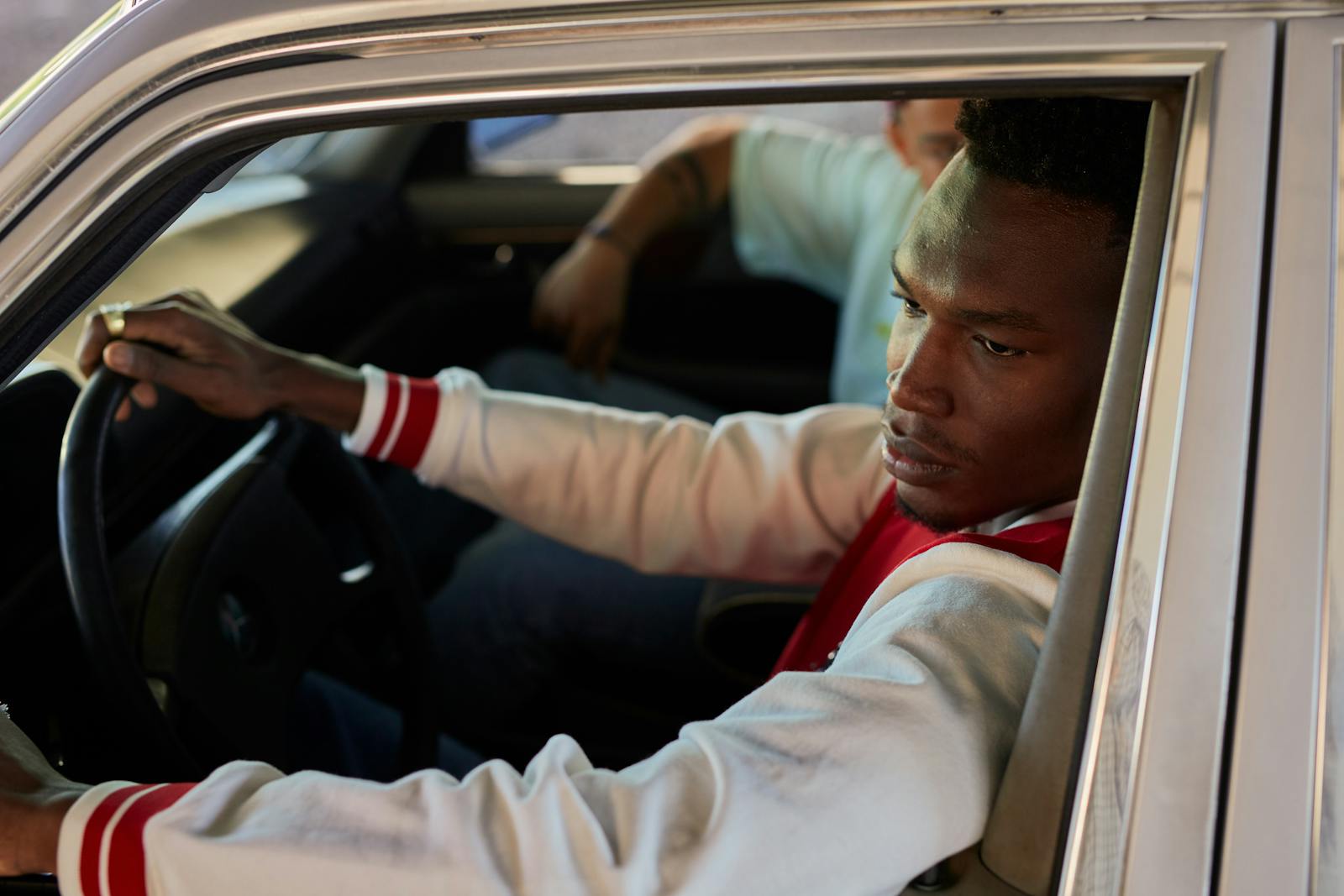

He’d been weirdly excited about it all week, the way people get excited about something they’ve built up in their head as a rite of passage. His dad had finally offered to teach him how to drive stick, like it was a secret handshake into adulthood. “We’ll go to the empty lot by the old hardware store,” his dad said, casual and confident, like this was going to be a chill Saturday morning thing.
He showed up with the kind of nervous energy you can’t really hide—checking his shoes for the right feel on the pedals, googling “friction point” one last time, rehearsing how to not look clueless. His dad tossed him the keys with that little smirk dads do when they think they’re about to demonstrate competence. The car was an older sedan with a clutch that felt like it belonged in farm equipment, but it ran, and the parking lot really was empty.
The first hint that this wasn’t going to be a patient lesson came before the engine even turned over. His dad adjusted the passenger seat, sighed like he was already tired, and did the whole “Okay, listen” voice—like his son had been arguing, even though he’d barely spoken. The son nodded, hands at ten and two, trying to look like a person who definitely belonged behind a manual transmission.
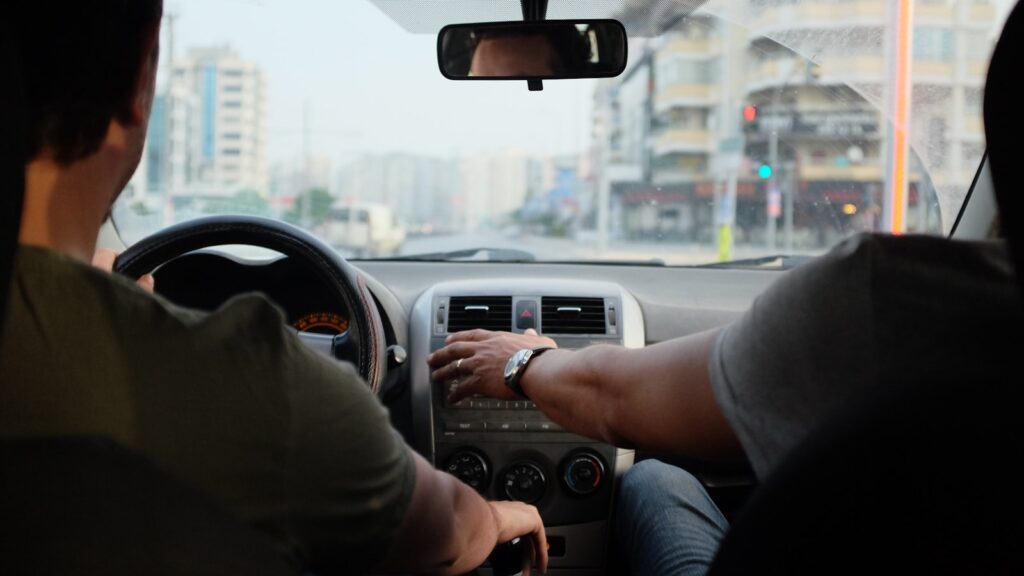
The “okay, you got it” phase lasts about thirty seconds
At first his dad actually tried. He pointed at the pedals—clutch on the left, brake in the middle, gas on the right—like the son hadn’t already memorized that from every driving video ever made. He explained the concept of the bite point, how you ease off the clutch while giving a little gas, how you’ll feel the car start to pull.
Then the son stalled it. Not dramatically, not with a lurch that launched them into a curb—just a clean stall, the exact thing every beginner does. The car shuddered and died, and the silence afterward hung for half a beat.
His dad exhaled hard, the kind of sigh that’s basically a performance. “No—no, no, no,” he snapped, like the son had intentionally turned the key off to be difficult. The son apologized automatically, already flustered, and tried to laugh it off like, okay, first stall, that’s normal.
They started again. He found the clutch, tried to hold it steady, and the car rolled a little before dying again. That’s when his dad’s voice jumped from annoyed to sharp, volume rising like someone had turned a dial.
Everything becomes a crisis: feet, timing, and the dad’s running commentary
It turned into one of those situations where the student can’t do anything right because the teacher won’t stop talking long enough for the student to think. “You’re riding the clutch—stop riding it,” his dad barked, while also telling him, “Give it gas—more gas,” and also, “Not that much, Jesus.” The instructions contradicted each other in real time, and the son’s foot started shaking the way it does when you’re trying to do something delicate and someone’s watching too hard.
Every movement got narrated like a sports commentator who hated the team. If the son looked down at the stick to make sure he was in first, his dad snapped, “Eyes up!” If he looked up, his dad said, “You’re not even paying attention to what you’re doing.” The son’s face went hot, and he got quieter, which somehow made the dad louder.
They made it moving in first gear for maybe thirty yards, creeping across the empty lot at a cautious pace. For a second the son’s shoulders loosened, like, okay, we’re doing it. Then his dad started pushing for second immediately—“Shift, shift, shift”—even though the son was still figuring out how not to stall in first.
The shift was rough. The son let the clutch out too fast, the car jerked, and his dad shouted an actual “What are you doing?” like the son had just swerved into oncoming traffic. It was an empty lot, but you’d think they were threading a needle between semis.
The parking lot audience arrives: a couple of strangers and one mortifying stall
The lot wasn’t as empty as it had looked from the street. A guy in a work truck parked near the far edge, eating something and scrolling his phone. Another car rolled through slowly, probably cutting across as a shortcut, and the son felt that specific dread of being observed while failing at something basic.
That’s when the worst stall happened—mid-turn, wheels cranked, the car making that dramatic bucking motion that feels ten times louder than it is. The engine died and the son froze for half a second, hands clenched on the wheel, trying to remember the sequence: clutch in, brake, neutral, start, back to first, breathe.
His dad didn’t give him the half second. “Hopeless,” he said, loud enough that it didn’t stay inside the car. Not a mutter, not a frustrated under-his-breath thing—he said it like a verdict. Then he added, “I don’t know how you can be this bad,” as if driving stick was supposed to be genetically inherited and the son had personally disgraced the family line.
The son’s throat tightened and he tried to restart the car, but his hands were shaking now, fingers clumsy on the key. He stalled again immediately because he was panicking, and the dad laughed in this short, mean burst. The guy in the work truck looked up, just briefly, and looked away again, which somehow made it worse—like even strangers could tell this was a private humiliation happening in public.
Control slips: the dad grabs at the lesson like it’s a steering wheel
At some point the dad stopped teaching and started trying to take over without switching seats. He reached toward the stick, pointing too close, his finger hovering like he was going to slap the son’s hand away from the shifter. He didn’t actually hit him, but he got physical in that impatient way—tapping the son’s knee, snapping his fingers near the console, gesturing aggressively at the pedals as if the son could see through the floorboard.
“You’re not listening,” his dad kept saying, while also not letting the son finish a single action without interrupting it. The son tried to explain that the yelling was making it harder, and that landed like an insult. His dad’s voice went colder for a second, which was almost worse.
“Oh, so it’s my fault,” his dad said, like he’d been waiting for an excuse to turn it into a bigger fight. Then he launched right back into it, louder: “You can’t handle basic instructions. That’s the problem. You just don’t think.” The son stared straight ahead, blinking too hard, doing that thing where you hold your face still so nobody can accuse you of being dramatic.
They tried again, and the car moved, sort of. The son managed a shaky loop around two empty spaces and the line of faded paint marking the perimeter of the lot. But he could feel his dad waiting for the next mistake, like a referee who already decided the outcome.
The lesson ends the way it started: with the dad sure he’s right
Eventually the son’s leg started to cramp from holding the clutch down so long, and his brain felt scrambled from the constant noise. He pulled the car to a stop and put it in neutral, engine idling, hoping for a reset. He said, quietly, that maybe they should take a break for a minute.
His dad took that as quitting. “Of course you want a break,” he snapped. “You always want to stop when something’s hard.” The son’s jaw tightened, and for the first time he pushed back—nothing huge, just a “Can you stop yelling? I can’t learn like this.”
His dad stared at him like he’d just been challenged in public, even though they were alone in the car. “I’m not yelling,” he insisted, while clearly raising his voice. Then he hit him with another “hopeless,” like it was a lesson in itself, and told him to get out so he could drive them home before the son “wrecked the clutch.”
The son switched seats without arguing, because arguing felt pointless and also because he could feel that tight pressure behind his eyes that meant he was close to tearing up. His dad peeled out of the parking space like he had something to prove, shifting smoothly, the car suddenly obedient in his hands. The son sat there watching the storefronts slide by, feeling embarrassed and angry in equal measure, thinking about how this was supposed to be one of those dad-and-son moments people talk about later.
By the time they got home, his dad was acting like the whole thing had been a normal lesson that simply revealed an inconvenient truth: the son “just wasn’t cut out for it.” He told him they’d “try again another time” in the same tone you’d use for someone who’d failed a simple test. The son went inside knowing the real problem wasn’t the clutch or the stick or the timing—it was that his dad wanted to be the guy who teaches, but only if the student magically arrives already good, and now there was this new, ugly memory sitting in the parking lot with the skid marks and the word “hopeless” still ringing in his ears.
More from Steel Horse Rides: