

She wasn’t even running late. It was one of those ordinary errand runs where you’ve got two kids in the back, a mental checklist of groceries, and just enough gas to justify a quick stop before heading home. The kind of drive where you’re half-listening to kid chatter and half-watching the fuel gauge like it’s judging you.
The whole thing kicked off on a stretch of road that didn’t seem like it could possibly produce drama. A few lights, a couple turns, nothing intense—until a stranger in another car decided something she did behind the wheel was unforgivable. Not “oops, that was close” unforgivable. More like “I’m going to make this my entire personality for the next ten minutes” unforgivable.
By the time she pulled into a gas station, she thought it was over. Then the other car turned in right behind her, tight and deliberate, like they’d both been invited to the same party and only one of them was actually welcome.
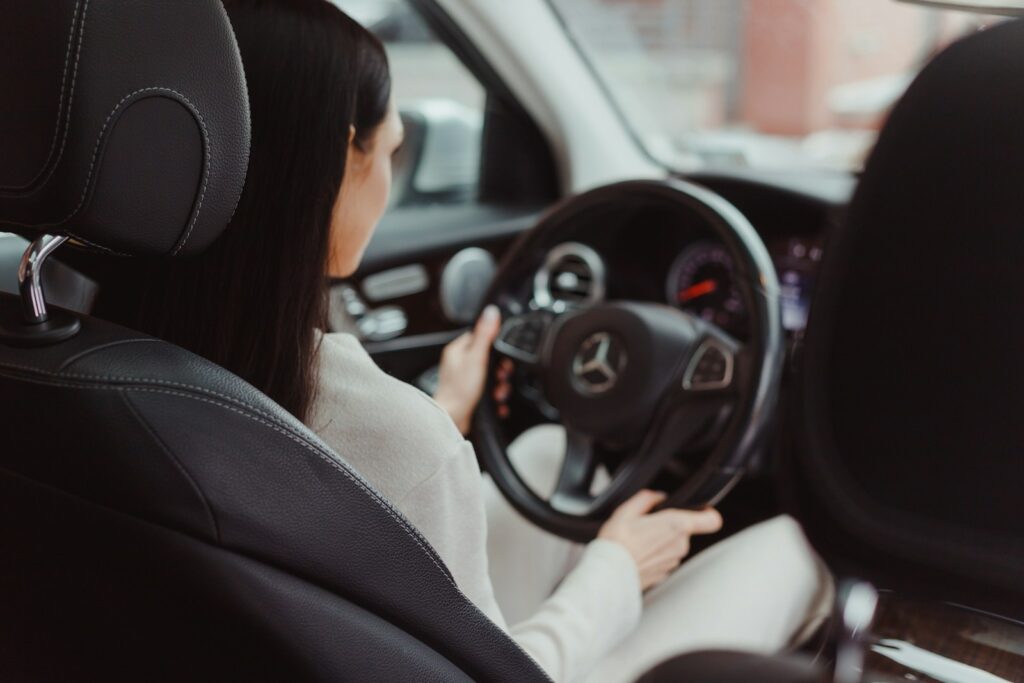
The little moment that lit the fuse
From the way she described it, the trigger was minor and stupid in the way road rage usually is. She had to merge or change lanes—something routine—and the other driver either felt cut off or decided she “didn’t signal long enough” or whatever invisible rulebook they were enforcing that day. She didn’t slam on brakes, she didn’t flip anyone off, she didn’t even honk back.
But she noticed the other car immediately ramp up: tailgating close enough that she could see the driver’s face moving around in the windshield, hands gesturing like they were conducting an orchestra. The car followed her through a light, then another, staying right on her bumper like it was attached. In her rearview mirror, it wasn’t just “annoyed driver” energy—it was locked-in, mission-mode energy.
She tried the usual de-escalation moves without making a big show of it. She slowed a little to encourage them to pass. She left extra space ahead, hoping they’d get bored and dart around. Nothing worked, and the longer it went on, the more she could feel her kids’ voices shift from normal chatter to that quieter tone kids get when they sense adults are about to do something weird.
Realizing she was being followed
At some point it stopped feeling like coincidence. She made a turn that wasn’t part of a straight route—more of a “let me see what happens if I change my path” kind of turn—and the other car mirrored it. That’s when her stomach dropped, because annoyance is one thing; commitment is another.
She didn’t want to drive home with this person behind her, especially with her kids in the car. So she picked a public place with cameras and people: a gas station she knew would be busy. In her head, it was simple—pull in, park at a pump, let them either keep going or look ridiculous if they followed her into a well-lit lot full of witnesses.
What she didn’t expect was the other driver to follow her in like they’d been waiting for this exact opportunity. Not just turning in after her, but choosing her lane, picking her pump area, and positioning the car with intention. The kind of intentional parking that says, “I’m not here for gas.”
The pump-blocking move
She pulled up to a pump, angled neatly like anyone does. Before she could even fully exhale, the other car slid in and stopped in a way that boxed her in—close enough that getting out would mean squeezing between vehicles, and awkward enough that it clearly wasn’t an accident. The stranger wasn’t trying to fuel up; they were trying to trap the moment.
And now she had to make a decision in real time. Stay in the car with the doors locked and risk escalating the person outside? Get out and pretend everything is normal? Drive off and risk them following again? Meanwhile the kids were watching, faces pressed toward the windows, picking up on every single cue in her posture.
She stayed put for a beat, hands on the wheel, scanning for employees or anyone nearby. Gas stations are strange stages for conflict—people are close enough to witness but far enough to mind their own business. She could see a couple of people at other pumps, the bright signage, the convenience store doors sliding open and shut. Ordinary life continuing while her little corner turned into a showdown.
“Learn how to drive” — the public scolding
The stranger got out first. Not cautious, not hesitant—quick, stiff movements like they’d rehearsed this in their head on the drive over. They walked up toward her driver’s side, close enough that it immediately felt invasive, and started yelling before she even rolled a window down.
“Learn how to drive!” the stranger screamed, loud and sharp, in that tone that’s less about the words and more about dominance. It wasn’t a conversation starter. It was a performance, and the audience was her kids sitting right there in the back seat.
She didn’t describe herself as someone who freezes easily, but this hit a different nerve because of the kids. There’s something uniquely enraging about a stranger deciding your children should witness them berate you in public, as if that’s a reasonable extension of being mad in traffic. Her first instinct was to keep the doors locked and not engage, because engaging is what people like this feed on.
But the kids were asking questions—small, anxious questions that made the whole thing feel more exposed. Why is she yelling? Did you do something? Are we in trouble? And the driver, trying to hold it together, had to do that parent thing where you speak calmly while your pulse is doing parkour.
The stranger kept going, repeating “learn how to drive” like it was a spell. The volume didn’t match the alleged offense. They pointed, waved their arms, leaned in toward the window as if proximity could make their argument stronger.
The standoff and the quiet after
She didn’t get out to confront them. She didn’t trade insults. She didn’t give them the dramatic back-and-forth they clearly wanted. She sat there, jaw tight, scanning for an employee or someone who might intervene, and trying to look steady for her kids.
Eventually, the stranger backed off—but not in a “my bad” way. More like, “I’ve said my piece and I’m satisfied,” the way someone walks away from an argument they started. They returned to their car like they were the righteous one, still throwing looks over their shoulder as if daring her to respond.
That part might’ve been the most unsettling: the calmness after the explosion. The driver could finally move, finally breathe, but she also knew the stranger had followed her once and could do it again. Even with the other car pulling away, she was stuck in that paranoid loop of checking mirrors and watching exits, wondering if they’d circle back.
She got gas anyway, because what else do you do when you’re trying not to let your kids see you rattled? She kept her movements clipped and purposeful, eyes flicking between the pump display and the lot. The kids were quiet now, the kind of quiet that isn’t peace so much as a room holding its breath.
When it was over and she drove away, the adrenaline didn’t just disappear. It lingered in her hands on the steering wheel and in the way she kept replaying the beginning, searching for the exact moment that “earned” that reaction. The ugly truth was that it probably didn’t matter what she did—this wasn’t about driving, or merging, or a signal. It was about someone deciding they could drag a stranger into a public punishment, right in front of her kids, and then disappear back into normal life like that was a reasonable way to spend an afternoon.
More from Steel Horse Rides: