
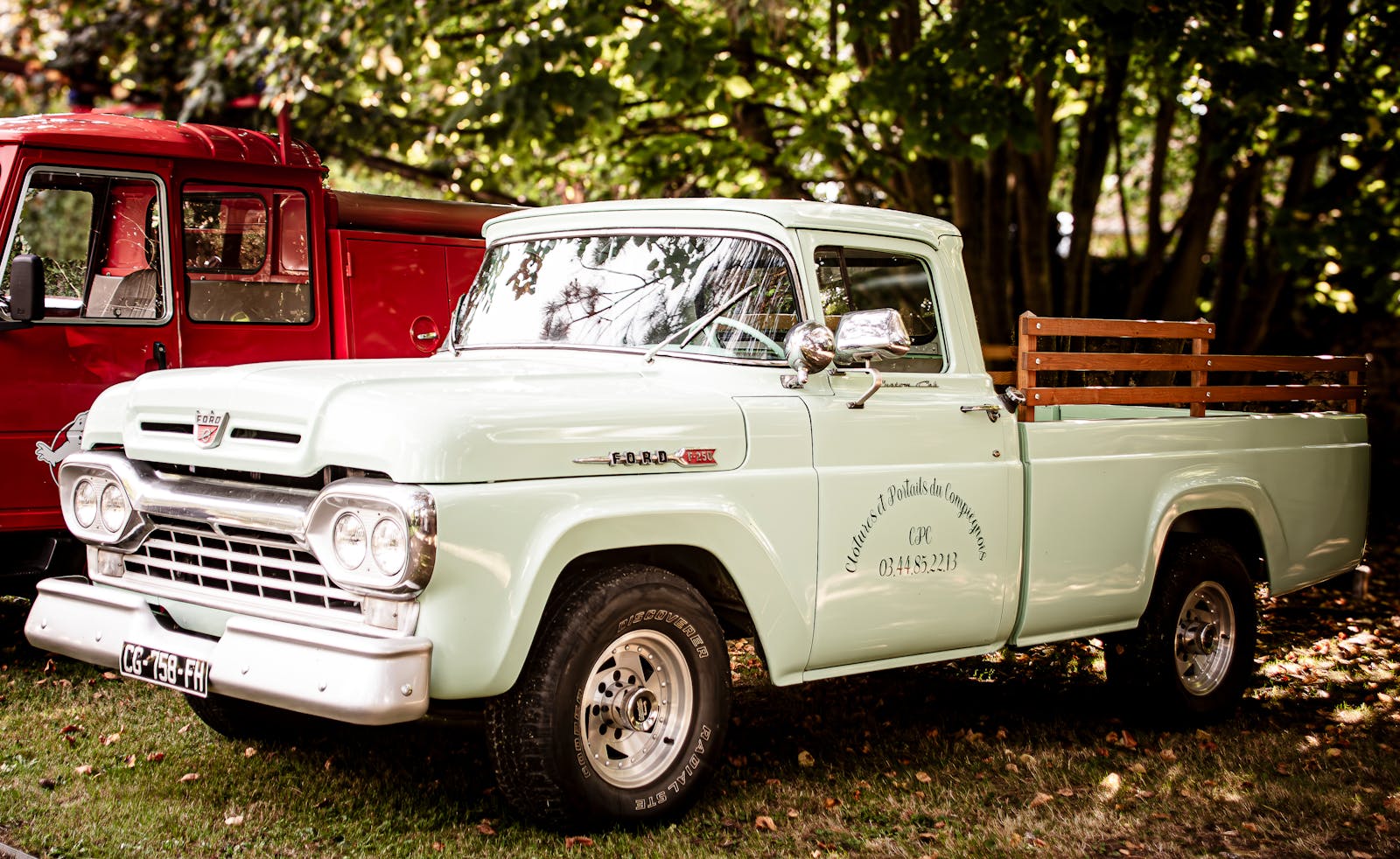

He’d been working on the truck longer than his youngest kid had been alive. Not “working on it” like a weekend hobby where you slap on a new grille and call it a restoration, either. This was the slow, obsessive kind: late nights in the garage, a space heater fighting winter air, receipts shoved into coffee cans, and hands that always smelled faintly like solvent no matter how much he scrubbed.
The truck was a classic—an old square-body pickup he’d found half-dead behind a barn, sun-bleached and rusted through in all the predictable places. He named it the way people name pets they swear they’re not attached to. Over the years it went from “that piece of junk” to “the project” to “my truck,” and every stage of that progression had its own price tag and argument attached.
And then, after years of grinding, sanding, searching for parts, and learning things the hard way, he finally got it where it looked right. Not perfect, not show-car precious, but the kind of clean that makes you stop and stare in a parking lot. That’s when his family started saying he should sell it—because, in their words, “it’s just sitting there.”
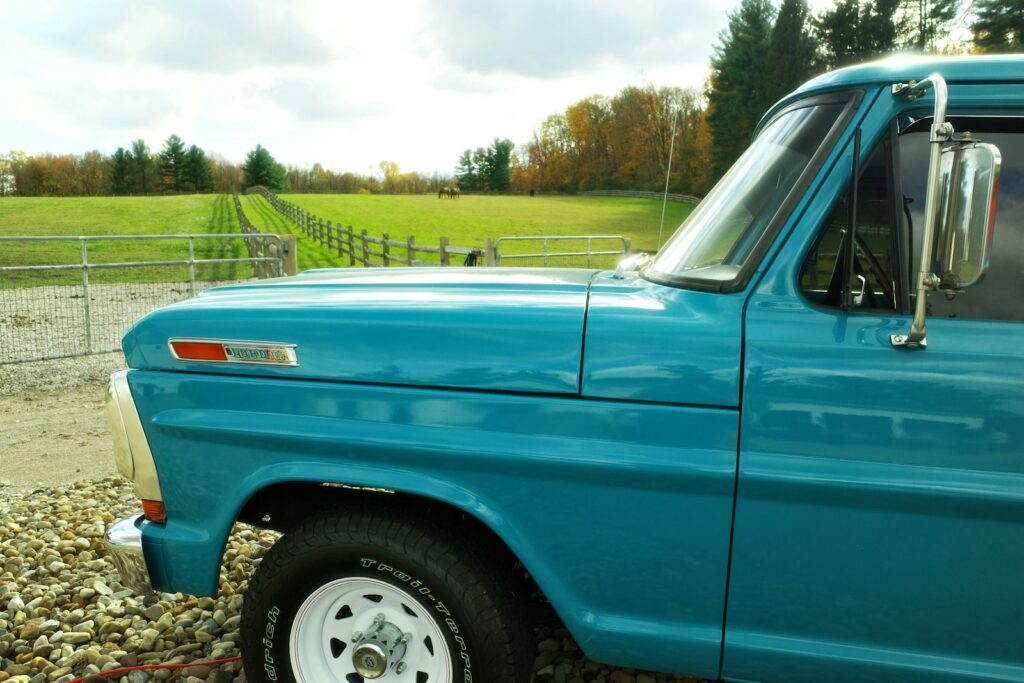
The long grind nobody sees
From the outside, it looked like he’d poured money into a driveway ornament. The truck spent a lot of time immobile in the garage, and when it wasn’t in the garage it was parked under a cover like a museum piece. His spouse and the kids mostly experienced it as an obstacle—something they had to walk around, something that ate weekends, something that made him say, “Give me twenty minutes,” and then vanish for three hours.
But his relationship with the truck was built on the unglamorous parts. He’d chased down a carburetor issue that turned out to be a vacuum leak, replaced wiring that looked like a nest of toasted spaghetti, and learned how to weld on thin, angry sheet metal without blowing holes through it. Any time a part didn’t fit, it became a lesson in patience and compromise, and he wore those lessons like a badge.
There were family moments wrapped up in it too, even if nobody wanted to admit it. One kid handed him sockets and asked a million questions until they got bored. Another one learned new vocabulary in the garage, the kind you don’t hear in school. His spouse took photos when it finally rolled out under its own power, mostly because they were surprised it ever would.
The “now what?” phase
Once it was done—done enough, anyway—the energy shifted in a way he didn’t expect. He’d spent years chasing a finish line, and when he crossed it, the truck didn’t turn into an everyday driver. He didn’t start using it for grocery runs or commuting; it was old, loud, and he didn’t trust other people not to dent it in parking lots.
So it sat. Not abandoned, not forgotten, but resting—washed, covered, battery tended, started up often enough to keep things alive. He’d take it out on nice weekends, maybe roll to a hardware store just for the excuse, and he’d come home with that calm, content look people get after doing something that feels like theirs.
That was when the rest of the household began treating it like an unsolved math problem. If he wasn’t driving it daily, what was the point? If it wasn’t making money, why was it taking up space? The truck went from “your hobby” to “your hobby that’s in the way,” and the tone changed from teasing to irritated, like the family had agreed on a new story about it without telling him.
The comment that lit the fuse
It started, according to him, with an offhand remark during a weekend cleanup. Someone was trying to rearrange the garage to make room for bikes and storage bins, and the truck—covered and still—was the obvious immovable object. His spouse said something like, “We could actually use this space if you sold it,” in that casual way people say things when they expect you to nod along.
He didn’t nod. He said no, immediately, the way you say no when the answer isn’t up for negotiation. That’s when the conversation picked up speed and got sharp edges, because the family had assumed “sell it eventually” was the natural end of the story.
His spouse kept it practical: the truck wasn’t a necessity, the garage was cramped, and there were expenses coming up—home repairs, a kid needing braces, normal life stuff. One of the kids, old enough to echo adult logic, chimed in with, “You don’t even drive it,” like that was the final, unbeatable point. Another kid called it “a waste of money” with the blunt confidence only a teenager can pull off.
He heard all of it as a dismissal. Not just of the truck, but of years of effort—every late night, every scraped knuckle, every time he’d chosen a part over something more immediately fun. He didn’t yell at first, but he went cold, and the coldness made everyone else bolder, like they thought he was finally ready to be reasonable.
Numbers, memories, and the insult hiding in “just”
The phrase that kept coming up was “just sitting there,” and it got under his skin because of the word “just.” It wasn’t “sitting there” like a thing you love resting between uses. It was “just” as in pointless, dead weight, an object that should justify its existence by being productive.
He tried to explain what it meant to him, and it came out clumsy because feelings often do. He talked about how restoring it kept him sane during stressful stretches, how it gave him something that was his, how he liked knowing he could bring an old machine back from the brink with his own hands. He talked about how selling it now would feel like ripping the last chapter out of a book after writing the whole thing.
His spouse countered with the kind of logic that sounds airtight in a kitchen argument. “If it’s worth something now, that’s the perfect time to sell.” “We could use the money.” “We need the space.” They weren’t wrong about any individual point, which made it worse, because he couldn’t dismiss it as nonsense.
Then it got personal in a way that didn’t feel intentional but still landed like a slap. Someone implied he cared more about the truck than the family, or at least more than the family’s comfort. His spouse mentioned how often he disappeared into the garage over the years, how many weekends got eaten by “one more thing” on the truck, and how the whole house had adjusted around it while he treated it like a sacred object.
He shot back that nobody was complaining when he was spending his own time doing something that didn’t involve bars or gambling or whatever other midlife-crisis cliché people like to fear. He reminded them he’d never taken family money without discussing it, that he’d sold other things to fund parts, that he’d skipped vacations and nice purchases to keep the budget steady. The problem was, the more he defended it like a ledger, the more it sounded like he was putting a price on his devotion.
The stalemate that made the house feel smaller
After the blowup, the truck became a presence in the house even when nobody was in the garage. Dinner conversations got weird and cautious, like everyone was tiptoeing around a sleeping dog. His spouse would mention the garage mess and stop halfway through the sentence, like they could feel the argument waiting.
He started going out to the garage more, not less. Part of it was stubbornness—if everyone was going to treat it like a burden, he was going to at least enjoy the thing. Part of it was avoidance, because it’s easier to adjust a throttle cable than to navigate the feeling that your family doesn’t respect what you poured yourself into.
At one point, his spouse tried a softer approach. They suggested a compromise: maybe he could sell it and start a smaller project, something that didn’t dominate the garage. Or he could rent a storage unit and keep it there, which he heard as, “Put your weird passion out of sight.” The idea of paying monthly to hide his own truck made him laugh once—short and humorless—and after that, the conversation died again.
The kids took cues from the tension. One treated the truck like a joke, making comments whenever it came up, pushing that sore spot because teenagers can’t resist a button they know works. Another kid stopped going into the garage at all, like the truck had become the symbol of a fight they didn’t want to be part of.
And the truck itself sat exactly where it always had, covered, clean, ready to run. The irony was that he probably would’ve driven it more if he didn’t feel like he was being watched, evaluated, and measured every time he lifted the cover. Now every potential joyride came with the imagined chorus of, “See? You only use it once in a while.”
By the time the dust settled, nobody had won. The family still wanted the space and the money, and he still couldn’t stomach the idea of handing over the keys to something he’d rebuilt piece by piece. The truck wasn’t just sitting there anymore—not really. It was parked in the middle of an argument about value, time, and what counts as a “real” reason to keep something, and the worst part was that the longer it stayed, the more everyone started acting like the truck was the one making the house feel crowded.
More from Steel Horse Rides: