

She’d gone in for the boring, responsible kind of errand: new tires before a road trip turns into a roadside problem. It was a weekday afternoon, the kind where you’re juggling school pickup times, snacks in the backseat, and the quiet satisfaction of checking one more thing off the list. The shop was busy but not chaotic, and the whole point was to leave with a safer car than the one she arrived in.
Her kids were with her, strapped in and restless, watching the little TV bolted to the waiting room wall while she signed the paperwork. The tech behind the counter kept it casual—“You’re good, we’ll have you out in an hour”—and she believed him because why wouldn’t she? Tires are tires, lug nuts are lug nuts, and this is the part of adult life you’re supposed to be able to outsource to professionals.
Less than a day later, she was on the highway with those same kids, doing normal highway speed, when her steering wheel started talking back. Not figuratively. The car developed that nasty, wobbling shudder that makes your stomach drop because you don’t know if it’s road noise or the start of something catastrophic. She started easing off the gas, reaching for the hazard lights, already doing that mental math of “okay, shoulder, okay, keep it straight,” when the front corner of the car suddenly dipped and something metal screamed against asphalt.
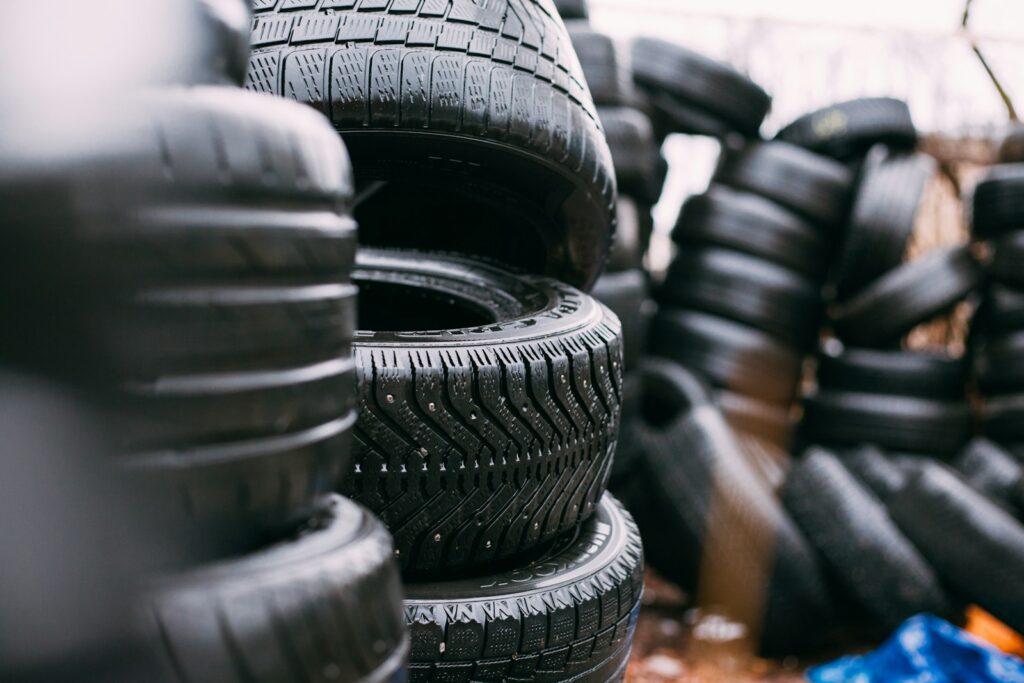
The “new tires” errand that felt totally normal
According to her account, she’d picked a mid-tier chain tire shop because it was convenient, had decent reviews, and she didn’t feel like playing phone-tag with three different places for quotes. The car wasn’t acting up when she drove in. No vibrations, no warning lights, no mysterious clunks—just tires that were getting bald enough to make her nervous in rain.
In the shop, everything sounded standard. They recommended a set, she agreed, they rotated and mounted, and she paid. The only tiny red flag—one she didn’t clock until later—was how fast they pushed her out the door once the car rolled around front, like they were trying to clear the bay for the next vehicle.
When she asked if there was anything she needed to do afterward, she said she got the usual line: come back in a few weeks for a re-torque, check pressure, standard maintenance stuff. No one said, “Hey, if you feel any vibration, stop immediately,” or “If anything sounds off, don’t drive it.” She buckled her kids in, merged back into traffic, and went on with her day.
The highway wobble that turned into a wheel leaving the chat
The next time she took the car onto the highway, it started subtle. A faint shimmy at first, the kind you can almost convince yourself is just the road surface or wind. Then it got louder and more insistent, a rhythmic thump-thump-thump that doesn’t match any pothole pattern.
She said she did what most people do when something feels wrong at speed: slowed down, turned the music off, tried to keep her movements calm so she didn’t spook the kids. The problem was, the car had already passed the point where “calmly pull over” was an option. The wheel didn’t just wobble—it separated.
It’s hard to describe how violent that is without sounding like you’re exaggerating, but anyone who’s seen it knows. The car drops hard, the brake rotor grinds, and the whole vehicle yanks toward the side like it wants to swap lanes without permission. She managed to muscle it onto the shoulder with sparks and a horrible scraping noise, kids crying in the backseat, and her own hands shaking so badly she couldn’t immediately get the hazard switch to click.
When she got out and looked, the wheel was gone. Not “loose,” not “tilted,” not “missing a lug”—gone, sitting further down the shoulder like it had made its own decision. Back at the car, the studs were exposed, and the hardware that should’ve been securing everything looked like it had simply backed off and disappeared.
The first call: “That doesn’t just happen”
She called the shop from the shoulder because in her head there was a simple, terrifying conclusion: someone didn’t tighten the lug nuts. It’s not a complex failure mode. Wheels don’t usually evacuate the vehicle unless the most basic fastening job didn’t happen correctly.
The person who answered didn’t come in hot at first, but they weren’t exactly alarmed either. They asked what road she was on, what tire was involved, whether she hit anything. She said no—no pothole, no curb, no accident, just normal driving and then the wheel left.
Then the tone shifted into that defensive customer-service cadence that means “we’re already building a story where this isn’t us.” She said she heard things like, “Our techs torque everything to spec,” and “If the wheel was installed properly, it wouldn’t come off,” which is a sentence that loops in on itself in a way that’s almost impressive. It was basically: if the wheel came off, then it can’t be our fault, because we don’t do things that cause wheels to come off.
She told them her kids were in the car. She said she was shaking. The response, as she described it, wasn’t sympathy so much as suspicion—like mentioning her kids was a tactic, not a fact. And then came the line that set her off: they started implying her driving must have caused it.
Back at the shop: the blame game in fluorescent lighting
Once the car was towed—because there’s no roadside fix for “missing wheel”—she went back to the shop in person. That’s when it became less of a scary mechanical failure and more of a messy human standoff. She expected someone to at least look panicked on her behalf, or to treat it like a serious safety incident.
Instead, she said she got a manager who acted like he was dealing with a difficult return at a retail store. Calm voice, stiff posture, lots of “let’s keep this professional,” even though she wasn’t the one who’d sent a family onto the highway with unsecured wheels. He asked if she’d “checked the lug nuts after leaving,” which is one of those questions that sounds reasonable until you say it out loud and realize how absurd it is to expect customers to inspect critical fastening work immediately after paying a professional to do it.
They kept circling back to “impact.” Had she hit a curb? Did she drive aggressively? Did she take a corner too fast? She said she felt like she was being interrogated for reckless driving when she’d been doing the speed limit and trying to keep juice boxes from exploding in the backseat.
At one point, she described them claiming that if their work had been the problem, she would’ve noticed sooner—like the highway incident proved it couldn’t be them. But loose lug nuts often announce themselves gradually: a vibration, a knock, a worsening wobble. In other words, exactly what she said happened right before the wheel came off.
The receipts, the missing hardware, and the quiet part out loud
What made her story stick wasn’t just the danger—it was the weird mismatch between the physical evidence and the shop’s confidence. She still had the receipt with the date and service listed. The car had been in their care, and the failure happened soon after.
She said she asked them to show her their torque logs or the checklist for the job. If they were so sure it was done right, they’d have some record, right? The answer she got, according to her, was a lot of vague talk about procedures without anything concrete to back it up.
Meanwhile, the missing lug nuts weren’t a philosophical argument. They were literally missing. Either they were not tightened and vibrated off, or they were tightened so poorly that they backed off, or something in the install process went catastrophically wrong. The shop’s insistence that her driving style could cause multiple lug nuts to disappear at highway speed sounded less like expertise and more like damage control.
She wasn’t asking for a gift card. She wanted them to take responsibility for the tow, the damage to the car, and the fact that her kids had been in a situation that could’ve turned into a headline no one wants to read. The shop, she said, treated it like an inconvenience she was bringing into their day.
Where it left her: a car in pieces and a trust problem that doesn’t tow away
In the end, the most unsettling part wasn’t even the sparks on the shoulder or the wheel sitting down the highway like a runaway shopping cart. It was how quickly the conversation turned into “prove it” when she was standing there with a vehicle that had clearly been assembled incorrectly. She left with her car still not right, her kids still rattled, and a manager who seemed more worried about liability language than the fact that a family almost lost control at speed.
And that’s the tension that hangs over the whole thing: she can replace parts, pay for repairs, and maybe even force a resolution through the right channels, but she can’t un-feel the moment her car dropped on the highway. The shop’s version of events required her to believe she’d somehow driven a wheel off the car through sheer bad vibes, and she couldn’t stop thinking about how easily that excuse might work on someone too tired to fight it. The wheel came off once; the bigger problem was realizing how fast a place will let you carry the risk when they’re the ones who created it.
More from Steel Horse Rides: