

It started the way a lot of neighborhood dramas start: with something small that felt off, and a person trying to talk themselves out of overreacting. She’d noticed her Jeep didn’t feel exactly the way it usually did, like the seat was nudged back and the mirror was angled slightly wrong. The kind of details you only clock when it’s your own car and you’ve sat in it a thousand times.
She told herself it was nothing. Maybe she’d adjusted the seat yesterday and forgot. Maybe the mirror got bumped when she tossed groceries in. But then she saw the mileage. Not a ton, just enough to make her stomach do that slow drop, because she hadn’t driven it since the weekend.
The Jeep was parked in the same spot on the street like always, no smashed window, no dangling wires, no obvious signs of a break-in. That was the weird part. It didn’t look stolen. It looked… borrowed.
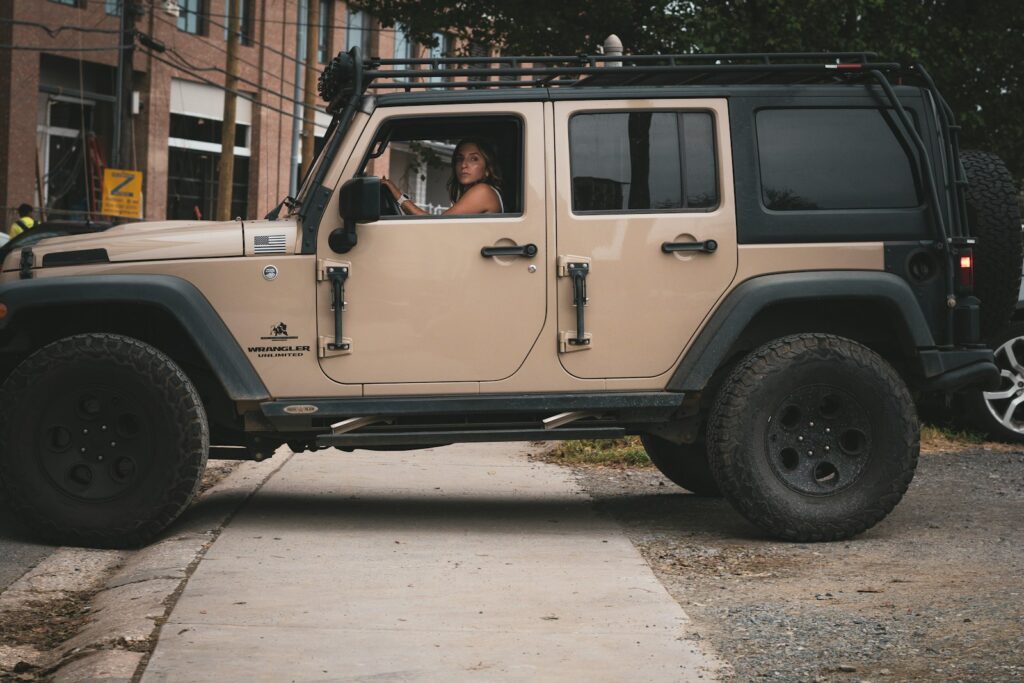
The little clues that didn’t add up
She did a quick, obsessive sweep the way people do when they’re trying to prove themselves wrong. Doors locked? Mostly. Glove box? Closed. Nothing missing inside, not even the ratty charging cable she kept meaning to replace. But the center console was slightly ajar, like someone had rummaged and then remembered to make it look neat again.
Her spare key was the next thought, and it hit her like a splash of cold water. She kept a hide-a-key in one of those magnetic boxes under the frame, because her work schedule was chaotic and she’d locked herself out once and sworn never again. She slid her fingers under the spot she always used and came up with nothing but dirt.
Now it wasn’t “maybe I forgot.” Now it was “someone knew exactly where to reach.” She stood there staring at the Jeep, doing that quiet math people do when they’re trying to decide whether they’re being paranoid or practical.
She didn’t call the cops immediately. First, she did what most people do when they think they can solve it with one uncomfortable conversation: she looked around the block. And that’s when she noticed the neighbor’s teenager outside, washing his hands at the hose like he’d been working on something greasy.
When “just asking” turns into a confrontation
She didn’t storm over screaming. She walked up and asked, in a voice that was trying hard to stay normal, if he’d seen anyone near her Jeep. The teen’s face did that split-second flicker—blank to alarm to overdone innocence—like he was cycling through scripts and couldn’t decide which one fit.
He shrugged and said no, not really, maybe some kids walking by earlier. But she couldn’t stop staring at his shoes, because there was dust on them that looked exactly like the pale grit from the dirt lot near the back of the subdivision. The same lot where people sometimes did donuts when no one was looking.
She pressed, lightly at first. “You sure? Because my spare key is gone.” He laughed, a little too quickly, and said, “That’s crazy,” then immediately asked if she wanted him to help her look for it. It was the kind of offer that sounds helpful until you realize it’s also an attempt to steer the situation.
She didn’t accuse him outright. She went home, checked her doorbell camera, and found the part that made her hands go cold: the Jeep rolling past at around 11:30 p.m. the night before, headlights on, moving slow like the driver didn’t want to draw attention. The camera angle didn’t catch the face, but it caught the shape of a hoodie and the way the driver hunched forward like they weren’t used to the seat position.
The joyride that wasn’t supposed to be a “big deal”
She walked back over to the neighbor’s house, video pulled up and ready. This time she asked for his parents, because whatever was going on didn’t feel like a casual teen mistake anymore. It felt like someone had taken her vehicle, at night, without permission, and then put it back hoping she wouldn’t notice.
The parents came to the door with that wary politeness people use when they already suspect why you’re there. She explained, kept it factual: spare key missing, mileage added, video showing her Jeep out late. She didn’t even say their son’s name at first, just asked if they knew anything about it.
The mom’s expression tightened in a way that suggested she was doing damage control in her head. The dad immediately went into that defensive posture—arms crossed, chin lifted—before anyone had even been accused. Then the teen wandered into the hallway behind them, and the mom shot him a look that wasn’t confusion so much as “do not make this worse.”
That’s when the story changed from “mystery” to “weird, messy confrontation.” The teen mumbled something about “just checking it out,” like he’d taken a look inside, not taken the whole thing for a drive. She played the video of the Jeep leaving, and the dad actually scoffed and said it could be anyone’s Jeep, as if hers was just a generic vehicle sliding through the frame.
“He was just curious” and the parenting version of denial
Eventually, the teen admitted it, but in the most minimized, half-swallowed way possible. Yeah, he found the spare key. Yeah, he drove it “around the neighborhood.” He said it like that should close the matter, like “around the neighborhood” meant safe, harmless, practically a lap around the driveway.
The mom jumped in fast with the line that would become the sticking point: “He was just curious.” The phrasing was wild, because curiosity is for borrowing a book or asking questions, not taking a 4,000-pound vehicle into the dark with zero permission. The dad followed it up with a complaint about “kids being kids” and how calling police would be “ruining his life over a mistake.”
She asked a simple question: “What if he hit someone?” And the parents did that thing where they talk past the point. The mom insisted he’s a good kid, he’d never hurt anyone, he was only trying to see how it drove. The dad said he’d already “handled it” by grounding him and making him apologize.
But then came the part that made her realize they weren’t taking it seriously: they asked her not to make it “a whole thing,” because the teen was applying for jobs and “a police report would look bad.” Not “we’re sorry,” not “we’ll pay to rekey it,” not “we’ll make this right.” Just a request for silence wrapped in parental worry.
The call she didn’t want to make
She left their porch with that buzzing, shaky anger that feels like your body trying to decide between crying and yelling. Back in her house, she stared at the spare-key spot again, empty and muddy, and thought about how easily it happened. If he could find it once, someone else could find it too.
So she called the non-emergency line and made the report. She gave them the video, explained the spare key was taken, and said she believed the neighbor’s teen had driven the vehicle without permission and returned it. It wasn’t a dramatic 911 scene. It was the slow, deliberate kind of call that feels like crossing a line you can’t uncross.
The officers showed up later and, predictably, the situation instantly got ten degrees more tense. The parents’ tone changed the moment uniforms were involved—less “please understand” and more “this is ridiculous.” The teen suddenly looked small and scared, which would’ve hit differently if she hadn’t watched his parents try to smooth it all over like her car was a community resource.
And of course the parents leaned hard into the “curious” narrative with the police too, emphasizing that the Jeep was returned, that nothing was damaged, that it was a “stupid kid choice.” The officer asked the practical questions: how did he get the key, did he have a license, where did he drive, did he have permission. Every answer made the parents more irritated, because the questions made it sound like what it was—unauthorized use of a vehicle.
The fallout that keeps spreading
Afterward, the immediate crisis shifted into something more awkward: living next door to people who now saw her as the villain. The teen avoided her entirely, which was fine, but the parents started doing petty, passive things. No more waves. Doors closing a little harder than necessary. The mom’s tight smile that didn’t reach her eyes if they crossed paths at the mailbox.
She replaced the spare key situation immediately—new key, new hiding spot, and then eventually no hiding spot at all. She also started double-checking her doors, her camera, her everything, because the unsettling part wasn’t the extra miles. It was the feeling that her sense of basic privacy had been punctured by someone who thought “curious” was an excuse.
There was also the question nobody could answer cleanly: what actually happened during that drive. The teen claimed it was just around the neighborhood, but the dust on his shoes and the slight smell in the Jeep—faint, like burned rubber—made her wonder if “around the neighborhood” included showing off to a friend or pushing the gas on an empty stretch.
The parents kept insisting she’d overreacted, that she could’ve “handled it like an adult” by letting them discipline him privately. But that argument only works if the adults involved act like adults about the harm, and they didn’t. They wanted control of the consequences without acknowledging the risk, and they wanted her cooperation without giving her any real reassurance it wouldn’t happen again.
By the end of it, the Jeep was still in her driveway, but the neighborhood felt different. She’d learned exactly how thin the line is between “friendly neighbors” and “people who think your stuff is available if their kid wants it,” and the worst part was knowing the parents truly believed their son’s curiosity should matter more than her right to feel safe. The cops could file a report and the family could simmer behind their curtains, but that uneasy question stayed parked in the space between the houses: if he was willing to take it once and they were willing to excuse it, what else were they willing to call “just curious”?
More from Steel Horse Rides: