

He’d waited three weeks for the right listing to pop up: a clean-looking sedan, mid-mileage, “babied,” “dealer-maintained,” and—his favorite phrase—“perfect, no issues.” The seller sounded like the kind of person who’d alphabetize receipts for fun, calm and confident on the phone, almost offended by the idea that anything could be wrong. So when the buyer showed up with cash and a cautious optimism, he was already halfway convinced.
The car looked good in the driveway, too. Fresh wash, shiny tires, interior that smelled like someone had tried to erase a life’s worth of fast food with one aggressive air freshener. The test drive was uneventful, which is exactly what you want when you’re praying you’re not about to buy a rolling problem. And the seller kept repeating it like a mantra: “It’s perfect. You won’t need to do a thing.”
The buyer still did the one thing everyone tells you to do and almost nobody does: he booked a pre-purchase inspection at a local mechanic for the very next morning. He didn’t tell the seller until after the handshake, because he’d already heard enough stories of people suddenly getting “busy” the second a shop gets involved. The seller didn’t object, exactly—he just did that tight little laugh and said, “Sure, go for it. They’ll tell you what I told you.”
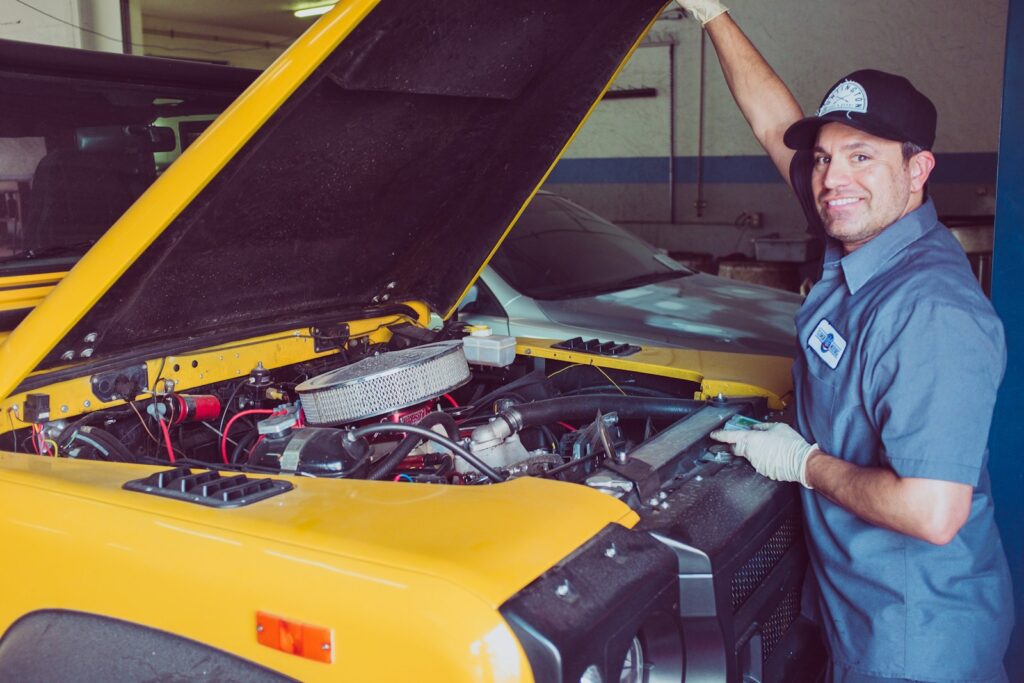
The “quick look” that turned into a slow walk
The mechanic didn’t start with anything dramatic. Hood up, flashlight out, the usual routine—checking fluid levels, looking for obvious cracks, tugging hoses with the casual confidence of someone who’s seen every possible way a car can lie. The buyer stood a few steps back, trying not to hover but also trying to absorb every expression change like it was a verdict.
At first, it was small stuff. A clamp that wasn’t positioned quite right. A wire loom that looked like it had been manhandled. The mechanic didn’t say much, just made little noises that weren’t quite “uh-oh” and weren’t quite “nothing.” Then he leaned in toward the front of the engine bay, paused, and asked, “Did he mention any recent work?”
The buyer said the seller claimed it was all routine maintenance, nothing major. Oil changes, brakes, “always on time.” The mechanic nodded like that answered something, and then reached down behind a plastic cover and tugged lightly. Something didn’t move the way it should’ve, and the mechanic’s eyebrows did that subtle lift that makes your stomach sink before you even know why.
Duct tape where it had no business being
He pointed it out without fanfare, which somehow made it worse. A strip of duct tape was wrapped around a section near the intake tubing, not even neatly—just enough to look intentional from a distance. It wasn’t the kind of tape you use to bundle wires temporarily; it looked like the kind of tape you use when something’s split and you’d like to pretend it hasn’t.
The buyer tried to offer an innocent explanation, because that’s what people do when they’re staring at evidence that they might’ve made a mistake. “Maybe it’s just holding something until a proper clamp—?” He didn’t finish, because the mechanic had already peeled the edge back with a pick.
Underneath, the rubber had a hairline tear that wasn’t catastrophic yet, but it was the kind of crack that turns into a whistle, then a rough idle, then a dashboard light, then a weekend ruined. The tape wasn’t a temporary “get home” fix. It was positioned like someone wanted it to pass a casual glance, long enough to sell the car to someone who didn’t know what they were looking at.
The mechanic didn’t accuse anyone out loud. He just said, “This is… creative,” and moved on, which is what made the buyer’s face get hot. Because “creative” was mechanic-speak for “somebody’s been hiding things.”
The missing bolts and the uneasy math of “recent work”
Once you see one questionable fix, everything starts to look suspicious. The mechanic started checking covers and brackets, giving them little tugs, looking for proper torque marks. That’s when he noticed it: a couple of bolts missing from a mounting point that absolutely should’ve had bolts. Not one, but multiple, like someone had taken things apart and either lost hardware or didn’t bother putting it back.
The buyer watched him point with the flashlight. “That’s not factory,” the mechanic said, and then he paused and corrected himself: “Well, the factory didn’t intend it to be like that.” He found another bolt nearby—wrong head, slightly different length, the kind you’d grab from a coffee can full of leftovers because it’s close enough.
Now the question wasn’t just what was wrong; it was what had been touched. Missing bolts can mean sloppy repairs, rushed DIY work, or a shop that didn’t want to admit something didn’t line up anymore. And every possibility came with a price tag, but the biggest cost was the feeling that the seller’s “perfect” wasn’t confidence—it was a strategy.
The mechanic asked again about service history. The buyer admitted he didn’t have paperwork yet, just the seller’s word and a couple of photos of the odometer from past oil change stickers. The mechanic made a noncommittal sound and said, “We’ll keep looking.” That “we” felt generous; the buyer hadn’t done anything but stand there and start regretting his optimism.
The hidden leak that only shows itself when you stop rushing
It wasn’t pouring fluid onto the pavement. That’s the thing that makes hidden leaks so good for sellers and so miserable for buyers. The mechanic found it the way you find a lie you weren’t expecting: by being patient.
He traced a faint grime trail—just a sheen, not a drip—along the edge of a component near the front of the engine. He wiped it with a rag, waited, then checked again. A fresh wetness crept back like the car was sweating under the scrutiny.
The buyer’s first thought was oil, because that’s what everyone fears, but the mechanic sniffed the rag and said it was coolant. Not an obvious hose burst, not a dramatic radiator geyser—something slower, something that could be topped off every so often and shrugged away. The kind of leak that could be “no issues” if you define “issues” as only things that strand you on the highway.
He pressurized the system and it got easier to see: a tiny bead forming where it shouldn’t, tucked just out of sight unless you knew where to aim the light. The buyer felt that specific kind of anger that’s half embarrassment, half betrayal. It wasn’t just that the car had problems; it was that someone had made choices to keep those problems from being noticed.
The phone call that went from polite to icy
The buyer didn’t storm out or start shouting in the shop. He did what people do when they’re trying to stay rational: he called the seller and kept his voice steady. He started soft—“Hey, so the mechanic’s finding a few things under the hood”—and waited for the seller to react like an honest person would. Surprise, concern, maybe even an apology.
The seller didn’t bite. “Like what?” he asked, flat and guarded, as if he already knew the list and was bracing to negotiate. The buyer mentioned the duct tape first, because it was the easiest to describe without sounding technical or nitpicky.
There was a pause, and then the seller tried to laugh it off. “That’s nothing. Probably from the last guy. Doesn’t affect anything.” The buyer moved on to the missing bolts, and the seller’s tone sharpened. “Those bolts don’t matter. Mechanics always say stuff like that to upsell you.”
When the buyer said “coolant leak,” the seller finally got annoyed enough to drop the casual act. He insisted the coolant had “never been an issue,” accused the mechanic of “looking for problems,” and then pivoted to the thing that always shows up in these conversations: “You bought it as-is.” The buyer hadn’t even asked for money yet, and the seller was already rehearsing his defense.
The mechanic, still calm, offered to show the buyer exactly what he was seeing, so the buyer could take photos. He snapped close-ups: the tape, the tear beneath it, the missing bolt holes, the wet trace where coolant reappeared after a wipe. The seller, when told there were pictures, didn’t get quieter—he got indignant, like the buyer was committing a social offense by documenting reality.
The buyer tried one last time to keep it civil: either unwind the deal, or knock down the price enough to cover repairs and the obvious dishonesty. The seller refused both. He said the buyer was “being dramatic,” that the car “runs fine,” and that if the buyer didn’t like it, he could “sell it to someone else.” Then he ended the call in the middle of the buyer speaking, the kind of hang-up that isn’t just rude—it’s a statement.
By the time the hood came down, the buyer wasn’t thinking about repairs anymore. He was thinking about the seller’s voice, that practiced certainty, and how easily “perfect” had rolled off his tongue. The car was still sitting there, looking clean and innocent, while the buyer stared at it like it was a prop in someone else’s scam—one he’d walked into willingly. And the worst part was knowing the seller wasn’t panicking or apologizing, because from his perspective, the plan had always been simple: say “perfect” confidently enough, and let the next person deal with the leak when it finally stops being hidden.
More from Steel Horse Rides: