

She went in on a Tuesday thinking she’d be out in twenty minutes, tops. Same commute car, same “I’m due for it” oil change, same little shop wedged between a tire place and a vape store. The only thing she did differently was bringing her laptop, because she figured she’d sit in the waiting area, answer a few emails, and be done.
The waiting room had the usual feel: burnt coffee smell, a TV on too loud, a rack of faded car magazines that all somehow looked like they’d survived a flood. She watched the tech drive her car around to the bay like it was nothing, and she didn’t think twice about it. Then, maybe ten minutes later, the vibe shifted—one of the service writers came out with that careful face people put on when they’re about to tell you bad news they didn’t personally cause.
He didn’t start with the oil. He started with, “Ma’am, can you come take a look at something?” and that’s when she felt the first little pinch of dread, because nobody gets invited into the bay for good news.
“We found pre-existing damage”
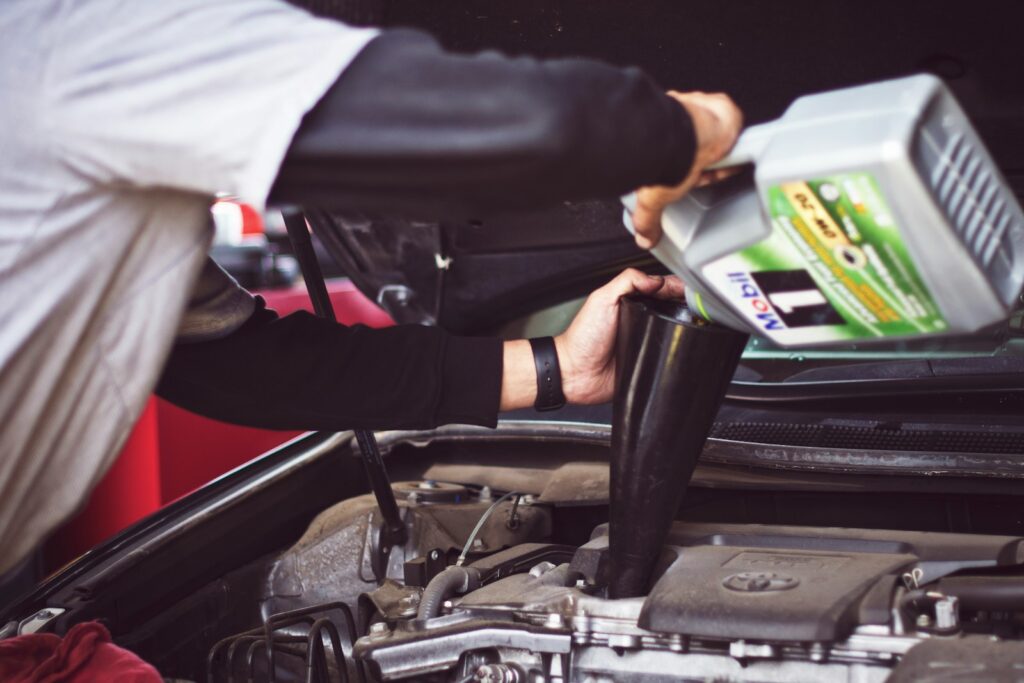
In the bay, her hood was up and her car looked suddenly vulnerable, like a patient mid-surgery. The service writer pointed down at the engine area and started talking in a rehearsed rhythm—something about how they’d noticed signs of damage, how there was “noise,” how the oil looked “off,” how they didn’t want to be held responsible for what was already happening. He said the phrase “pre-existing” more than once, like that made it official.
She asked what exactly they meant by “damage,” and that’s when the story started getting slippery. The service writer said it could be “bearing wear” or “internal scoring,” but he couldn’t say for sure without more diagnostics. He kept circling back to the same point: if the engine failed later, they needed her to acknowledge it was already on its way out before they touched it.
She wasn’t a mechanic, but she wasn’t clueless either. The car had been driving fine that morning—no knocking, no dash lights, no dramatic smoke signals. She told him that and asked why, if the engine was so obviously damaged, they were only bringing it up after pulling it into the bay instead of when she drove in.
That question landed badly. His tone tightened just a little, and he said they hadn’t taken anything apart yet, they were just being “transparent.” Then he pulled out a form—one of those clipboard waivers—and pointed to a line that basically said the shop wasn’t responsible for any issues discovered during service. “It’s standard,” he said, but he hovered the pen like he needed her signature right now.
The oil change that stopped being an oil change
She asked if they’d already drained the oil. The writer hesitated and said something like, “We started the process,” which is the kind of non-answer that makes your stomach drop. She pressed: is there oil in the car at this moment or not? That’s when a tech, without looking up from whatever he was doing, said they’d already drained it and were “checking things.”
Her brain went straight to the nightmare scenario: car drained, sitting on a lift, and she’s being asked to sign something before they’ll finish putting it back together. She told them she wasn’t signing anything that implied her engine was damaged unless they could show her actual proof. The writer responded with a calm-but-stern, “We’re not accusing you, we’re protecting ourselves.”
The more he talked, the more it felt like a script designed to back her into a corner. They couldn’t diagnose without charging her; they couldn’t guarantee anything; they needed her to sign before proceeding; and if she didn’t sign, well… he let that hang in the air. She asked if they could just refill it, complete the oil change, and she’d take it somewhere else for a second opinion.
He said they could, but he repeated the word “liability” like it was a sacred rule. And then he added a line that made it personal: “If your engine locks up when you leave here, that’s on you.” It wasn’t shouted, but it had teeth.
Show me the damage, then
At this point she wanted specifics, not vibes. She asked to see what they saw—metal in the oil, sludge, anything. The tech brought over the drain pan and held it at an angle like that was supposed to answer everything. She stared at the dark fluid and tried to make sense of it, because oil always looks bad when it’s used, and she knew that.
The writer pointed to tiny specks and said “metallic.” She squinted, asked if they’d run a magnet through it, asked if they had photos, asked if they could put it in writing. The writer gave her a look like she was being difficult on purpose, then said, “We can recommend an engine flush and a diagnostic.” That’s when she felt it click: the oil change was turning into an upsell, and the “pre-existing damage” line was the lever.
She told them she wasn’t authorizing any extra work. She also said she wanted her old oil and filter saved and her car put back together immediately. The writer’s shoulders did that tiny rise people do when they’re about to stop being friendly, and he said they’d need a moment, and that the shop manager would talk to her.
While she waited, she noticed the small stuff that made the whole thing feel worse: the way two employees kept glancing over like she was a problem customer, the way her keys weren’t on the hook anymore, the way her car was still in the air like it was being held hostage by gravity and hydraulics. She could hear a compressor kick on and off, punctuating the silence like a metronome.
The manager enters, and the temperature changes
The manager came out with a practiced sigh, not angry exactly, but already tired of her. He didn’t ask what happened—he launched straight into his version of it. He said the tech noticed abnormal wear indicators, they were doing the right thing by warning her, and she shouldn’t take it personally.
She repeated her request: finish the oil change, no extras, and she’s leaving. The manager said they would, but again, she needed to sign something acknowledging the warning. She asked why she had to sign to receive the basic service she came in for, and he gave the classic line: “Because we’ve been burned before.”
That’s when she said she wanted everything documented—notes on the invoice, a copy of whatever they wanted her to sign, and a clear statement of what they claimed was wrong. The manager’s face tightened. He said they could write “customer declined recommended diagnostics,” but they weren’t going to write “we damaged your engine,” which wasn’t what she asked, but it was telling that his brain went there.
She asked, very plainly, whether they were implying they might have caused damage. The manager said no, of course not, but then he started talking about how engines can fail “at any time” and how sometimes customers blame the last shop that touched the car. It was defensive in that way that makes you wonder why someone’s defending themselves before they’ve been accused.
Getting the car back wasn’t simple
They finally lowered the car, and she watched like a hawk while the tech replaced the filter and poured in new oil. Nobody chatted with her anymore. The friendliness was gone; everything was clipped and procedural, like she’d crossed some invisible line by asking for proof.
When the invoice came, it wasn’t just an oil change receipt. It had a bold note about “engine noise” and “possible internal damage,” plus a recommendation for diagnostics that cost more than the oil change itself. Next to it was a checkbox section that basically said she’d been advised and declined further work, and they wanted her signature at the bottom.
She didn’t refuse to sign outright—she read every line. She crossed out the parts that sounded like admissions, wrote her own note that she brought the car in running normally and requested only an oil change, and initialed it. The manager didn’t like that. He tried to stop her from altering it, and she told him, calmly, that she wasn’t signing anything that suggested her engine was already failing based on a glance into a drain pan.
He let it go, but the tension stayed thick right up until she got her keys back. When she started the car in the lot, she listened hard, half expecting some new noise to show up out of spite. It idled the way it always had—maybe a little louder in her own head, because now she couldn’t un-hear the accusation.
She drove off with two things in her hands: a receipt that practically predicted her engine’s death, and that sick feeling you get when you don’t know whether you just dodged a scam or walked away from a real problem. The shop had planted a narrative—“it was already damaged”—and whether it was true or just convenient, it followed her out of the parking lot like a shadow she couldn’t shake.
More from Steel Horse Rides: