

She’d parked in the same spot a hundred times: third row from the dumpster, under the one light that flickered like it was thinking about giving up. It was late, she was tired, and the only thing she wanted from her apartment complex was the basic promise they’d sold her on—“resident parking.” She locked her car, glanced at the little parking sticker on her windshield like she always did, and went upstairs.
The next morning, she walked out with her keys in her hand and that sleepy, automatic confidence that her car would be where she left it. Instead, there was an empty rectangle of asphalt and a few oil stains that suddenly felt personal. For a second she genuinely thought she’d misremembered, like maybe she’d parked on the other side of the building. Then she saw it: fresh scrape marks and a broken bit of plastic on the ground, the kind that comes off when someone drags something that doesn’t want to be dragged.
She did the whole lap of the lot anyway—because what else do you do when reality is being weird?—and ended up back at the same empty spot, checking her phone like it might provide an answer. She called the non-emergency line first, because “my car is gone” makes you feel ridiculous until you’ve said it to someone official. They told her it had been towed, and gave her the name of the towing company like they were reading a weather report.
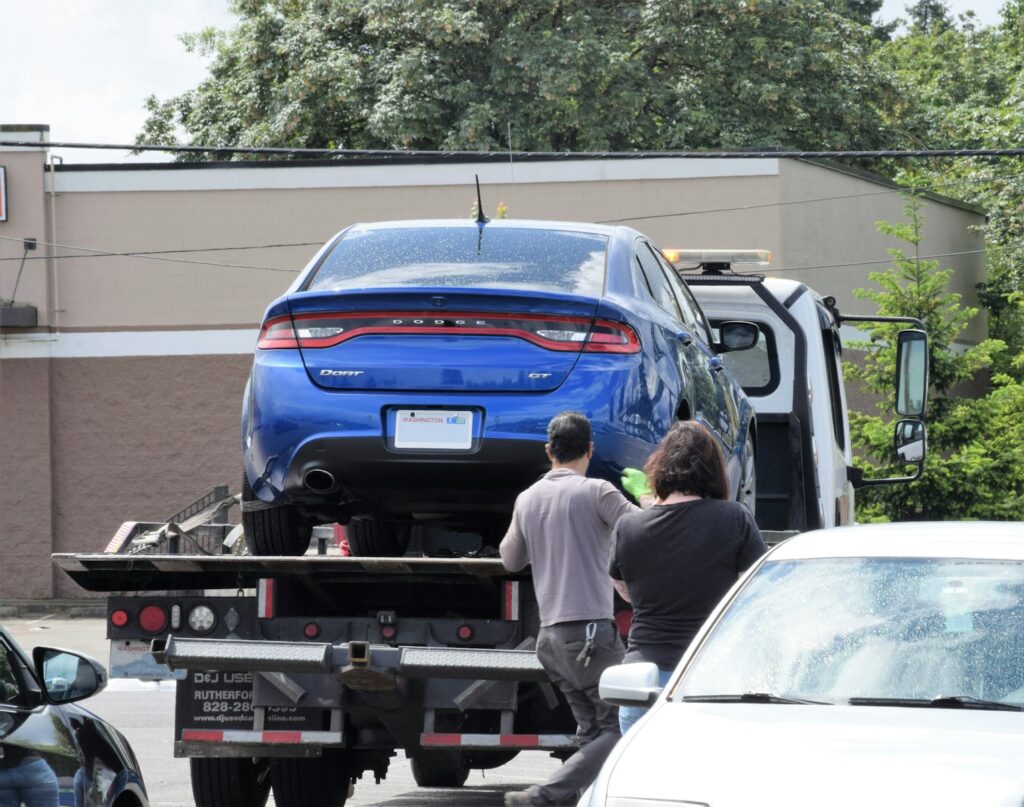
The tow yard was ready for her money
The tow company didn’t act confused. They acted like this was Tuesday, because for them it was. When she called, the woman on the other end asked for her plate number and immediately said, “Yep, we’ve got it,” then slid into the price like it was prewritten: tow fee, storage fee, “processing,” and a deadline that basically punished her for having a job.
She asked the obvious question—why was it towed at all?—and the tow company didn’t even pretend it was their call. “We tow under contract for your property,” they told her. “Management requested it.” The phrase “requested it” landed funny, like someone had sent an email asking for her car to be removed like an unwanted couch.
When she got to the yard, the whole place had that vibe of controlled hostility: chain-link fencing, warning signs, and an office window that makes you feel like you’re doing something wrong just by standing in front of it. She showed her ID and registration, and the guy behind the glass handed her a form and pointed at the total. She paid because she didn’t have another option, and because every hour her car sat there was another fee piling up.
Before she left, she asked again what the reason was. This time they gave her a one-liner: “Sticker wasn’t visible.” Not “no sticker.” Not “wrong lot.” Just “wasn’t visible,” said with the confidence of someone repeating the note they were handed.
Management played innocent for exactly one minute
She drove straight back to the apartment office, still buzzing with that specific kind of anger that comes from being charged hundreds of dollars for a problem you didn’t create. The office smelled like air freshener and printer toner, and there was a little sign about “community standards” near the door that suddenly felt sarcastic. She explained, calmly at first, that her car had been towed overnight from her assigned resident lot.
The staff member behind the desk did the polite face people do when they’re deciding whether you’re a real problem or a temporary inconvenience. They asked for her unit number and pulled something up on the computer. For a moment, it looked like they might deny it outright—like maybe she had parked in visitor—until she said the tow company told her management had requested it.
That’s when the story changed. The staffer didn’t deny the tow anymore; instead, they leaned into the rulebook. “The parking sticker has to be visible,” they said, like she was new, like she’d just moved in yesterday and didn’t understand what a windshield was. She told them it was visible. It was on her windshield. It had been there the entire time she lived there.
“It wasn’t visible enough,” the staffer corrected, and somehow that was worse. Not visible enough for who? The sticker doesn’t have a brightness setting. The entire concept felt like someone trying to justify a decision after the fact, like the tow was already done and now they just needed a reason that sounded official.
The sticker wasn’t missing—just not “good enough”
She walked them out to her car right there in the lot, because arguing in the office felt like getting scolded by a printer. The sticker was exactly where it always was: inside the windshield, lower corner, pressed flat, not peeling off, not hidden behind anything. She even pointed out that it was placed the way their own move-in packet instructed residents to place it.
The staff member did that thing where they squint and tilt their head like they’re examining a painting, except they were looking at a basic parking decal. They said it needed to be “more visible from the outside,” which raised the obvious question of what “more” meant. Higher? Centered? Neon? Because nobody had ever told her there was a specific angle required for towing staff to feel confident.
She asked if they had photos from the tow company proving the sticker couldn’t be seen. That’s where the conversation got slippery. They didn’t have photos on hand. They said the tow vendor “documents everything,” but somehow none of that documentation was immediately available when it was time to justify taking her car.
And then came the real kicker: management said they couldn’t reimburse her because “it was properly towed.” That sentence felt like getting mugged and then told it was allowed because someone wrote it down in a policy. She wasn’t arguing about whether towing was a thing—they obviously had the right to tow unauthorized cars. She was arguing that her car was authorized, in the authorized lot, with the authorized sticker, and they still let it get hauled off.
Everyone suddenly had a procedure, but nobody had responsibility
Once she started pressing, the office went into procedural mode. File a complaint. Submit a request. Email the property manager. They gave her the kind of steps that create a paper trail but also create distance—like the whole point was to make her take her anger somewhere else and turn it into a spreadsheet.
She asked for the towing authorization record: who approved it, what time, and why. The staff member wouldn’t hand anything over on the spot. They said the property manager “handles that,” and the property manager “wasn’t in.” Of course they weren’t. They’re never in when the problem is expensive.
She called the tow company again while standing in the parking lot, because it was starting to feel like she was being bounced between two people who’d agreed to share the profits and none of the blame. The tow company repeated the same thing: they tow based on instruction, and the instruction was for a car with “no visible permit.” When she told them the sticker was there, they basically shrugged through the phone and told her to take it up with property management.
At that point, the whole thing started to look less like an honest mistake and more like a system designed to create plausible deniability. Management could say, “The tow company made the call.” The tow company could say, “Management authorized it.” And she was the one out the money, sitting in the middle of their contract like a dropped wallet.
She tried to make it undeniable—and that’s when it got personal
She took photos of the sticker from every angle: standing outside the driver’s side, leaning over the hood, backing up to show it in context. She took a video too, walking up to the car so it was obvious the sticker could be seen without doing yoga. If the argument was going to be “not visible enough,” she wanted proof that the standard was arbitrary.
Back in the office, the tone shifted. The staff member was less firm, more defensive, like they could feel the story getting sharper. They suggested she reposition the sticker “to avoid future issues,” which is a wild thing to say to someone who just paid a tow bill—like the lesson was for her to adjust, not for them to stop towing residents.
She asked a question that made the room go quiet for a second: if the sticker is visible now, and it was in the same place yesterday, what exactly changed overnight? Nobody had a clean answer. They circled back to the same line about visibility, but it sounded thinner each time, like the phrase was a shield they’d started hiding behind because it was the only one they had.
She left with an email address, a promise that the property manager would “review it,” and that particular exhausted fury you get when you realize you’re about to spend your free time fighting a system that’s built to wear you down. The money was already gone. The tow company already got paid. Management already treated it like a closed case.
And that’s the part that stuck: it wasn’t just the cost, even though the cost hurt. It was the way “wasn’t visible enough” could be used like a magic phrase to turn a resident into a violator overnight, with no warning, no proof offered upfront, and no urgency to make it right afterward. She could move the sticker, sure—but she couldn’t shake the feeling that if they could tow her once from her own lot and call it proper, they could do it again whenever someone decided her car was inconvenient.
More from Steel Horse Rides: