

The mechanic didn’t even make it past the first latch before his face changed. He’d popped hundreds of hoods that week alone—routine stuff, quick inspections, maybe a belt squeal or an oil seep—but this one had that instant wrongness to it. The owner, a guy in his late twenties named Eric, was standing a few feet back in the shop bay, trying to look casual like he wasn’t holding his breath.
Eric had bought the car two days earlier. Used sedan, decent miles, clean interior, “drives great,” all the usual phrases that sound normal until they don’t. It was his first “adult” purchase after sharing beaters with roommates for years, and he’d booked a post-purchase inspection mostly to feel responsible.
So when the mechanic leaned in and went quiet, Eric started doing that thing where your brain tries to solve the problem before you’re allowed to know it. He watched the mechanic’s gloved hands move carefully, like he was handling something fragile. Then the mechanic straightened up and said, “Uh… did you know you’ve got rodent damage?”
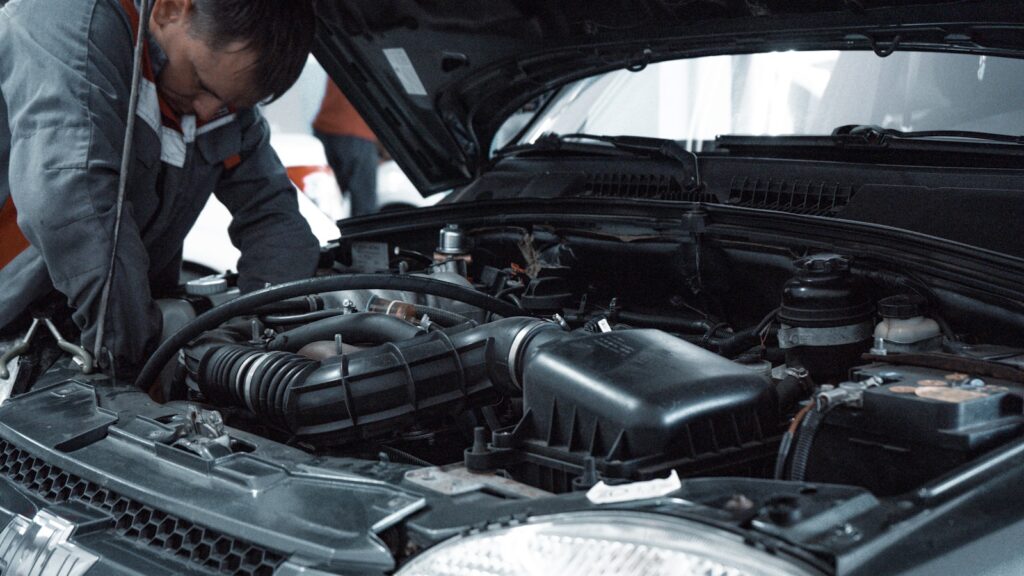
The hood opens, and it’s not just one chewed wire
At first Eric assumed “rodent damage” meant one gnawed wire and a quick splice. That’s what people always talk about—mice nibbling a sensor wire, the check engine light coming on, a $200 annoyance. But the mechanic pointed into the engine bay like he was showing Eric a bad injury.
The top of the engine cover had little bits of shredded insulation scattered around it, like someone had torn open a pillow. There were tiny dark pellets in the corners and along the firewall, plus a faint dusty smell that didn’t belong in a car that had supposedly been driven daily. The mechanic used a flashlight and traced the beam along a harness, and it was obvious: the outer sheathing had been chewed in multiple places, leaving copper strands exposed.
Then he started lifting things. The plastic cowl area near the windshield had debris packed in it—dry leaves, scraps of paper, what looked like tufts from a seat cushion or maybe the hood liner. It wasn’t one nest; it was like several attempts at home renovation spread across the bay. “They’ve been active in here,” the mechanic said, and his tone wasn’t dramatic so much as annoyed, like he was looking at a mess he now had to explain.
Eric kept asking the same question in slightly different forms: is it fixable, is it dangerous, how much. The mechanic didn’t answer right away. He just kept pointing out more and more chewed spots, like he couldn’t stop finding them once he knew where to look.
Eric’s confidence unravels in real time
Eric’s first reaction was denial dressed up as curiosity. “But it runs fine,” he said, like the engine’s ability to start was supposed to cancel out what they were seeing. He’d driven it home, run errands, even bragged to a friend about the deal he got.
The mechanic shrugged in that way mechanics do when they’re not trying to argue with you, but also aren’t going to pretend. Rodent damage doesn’t always show up immediately, he explained. Sometimes it’s one wire away from a no-start, or it becomes an intermittent electrical gremlin that takes weeks to diagnose and makes everyone hate the car.
Eric asked to see the worst of it, like he needed a single smoking gun to justify panic. The mechanic pointed to a section near the fuse box where the insulation had been stripped back in a jagged line, teeth marks visible if you looked close enough. “If this shorts,” the mechanic said, “you’re looking at blown fuses at best. At worst, it’s heat where you don’t want heat.”
Eric’s face did that slow shift from confused to mad. Not mad at the mechanic—mad at the situation, mad at himself for trusting the seller, mad at the vague, slippery idea of “used car.” He stepped back and stared at his own car like it had betrayed him.
The seller’s story starts to sound different
The car had come from a private seller, a middle-aged woman named Dana who met Eric in a grocery store parking lot. She’d been friendly and talkative, the type who fills silence with little life details. She’d said she was “downsizing,” that the car belonged to a family member, that it “always started right up.”
Eric replayed the meeting with the mechanic’s flashlight in his mind. Dana had been weirdly firm about one thing: no pre-purchase inspection. She’d said she didn’t have time and that “these cars sell fast,” but she’d also offered a discount if he took it that day. Eric had felt lucky, like he’d negotiated his way into a bargain.
Now the little details started reordering themselves. The battery looked new, which had seemed like a bonus. There was a faint smell in the trunk—musty, old air—but Eric figured it was from sitting with the windows up. Dana had brushed off a question about service history with a breezy “I’ve got some paperwork somewhere,” which Eric had accepted because he wanted the car to be fine.
Standing in the shop, Eric called Dana on speaker. She answered, cheerful at first, until he said the words “rodent damage everywhere.” There was a pause—not a “what are you talking about?” pause, but a “how do I answer this?” pause.
“It was just sitting for a bit” turns into months
Dana didn’t immediately deny it. She went for the softer language first, saying she’d “never had an issue” and that “cars get mice sometimes.” Eric kept his voice controlled, but you could hear the pressure behind every word as he asked if the car had been sitting.
“It was just sitting for a bit,” Dana said. Eric asked how long “a bit” was. Another pause, then she admitted it had been parked at her brother’s place while he was dealing with “some stuff,” and it hadn’t been driven regularly.
The mechanic, who wasn’t trying to eavesdrop but couldn’t avoid hearing, raised his eyebrows like, here we go. Eric asked again, more specific. Weeks? A couple months? Dana finally said it had been “several months” and then quickly added that it was in a “safe neighborhood” like that was relevant to rodents.
That was the moment Eric stopped talking like a polite buyer and started talking like someone who realized they’d been maneuvered. He asked why she didn’t say that up front. Dana’s tone hardened, and she said she hadn’t lied; she just hadn’t been asked “that exact question.”
What “fixable” looks like when it’s wiring, nests, and unknowns
The mechanic laid out the practical part. To do it right, he’d have to trace the harnesses, check for shorts, inspect the air intake for nesting material, and look for damage underneath where rodents often climb. It wasn’t just “replace a wire”; it was labor, diagnostic time, and the possibility of more surprises once they started pulling covers.
He gave Eric a rough estimate that made Eric swallow hard. Not because it was the highest number anyone could imagine, but because it was the kind of money that turns a “good deal” into a financial bruise. And even then, the mechanic warned, rodent damage is tricky because you can fix what you find today and still discover a chewed line next week when the car throws a code.
Eric asked if insurance would cover it. The mechanic said sometimes comprehensive does, but it depends on the policy, the deductible, and whether the car qualifies as “sudden damage” versus “existing issue.” Eric looked like he was doing math in his head—purchase price, inspection cost, potential repairs, the sinking realization that the seller probably knew more than she admitted.
Dana texted him while he was still in the bay. The message was short and careful: she was “sorry he was having trouble,” but the car was sold as-is. Eric stared at the screen and didn’t reply right away, like he was trying to decide whether words would even matter.
He asked the mechanic if he’d seen this before. The mechanic nodded and said it happens a lot with cars that sit, especially if there’s food nearby or it’s parked outside under trees. Then he added, almost as an afterthought, that the nesting material looked established—like it wasn’t a weekend visitor.
Eric left the shop without authorizing the full repair, just the basic safety check to make sure nothing was about to short and strand him on the way home. In the parking lot he stood beside the car, keys in hand, staring at something he’d been excited about 48 hours earlier. It still looked clean from the outside, still started when you turned the key, and that made it feel even more insulting—like the car was wearing a nice outfit over a problem that could keep escalating.
What stuck with him wasn’t even the cost, exactly. It was that slippery gap between “I didn’t know” and “I didn’t tell you,” the way Dana’s story shifted from confident to cautious once the hood was open. Eric drove away with the engine sounding normal and his mind running hot, because now every flicker of a light on the dash would feel like a countdown, and every next step—insurance, small claims, paying out of pocket—was going to force him to keep reliving that quiet moment when the mechanic lifted the hood and found a whole hidden life living in there.
More from Steel Horse Rides: