

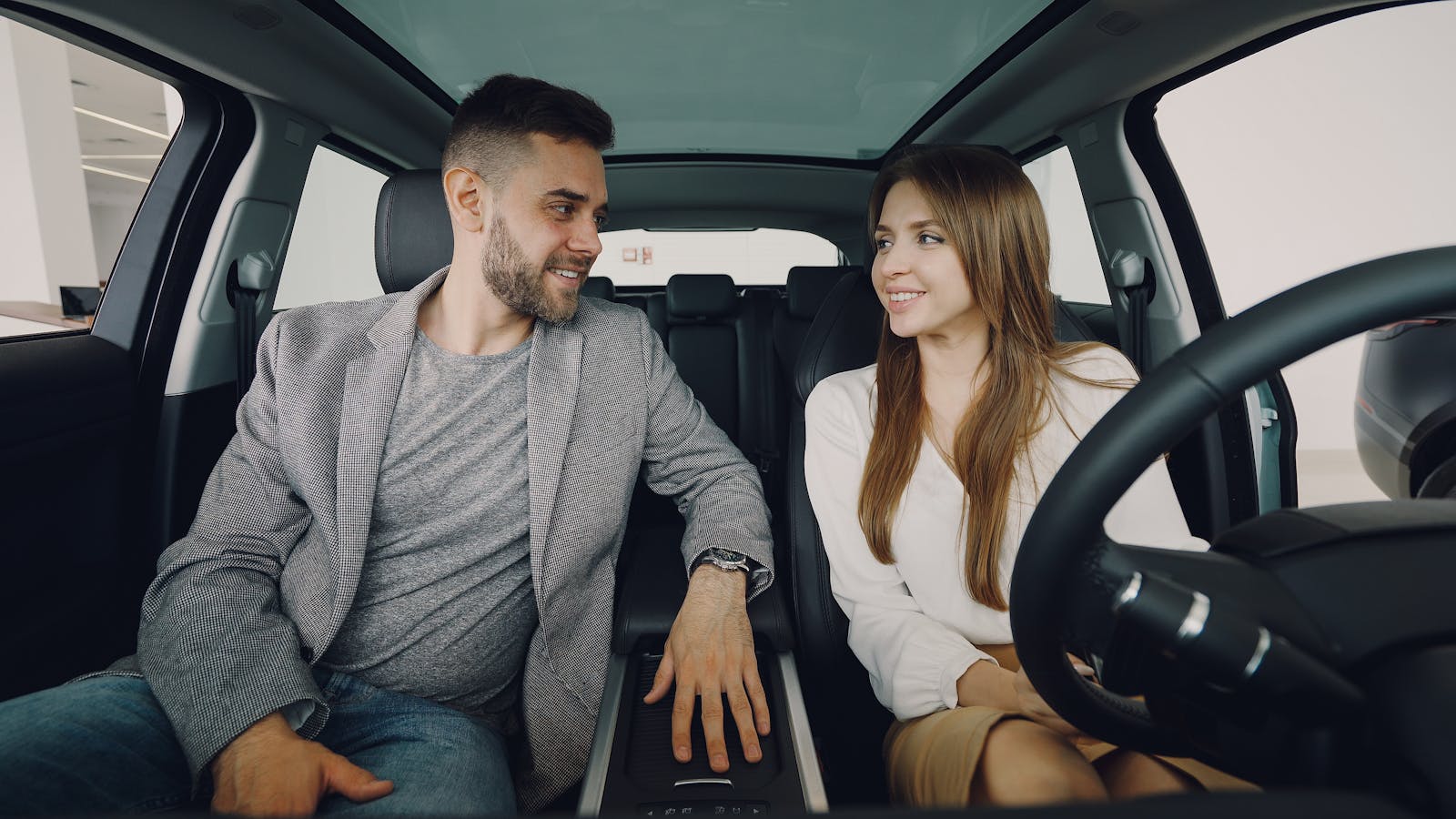
She showed up to the dealership on a random weekday with the kind of cautious optimism people reserve for errands they hate but still hope will go smoothly. Her old car was on its last legs, she’d been browsing listings for weeks, and this place had the exact model she wanted in the exact color she’d promised herself was “non-negotiable.” She figured she’d take it for a spin, go home, run the numbers, and maybe come back with her dad or a friend who actually enjoys haggling.
At first it felt normal in that slightly staged, fluorescent way dealerships always do. Someone offered water, someone made a joke about how “these things sell fast,” and a salesman swooped in with the practiced friendliness of a person who’s already decided you’re leaving with keys in your hand. She told him right away she wasn’t buying today—just test driving, just gathering info—and he nodded like he understood, like it was no big deal.
Then the test drive ended, and the whole vibe changed. The second she parked back in the lot, she said she wanted her license back and to head out, and the salesman hit her with a smile that didn’t quite reach his eyes. “Sure,” he said, “let’s just step inside for a minute.”
The “Just One Minute” Walk Inside
He didn’t hand her license back at the car like she expected. Instead he gestured toward the showroom, talking fast about “numbers” and “seeing what we can do” and “you’ll want to hear this.” She followed because it felt easier than making a scene in the parking lot, and because she assumed the whole thing would take sixty seconds, tops.
Inside, he steered her past the open desks and toward a little office with a door, the kind with a glass window and dealership posters taped to the wall. It wasn’t locked, but the moment they sat down it had that trapped feeling—like when someone invites you into a conversation and then uses the room itself as leverage. He asked for her phone number and email “so I can send you the spec sheet,” and when she hesitated, he laughed and said, “I promise I’m not going to spam you.”
She asked again for her license, trying to keep it light. He patted his pockets dramatically like he’d forgotten, then said, “Oh, it’s right here—don’t worry, we’ll get it back to you. Let me just print something.” That’s when she realized he was treating her like she’d already agreed to buy.
Numbers on Paper, Pressure in the Air
The salesman slid a paper in front of her with monthly payments circled in marker, like the circles themselves were supposed to hypnotize her. He didn’t ask what her budget was; he told her what her budget could be if she “structured it right.” When she said she needed to think and would come back later, he leaned back and made a little show of looking surprised, as if she’d broken a rule of the game.
He started tossing out urgency like confetti. Someone else was “coming in tonight,” there were “two people watching this exact unit,” and the price was “only good if we do it today.” She kept repeating some version of: I’m not making a decision right now, I’m just test driving. Every time she said it, he answered with a new angle, like he had a mental menu of objections and rebuttals.
Then he went for the emotional squeeze. “So what’s stopping you?” he asked, as if the only reasonable explanation for not buying a car in the next ten minutes was some personal flaw she needed to confess. When she said she wanted to compare options, he smiled and told her comparing was “how people end up paying more.”
The License Becomes the Leash
At some point it clicked for her that the license wasn’t an oversight—it was the hook. She stood up and said, calmly, that she needed her ID back because she had to leave. He stood up too, still smiling, and said, “Absolutely. Sit tight one second and I’ll go grab it.”
He didn’t come back in one second. He didn’t come back in two minutes either. She sat there listening to the muffled buzz of the showroom outside the office, watching people walk by through the glass, wondering if she should go hunt him down or if that would just give them a reason to claim she was being “difficult.”
When he returned, he still didn’t hand it over. He held it in his hand like a prop and asked, “Before I give this back, can I just ask—if I could get your payment to X, would you do it today?” It was such a blatant little hostage exchange that she almost laughed, except her stomach had that cold, tight feeling that comes from realizing you’re alone in a place designed to keep you there.
“Let Me Get My Manager” Becomes a Wall
She told him no, again, and reached out for her license. He pulled it back—not dramatically, just enough that the message landed. Then he said the phrase that always sounds polite until you’re stuck under it: “Let me get my manager.”
The manager arrived with a different flavor of charm: less buddy-buddy, more disappointed dad. He sat down across from her, glanced at the paperwork like he’d already decided she was being unreasonable, and asked what they could do “to earn her business today.” She told him, for the third or fourth time, that she wasn’t buying today and that she needed to leave.
The manager’s tone shifted from friendly to flat. He started talking about how test drives “take time,” how they “have to protect their inventory,” how they “can’t just let people joyride.” It was framed like a lecture, like she owed them something for daring to test drive a car they offered test drives for. She asked for her license again, and the manager looked at the salesman like the salesman was the one holding the keys to the whole situation—which, in a way, he was.
They tried one more squeeze: if she wouldn’t buy, maybe she’d at least put down a deposit “to hold it.” When she said no, the manager sighed loudly, stood up, and said, “Fine. If you’re not serious, we can’t waste any more time.” Then he nodded at the salesman like he was granting permission.
The Exit Isn’t Clean, Even When She Gets Out
The salesman finally handed her the license back, but he didn’t do it like someone returning something they borrowed. He did it like someone returning something she’d failed to earn. As she stood up, he followed her out of the office and kept talking—still selling, still pushing, still trying to salvage the moment by making her feel guilty for leaving.
Walking through the showroom felt weirdly public, like she could feel employees clocking the energy even if nobody said anything. She kept her face neutral, eyes forward, keys in hand, doing that thing people do when they’re trying not to look rattled. At the door the salesman got in front of her just slightly, not blocking her outright but forcing her to slow down, and asked one more time if she was “sure” she didn’t want to lock it in.
Outside, the air felt colder than it had when she walked in, even if the weather hadn’t changed. She got into her own car and sat there for a second with her hands on the steering wheel, just breathing and replaying it. It wasn’t the loudest confrontation in the world, but it had that specific aftertaste of being cornered politely—like everything was wrapped in “sir” and “ma’am” while the underlying message was, you don’t get to leave on your terms.
She drove off without looking back, but the whole thing stayed sticky in her mind: the way the license became leverage, the way “let’s talk numbers” turned into a stall tactic, the way two grown men acted like a test drive created an obligation. And the worst part wasn’t even the pushiness—it was how normal they seemed while doing it, like trapping someone in a sales process was just another step on the checklist, right up until the moment she pried her own freedom back and walked out with her ID in her hand.