

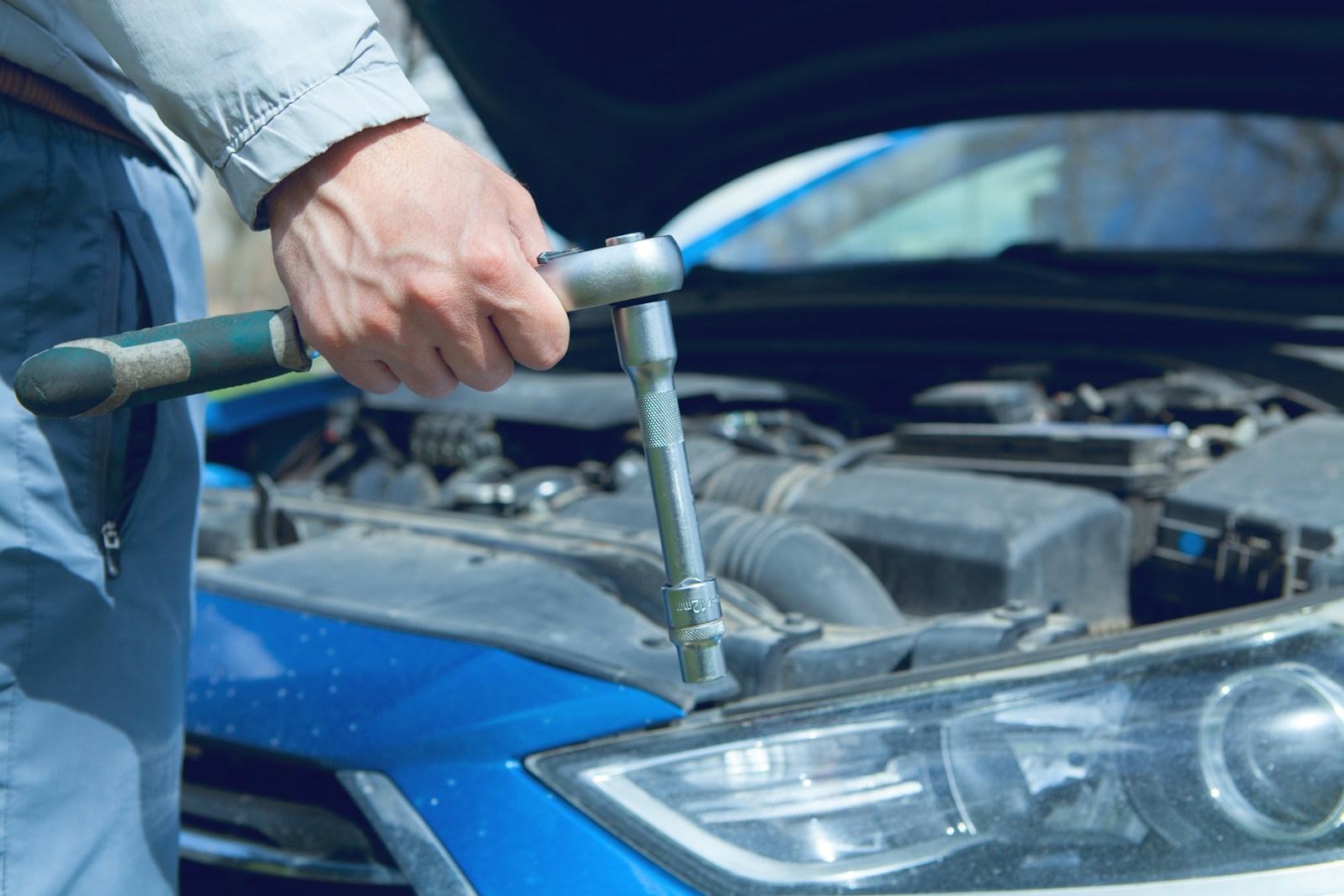
She wasn’t the kind of person who heard a weird noise and immediately spiraled into worst-case scenarios. She’d owned the car for years, kept up with oil changes, and didn’t treat the dashboard like a suggestion box. So when her engine started doing something that felt “off,” she tried to handle it like an adult: pay someone who supposedly knows what they’re doing.
The first time it happened, it was subtle—just a soft rattle on cold starts, like a handful of pennies in a tin can for half a second, then nothing. Then it became a pattern: every morning, same sound, and a faint vibration through the steering wheel that wasn’t there before. She’d mention it to friends and get the usual mix of “cars do that” and “you’re probably imagining it,” but she could feel it getting worse in her bones.
She took it to her mechanic, the one she’d been using because he was close to her apartment and had fixed a tire leak for cheap once. She didn’t want drama, she didn’t want a fight, she just wanted someone to listen for thirty seconds and say, “Yep, that’s a problem.” Instead, she got the kind of shrug that somehow feels personal.
The first visit: “That’s normal”
He didn’t even look up from the computer at first. She described the rattle, when it happened, what it sounded like, and how it was getting louder. He let her finish, then said, “Probably just the heat shield,” like he was diagnosing it from memory and boredom alone.
They took a quick drive around the block with the radio low. Of course, the car behaved like it had been coached. Back in the lot, he did the classic move: hood up, glance around, tug a hose like it owed him money, then shut it and wipe his hands on a rag that had seen better centuries.
“No codes,” he said, tapping the scanner like that ended the conversation. “If it was serious, you’d have a light.” She tried to insist it wasn’t about lights—it was a sound and a feeling—but he was already drifting toward the next customer, calling it “normal wear” and telling her to “just keep an eye on it.”
Months of follow-ups and the slow escalation
She did keep an eye on it, which turned into keeping an ear on it, which turned into wincing every time she turned the key. The rattle got longer, creeping from half a second to a full second or two, and sometimes it came back at stoplights in a low, ugly chatter. One day the car hesitated pulling into traffic, just a beat too long, and her stomach went cold.
She went back and tried a different approach: specifics. She told him it was louder after sitting overnight, that it sounded like it came from the top end, that she’d checked the oil level and it was fine. She even had a video on her phone—hood closed, microphone too close, the sound captured clear enough that she could play it and say, “That. That exact noise.”
He watched about three seconds of it and smirked. “People record everything now,” he said, half-joking, half-dismissive. Then he started talking about how some engines just make noise, especially “older ones,” even though her car wasn’t ancient, just not brand new.
He offered the kind of solution that wasn’t a solution: an oil change and “maybe” a thicker oil next time. She left feeling embarrassed for asking and angry for being embarrassed, which is a nasty combo. And because she had work and bills and no spare car, she did what a lot of people do when an “expert” tells them not to worry—she tried to believe him.
The warning she wouldn’t stop repeating
At some point, she started saying the same sentence every time she dropped it off: “It feels like something’s starving for oil on startup.” That was her gut, her pattern recognition, her attempt to translate fear into something mechanical. She wasn’t claiming to be a technician; she was describing the sensation of a machine that didn’t sound properly lubricated.
He’d respond with the same calm confidence that shuts conversations down. “Oil pressure would throw a code,” he’d say, or “If it was timing chain, you’d know,” which didn’t make sense because she felt like she did know. He never offered to keep it overnight for a true cold start, never suggested deeper diagnostics, never did the thing she kept begging for: listen when the car was actually doing it.
Over time, the visits got tenser in small, human ways. She’d stand at the counter gripping her keys too hard, trying to sound reasonable while her voice climbed anyway. He’d answer with that polite irritation, the tone that implies the problem is her anxiety, not the car.
The worst part was how he started framing it like a personality flaw. “You worry too much,” he told her once, like he was offering wisdom. She drove home furious, replaying the sentence and imagining what it would feel like if she came back someday with a dead engine and he acted surprised.
The day it happened: the exact failure she described
The breakdown didn’t happen in a cinematic blaze of smoke. It happened on a normal day, on a normal route, when she’d already started the car twice without incident. She was idling in a parking lot, waiting for a spot, when the rattle came back—only this time it didn’t stop.
It turned into a hard, metallic clatter, like someone shaking a toolbox under the hood. The engine stumbled, the RPM needle dipped, and then the whole thing lurched with a violent shudder. She killed the ignition out of instinct, hands shaking, and sat there in sudden, unreal silence while other cars eased around her like she was just another obstacle.
When she tried to start it again—because of course she did, because you always try once—the engine made a grinding noise that sounded expensive. Then it gave up with a dull click, like a door closing. No warning light had saved her, no polite little icon had popped up to validate months of being dismissed.
The tow truck driver did that sympathetic wince people do when they already know. She told him what it had been doing for months, and he nodded like it fit. “Sounds like timing or oil pressure,” he said, not even confidently, just casually, which somehow made her want to scream.
Back at the same shop: denial, defensiveness, and receipts
She had it towed to the same mechanic because, frankly, she was mad enough to want him to look her in the face. She wanted him to connect the dots in real time. When she walked in, she didn’t lead with accusations; she just said, “It finally died. It made the noise and then it died.”
He came out to the lot, looked at the car, and immediately went into manager mode. “Engines fail,” he said, like that was the beginning and end of the story. He asked when her last oil change was, and she told him—at his shop, on his schedule, with his sticker still on the windshield.
When he called later with the diagnosis, it was almost comically aligned with what she’d been saying. Low oil pressure on startup, internal wear, likely damage from running dry at critical moments, possible timing chain tensioner issues—words that sounded a lot like the sentence he’d been waving off for months. He presented it like a weather report: unfortunate, unavoidable, nothing anyone could have done.
She asked the question she’d been saving: why hadn’t he checked it more thoroughly when she first reported the noise? There was a pause, the kind that tells you the conversation has shifted from car repair to liability. He said, “We can’t tear an engine apart every time someone hears a rattle,” and she shot back that she hadn’t asked him to tear it apart—she’d asked him to take her seriously.
That’s when the defensiveness really kicked in. He started talking about how “no codes” means “no problem,” and how he’d done what he could. She reminded him of her videos, her repeat visits, her notes, and the fact she’d asked to leave it overnight for a cold start more than once.
And then she did the thing that changed the air: she mentioned she had invoices. Not in a threatening way, just as a fact—dates, complaints, “customer states rattle on startup,” all typed neatly in his shop’s language. Suddenly he wasn’t as breezy, and he offered to “see what he could do” about the repair cost, which wasn’t an apology but wasn’t nothing, either.
Where it left her: a busted engine and a hard new distrust
The quote for the fix was brutal, the kind that makes you calculate your car’s value and your own pride in the same breath. Rebuild versus replacement, used engine with unknown history, weeks without a vehicle, rental costs piling up. The mechanic talked options like he was being helpful, but every option sounded like paying extra money to learn a lesson she already knew.
She started calling other shops, telling the story and listening carefully to their reactions. Some were diplomatic—“hard to say without seeing it”—but a couple had that immediate, annoyed recognition, like they’d heard this exact pattern before: repeated cold-start rattle, brushed off, then catastrophic failure. One asked, quietly, why the shop hadn’t done an oil pressure test early on, and she almost laughed because she’d wondered the same thing every night for months.
What stuck with her wasn’t even the engine dying. It was the months of being treated like she was overreacting, and then hearing the diagnosis arrive wearing the exact outfit she’d described from the beginning. The car sat in her driveway like an accusation, and the mechanic’s “we can’t predict these things” line kept looping in her head—because she had predicted it, over and over, and the only thing she’d been wrong about was assuming that saying it out loud would matter.