

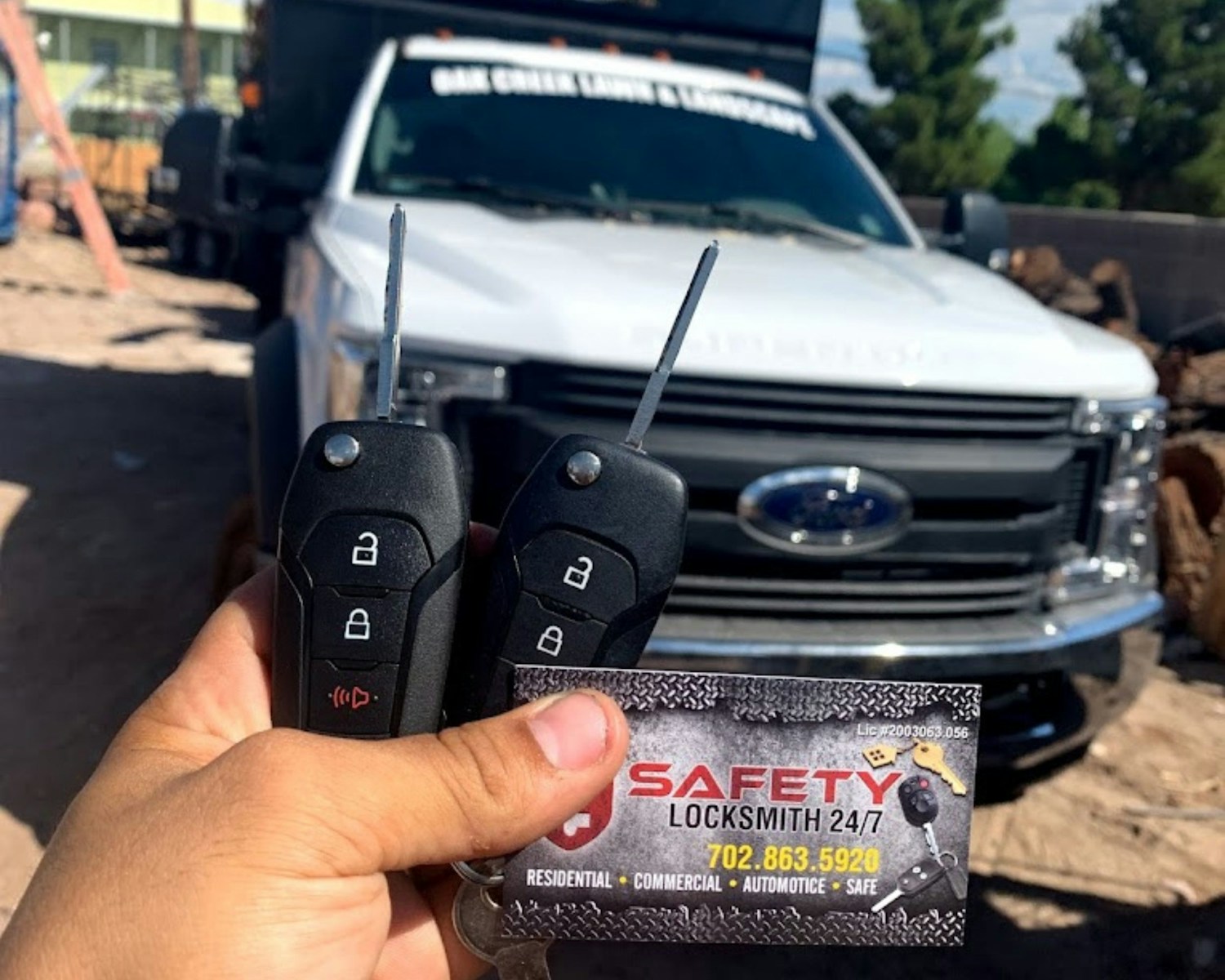
He thought he’d done everything right: researched the model, checked the mileage, negotiated the price, and walked into the dealership feeling that rare, fragile confidence people get right before they sign a car contract. The salesperson was friendly in that polished way—laughs a little too easily, remembers your name a little too fast. When the driver asked about the keys, the answer came back quick: “Yeah, it’ll come with two. If it’s not here today, we’ll get you the second one.”
At delivery, only one key fob showed up. Not “one fob and one plain key,” not “one key plus a valet key,” just one lonely smart key on a dealer tag. The driver paused with that pen-hovering moment—because everyone knows the “small stuff” is where a deal quietly changes shape. The salesperson waved it off like it was a missing floor mat: they’d order the second key, it happens all the time, don’t worry about it.
So he didn’t. He drove off with the new-to-him car and the promise of a second key hanging in the air like a receipt you forgot to print. It wasn’t until later, after the adrenaline wore off and he started setting up the car like it was actually his, that he looked up how much a replacement key really cost. That’s when the number hit him—hundreds of dollars—and the promise stopped feeling like a casual perk and started feeling like a debt.
The promise that sounded like nothing
The dealership had been smooth about it from the start. The salesperson framed the missing second key as a minor logistical hiccup, like the previous owner misplaced it or the trade-in only came with one. They said they’d “get it taken care of,” which is one of those phrases that somehow means everything and nothing at the same time.
The driver remembered asking specifically, because he’d been burned before with used cars and missing accessories. The salesperson didn’t hesitate, didn’t say “maybe,” didn’t say “we’ll see.” It was presented like a standard part of the deal—two keys is normal, and if they only had one in-hand, the second would be arranged after the fact.
And to be fair, the driver wasn’t trying to squeeze them. He wasn’t demanding free tint, free tires, a free warranty. He just wanted the car to come with what it usually comes with, the same way you assume a house comes with all its doors.
Sticker shock, but for a tiny piece of plastic
A few days later, he did what most people do: he started googling. Maybe he was curious, maybe he wanted to know what kind of key battery to buy, or maybe he just had that nagging feeling that “we’ll take care of it” often translates to “we hope you forget.” He found forum threads and dealership parts pages that all told the same story: smart keys aren’t cheap, and programming isn’t optional.
The numbers weren’t subtle. Depending on the make and model, a replacement fob could be $200, $300, even $500 once you factor in programming and the dealership’s labor. And if the car used a higher-security system, some locksmiths couldn’t even do it without the dealer’s equipment, meaning the dealership had a built-in monopoly on the fix.
That’s when it clicked for him why the dealership had been so casual. A second key wasn’t a $20 courtesy item. It was a several-hundred-dollar piece of leverage, the kind of thing you either get in writing or you end up paying for yourself.
Following up turns into a slow-motion vanishing act
He called the salesperson first, keeping it friendly. The salesperson said something along the lines of “I’ll check on that” and promised to call back. No call back came, so he called again the next day and got routed to voicemail.
When he finally reached someone, the story shifted just enough to be suspicious. Now it wasn’t “we’ll get you the second key,” it was “we’ll see if we can locate it,” like the key was a lost pet that might wander home. The driver asked for a timeline, a tracking number, anything concrete, and kept getting soft answers.
He tried the dealership’s main line and asked for the sales manager. He got put on hold long enough to hear the same loop of music twice, then transferred to an extension that rang until it dumped him into another voicemail box. He sent an email, then another, each one a little less cheerful than the last.
At some point the driver realized he’d been demoted, socially, from “customer who just bought a car” to “problem that costs money.” The warmth he’d gotten in the showroom—coffee, smiles, the “let me know if you need anything”—was gone. In its place was the kind of polite fog that makes you feel like you’re being unreasonable for asking for the thing you were told you’d get.
The paperwork problem and the little dance around responsibility
The driver dug through his documents to see if the second key was listed anywhere. He found the usual stack: purchase agreement, warranty options, financing disclosures, and a delivery checklist with boxes that didn’t quite match the reality of what he drove home with. Whether the “two keys” promise was written down or just said out loud became the central issue.
When he brought this up, the dealership’s posture stiffened. If it wasn’t explicitly included, they treated it like it didn’t exist. The driver insisted it was part of what he agreed to, and the dealership treated that like a misunderstanding he’d invented after the fact.
The frustrating part was how many ways they had to avoid saying “no” while still giving him nothing. “We’re waiting on the parts department.” “The person who handles that is out.” “We’ll need to see what keys came in with the trade.” “Can you bring the car in so we can check something?” Each sentence kept the story alive without ever moving it forward.
And every time they suggested he bring the car in, it came with an unspoken risk: if he showed up, would they suddenly act like he was asking for a favor instead of claiming something owed? Would they try to upsell him on a paid replacement and call it a compromise? He wasn’t eager to waste a Saturday driving over there just to be shrugged at in person.
What makes the ghosting sting
It wasn’t just about saving a few hundred bucks. It was the feeling of being played in a way that’s hard to prove. The promise was delivered in that friendly, informal tone salespeople use when they want you to feel like you’re both on the same side of the table.
And the driver kept thinking about the moment he signed. If the salesperson had said, “It only comes with one key,” he could’ve negotiated differently. He could’ve asked for a price reduction, demanded the second key be ordered before delivery, or at least gotten a “We owe you one key” document signed by someone with authority.
Instead, the dealership let him glide past the point of no return with the idea that the second key was handled. Then, once the deal was safely closed, the dealership treated the missing key like background noise—something they could ignore until he got tired.
Now he was stuck with a practical problem on top of the emotional one. With only one key, he had no backup if it got lost, stolen, or stopped working. And because of how modern keys pair to a vehicle, losing the only fob can spiral into an even more expensive mess, the kind where the car might need towing just to get reprogrammed.
He kept trying to decide what his next move should be without turning it into a months-long crusade. Go back in person and demand the sales manager? Call corporate if it was a branded dealership? File a complaint with whatever consumer protection office handled auto sales in his area? Or pay out of pocket, swallow the anger, and chalk it up to experience?
The thing that lingered wasn’t a dramatic confrontation or a big win. It was that thin, maddening gap between what someone promised to your face and what they’ll acknowledge when it costs them money. And somewhere in the dealership’s system—between “sold” and “not our problem anymore”—a second key was either sitting in a drawer, conveniently forgotten, or never ordered at all.