

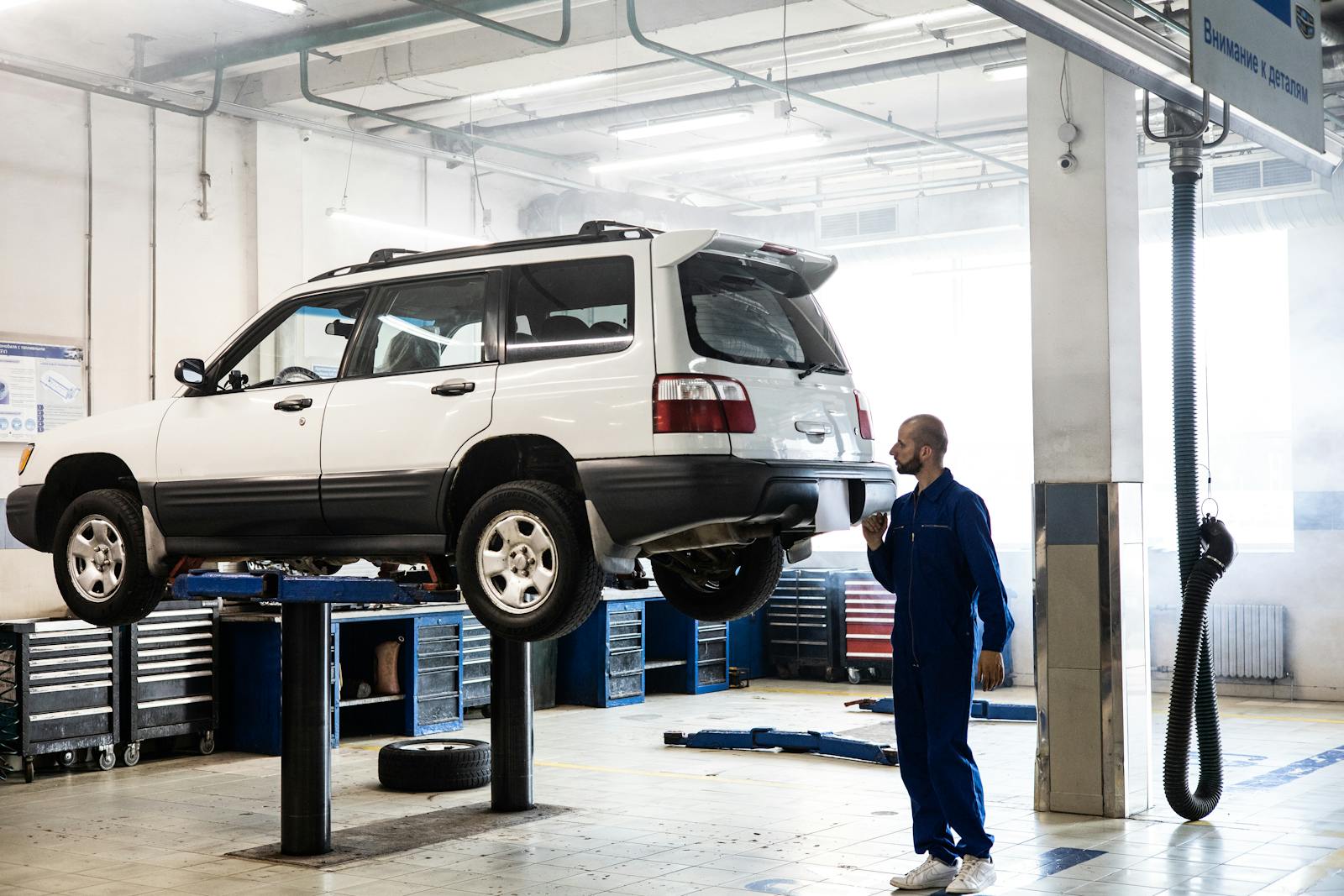
It started the way a lot of car headaches start now: a plain envelope, a corporate-sounding letter, and that vague, prickly line about “a safety recall.” The family had an SUV they relied on for everything—school drop-offs, grocery runs, weekend trips to see relatives—and the recall notice made it sound simple. Call a dealer, schedule the fix, get it handled.
They didn’t ignore it. They didn’t “wait until something happened.” They called the local dealership within days and got a slot for the recall repair, because the notice made it feel urgent in that carefully lawyered way: not a panic, but not optional either.
What nobody told them was that the “repair” wasn’t going to be an appointment. It was going to become a season of their life, with the SUV stuck in dealership limbo while every phone call ended the same way: parts are still on backorder.
The Drop-Off That Turned Into a Disappearing Act
On the morning they brought the SUV in, it was all normal-dealer theater. A service writer with a tablet, a quick walk-around, a couple of checkboxes and signatures, the casual promise that they’d call when it was ready. The family asked, point-blank, how long it should take, and got the kind of answer that sounds reassuring but means nothing: “Shouldn’t be too long.”
By late afternoon, no call. The next morning, they called and got a friendly update—tech hadn’t gotten to it yet, but it was in the queue. The family wasn’t thrilled, but they weren’t alarmed either; dealerships run behind all the time.
Then a couple days slid by, and the tone shifted. The service desk stopped projecting confidence and started using that careful, slightly defensive politeness people use when they know you’re about to get mad. “We’re waiting on the recall parts,” they said, like this was new information everyone should’ve expected.
“Backorder” Becomes the Only Word in the Conversation
The family’s first question was the obvious one: why take the SUV in if the parts weren’t even there? The answer they got sounded like it was built from pre-approved phrases: the vehicle needed to be inspected, the recall procedure required confirmation, parts availability changes quickly. Nothing that explained why their SUV was now effectively held hostage.
They asked if they could just take it back and return when the parts arrived. The dealership, according to the family, acted like that was possible “in theory” but complicated “in practice,” because the SUV was already partially disassembled for assessment. That line hit hard—no one had warned them that agreeing to a recall “check” might mean the car would be undriveable afterward.
From there, the story became a loop. The family called, got told the parts were on backorder, asked for an ETA, and received the same soft shrug in verbal form. Sometimes it was “maybe next week,” sometimes it was “we’re hearing end of month,” and sometimes it was the most infuriating version: “We don’t have a timeline.”
Meanwhile, real life kept happening. The family had work schedules, kids, errands, appointments—the stuff a household builds around having a vehicle that starts every morning. They scrambled between rides from relatives and last-minute car rentals that turned a recall into an unplanned monthly bill.
The Loaner Car Mirage and the Paperwork Wall
They asked about a loaner almost immediately, because that’s what people assume happens when a dealership keeps your car. The dealership’s answer was some variation of “we don’t have any available,” or “we can put you on a list,” or “those are reserved for certain repairs,” depending on who picked up the phone that day.
The family pushed for a rental covered by the manufacturer, which is where things got especially messy. The dealership pointed them toward customer care; customer care pointed them back to the dealership; the dealership said it had to be approved; approval required a case number; the case number required documentation; the documentation required the dealership to submit something it was “working on.” It was bureaucracy as a relay race, except the baton kept getting dropped.
At one point, the family was told they could rent a car and “maybe” get reimbursed. That “maybe” wasn’t a comfort; it was a gamble. They were basically being asked to front hundreds—then thousands—of dollars on faith that someone in some department would eventually agree they deserved it.
Every time they asked for anything concrete—an email confirmation, a written estimate, the name of the parts supplier—they got vagueness. Not outright refusal, just a slow fog of “we’ll look into it” and “our system doesn’t show that” and “I’m not seeing notes from the last person you spoke to.”
The Moment the Family Realized the Dealer Wasn’t Motivated to Fix It
Weeks turned into months, and the family’s calls stopped sounding like polite check-ins. They started keeping their own notes: dates, names, what was promised, what changed. The service department, sensing that shift, got more guarded, like any wrong sentence might be repeated back later.
The dealership kept saying “backorder,” but the family noticed something else: nobody seemed surprised by it. The tone wasn’t “we’re fighting to get your parts.” It was “this is how it is, stop asking.” That difference matters, because it’s the difference between a team stuck in the same storm and a gatekeeper telling you the weather is your problem.
The family asked if the parts were backordered nationwide or just through this dealer. The dealership’s answer was slippery—something about the supply chain, something about allocation, something about how recalls get prioritized. The family wanted to know: if another dealer had the part, could the SUV be towed there? Could the part be transferred? Could anything be done besides waiting?
They didn’t get a yes or a no. They got “it’s complicated,” and “we don’t do that,” and “you’d have to talk to management,” followed by the usual silence when they asked to actually speak to management.
And then came the detail that really lit them up: the SUV was still sitting on the lot, but it wasn’t being worked on. It wasn’t in a bay. It wasn’t “in progress.” It was in the same state it had been for weeks—dead in the water, waiting for a part that might not exist.
Escalation: Phone Calls, Case Numbers, and the Awkward Confrontation
Eventually the family showed up in person, because phone calls made it too easy for the dealership to deflect. In the service waiting area, with people sipping burnt coffee and staring at daytime TV, they asked to see the SUV and to get a straight answer on what exactly was disassembled and why it couldn’t be reassembled enough to drive.
That’s when the awkward dance happened—service staff trying to keep voices calm, the family trying not to blow up in public, everyone pretending the conversation wasn’t becoming a scene. The dealership repeated the core message: they couldn’t complete the recall without the parts, and the parts were on backorder. The family repeated theirs: they didn’t consent to losing their vehicle for months with no timeline.
Someone finally produced a manager, but it wasn’t the cinematic “I’ll fix this” moment. It was more like corporate conflict management: sympathetic phrases, no promises, and a subtle implication that the family was being unreasonable for expecting a safety recall to function like a normal repair. The manager offered to “check with our regional contact,” which sounded suspiciously like kicking the can down a longer hallway.
The family, now deep in sunk costs and stress, opened a formal case with the manufacturer. That introduced a new character into the story—customer care—who was polite and scripted and also seemingly powerless. Every update from them depended on what the dealership reported, and what the dealership reported never changed: still on backorder.
By then, the family’s frustration wasn’t just about the delay. It was about the feeling that no one was taking ownership. The dealership treated it like a parts issue. The manufacturer treated it like a dealership workflow issue. The family was stuck in the middle paying for transportation while being told, over and over, that the system simply didn’t have a lever for what they needed.
The weirdest part is that the recall letter made it feel like the responsible thing to do was to act quickly. They did everything “right” and got punished for it—months without the SUV, no reliable loaner, no real ETA, and no clear plan. And even now, the most maddening tension isn’t whether the part will eventually show up; it’s the realization that if it doesn’t, the family has no obvious way to force anyone to stop saying “backorder” and start offering an actual solution.