

The mechanic was halfway through a routine intake when the customer hit him with the line like it was a shield: “It was just serviced. Fresh oil change. Should be good.” The car was an older commuter sedan, nothing exotic, nothing that should’ve been dramatic. It had that faint hot-metal smell, though, the kind that lingers when something’s been worked harder than it should’ve been.
The driver wasn’t even there for an oil issue. He’d come in because the engine had started making a noise—“a little tick,” he called it, like he was describing a watch. He was hoping it was a loose heat shield or maybe a belt, some easy fix that wouldn’t interrupt his week. He kept bringing up the service receipt before the mechanic even asked for it, tapping the paper on the counter like proof that the car couldn’t possibly be in real trouble.
And the mechanic, who’d seen enough “freshly serviced” cars to know that phrase didn’t mean what people thought it meant, told him he’d take a look. Nothing confrontational, just the usual: keys, mileage, any warning lights, any leaks. The driver said no lights, no puddles, no drama—just that annoying noise and a “weird vibe” when he accelerated.
The dipstick that came up wrong
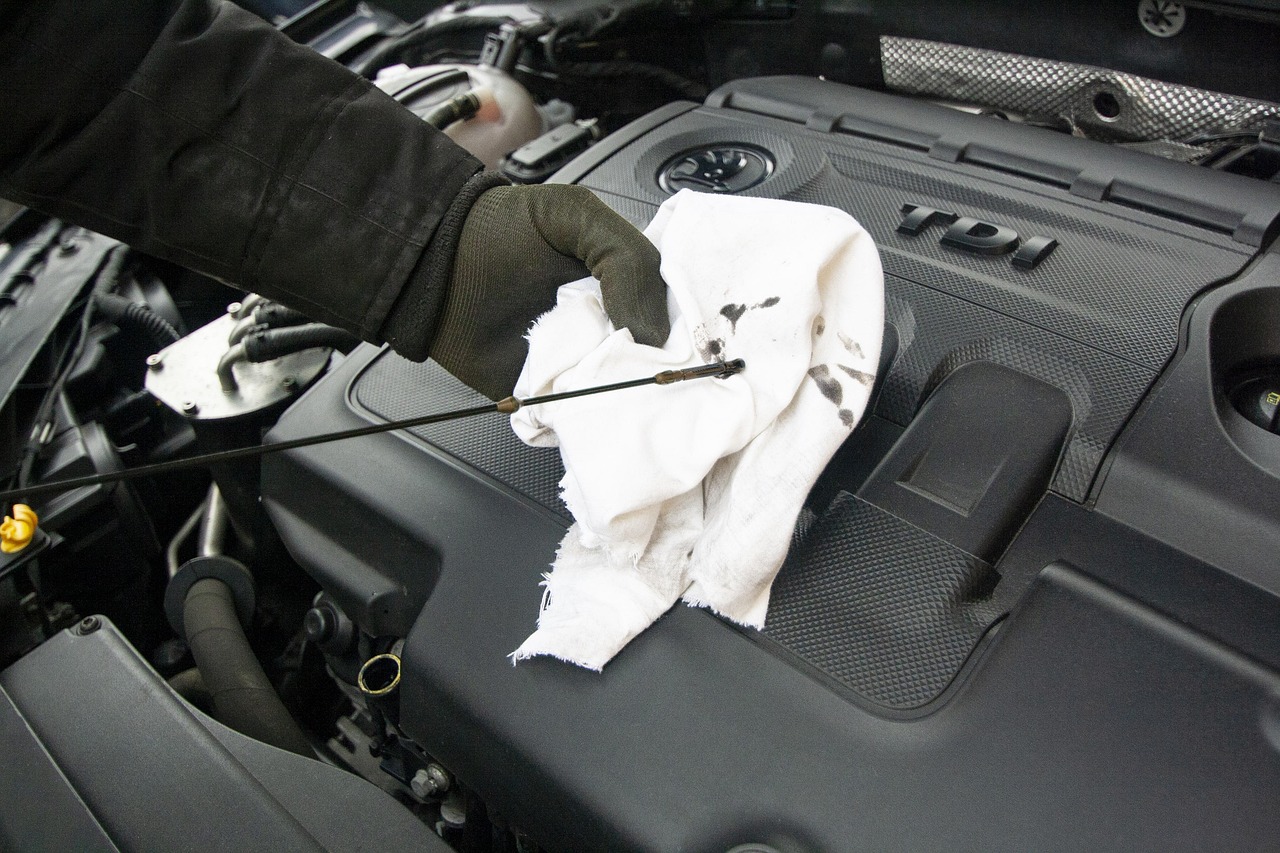
The first thing the mechanic did wasn’t glamorous. Hood up, quick scan for obvious stuff, then straight to the dipstick because the noise description sounded like the top end complaining. He pulled it, wiped it, reinserted, pulled again—and it came up basically dry.
Not “a little low.” Not “between the lines but close.” Dry enough that the mechanic stared at it for a second like maybe he’d grabbed the wrong stick, even though there’s only one. He angled it under the shop lights, rotated it, checked again, and got the same ugly result: no real film, no clean honey-colored oil, nothing that matched “fresh service.”
He didn’t say it out loud right away. He popped the oil cap and looked inside, expecting at least some evidence that oil existed somewhere in this engine. Then he did the next thing mechanics do when they’re trying not to panic a customer: he asked for details in a calm voice, like the answer might change physics.
“Where’d you get it serviced?” he asked, and the customer immediately got defensive. The guy named a quick-lube chain like it was a character reference, then added that he’d watched them do it. That was his big reassurance: he’d physically been in the waiting room, so obviously no one could’ve messed it up.
“It doesn’t leak, I’d see it”
The mechanic didn’t argue yet. He asked the customer if the car had been leaving spots in the driveway or if he’d smelled burning oil, and the guy shook his head hard. He had the confidence of someone who’d never had an older car quietly drink oil without leaving a dramatic puddle behind.
So the mechanic did the thing that would either calm everyone down or make it worse: he put the car up on the lift. If it was leaking badly enough to be nearly empty, it should’ve been obvious underneath. But the belly wasn’t soaked, the drain plug area wasn’t dripping, and the filter wasn’t spewing oil down the side of the block.
That’s when the “freshly serviced” part got more unsettling, because now there were only a few explanations and none of them were good. Either the engine was burning oil like crazy, or the last shop had underfilled it, or something had happened around the drain plug or filter that let oil escape without leaving a telltale mess. The mechanic checked around the filter anyway, looking for the kind of sheen that suggests someone tightened it wrong and it’s been misting oil while driving.
Then he found it: a faint, sticky track and a grimy spray pattern that didn’t look like a full-on leak, more like a slow pressurized mist that had been collecting dust. Not enough to form puddles, just enough to quietly empty a crankcase over time. The kind of thing a driver won’t notice until the engine starts talking back.
The moment the customer realized the receipt didn’t matter
When the mechanic brought the customer over to show him the dipstick again, the guy actually leaned in like proximity might conjure oil onto the metal. He kept saying, “But it was just done,” like he’d paid for a spell, not a service. He asked if the mechanic was sure he wasn’t checking it wrong, which is a very human reaction when the alternative is admitting your car has been running on fumes.
The mechanic stayed irritatingly calm and did something that’s half courtesy, half self-defense: he checked it again in front of him. Same result. He explained, without getting preachy, that oil doesn’t care about receipts, and engines don’t give you a warning period out of kindness.
The customer’s tone shifted from skeptical to frantic in about ten seconds. He wanted to know if the engine was already ruined, whether the mechanic could “just top it off,” and how something like this even happens if a shop “did the oil change.” It wasn’t anger yet, more like he was trying to re-stack a tower that had already started falling.
The mechanic told him the part that made the air feel heavier: one more decent drive, especially highway speeds, could’ve locked the engine. Not “might damage it a bit,” but seize it—metal on metal, heat, no lubrication, and then you’re coasting to the shoulder praying you’re not in the fast lane. He wasn’t trying to scare him for fun; he was trying to communicate the scale of how close this had gotten.
Topping it off wasn’t the end of it
They didn’t just dump oil in and call it a day. The mechanic added enough oil to register properly on the dipstick, then listened to the engine again. The tick didn’t disappear like magic; it softened, changed shape, became less sharp, but it was still there like a lingering complaint.
That’s when the conversation got awkward in the way only car trouble can make it. The customer wanted certainty—tell me if it’s fine, tell me if it’s ruined, tell me exactly what I need to pay for. The mechanic couldn’t honestly give him that in a five-minute bay check, because an engine that’s been run low can be unpredictable.
He recommended a proper inspection: check for leaks under pressure, inspect the filter and drain plug situation, maybe run it and monitor oil pressure if the car had a gauge or if they could hook up a scanner. He mentioned that low oil can chew up bearings and valvetrain components, and that sometimes the damage doesn’t show until later. The customer’s face did that thing where you can tell he’s mentally calculating how much this could cost while also trying not to hear it.
Then came the part everyone dreads: the customer asked if this was the last shop’s fault. The mechanic didn’t say “yes” like it was a courtroom verdict, but he also didn’t protect them. He pointed out the evidence—how low it was, how recently it was supposedly serviced, how there was residue around the filter area—and said the customer should go back with the receipt and ask some very specific questions.
The quiet fight that started in the parking lot
The customer stepped outside to make a call, still holding the receipt like it was going to help him win an argument. The mechanic watched from the bay as the guy paced near the front bumper, phone pressed to his ear, shoulders climbing toward his ears. You could tell the person on the other end wasn’t immediately taking responsibility, because the customer’s voice started doing that strained, polite-but-boiling thing.
He kept repeating the same points, louder each time: “You guys just did it,” and “There was almost no oil,” and “He said it could’ve seized.” At one point he looked back toward the shop door like he wanted the mechanic to come out and be his witness. The mechanic didn’t move, because stepping into that call is how you end up getting dragged into someone else’s customer service war.
Eventually the customer came back inside with that brittle expression people get when they’ve been told “bring it in and we’ll take a look,” as if that’s a solution and not a stall tactic. He asked for something in writing from the mechanic—anything that said the oil was low and the engine was at risk. The mechanic printed an inspection note, careful with the wording, sticking to what he could verify: oil level nearly empty on arrival, abnormal valvetrain noise, evidence of possible seepage near filter area, added oil to safe level.
The customer took the paper like it was a weapon and a comfort blanket at the same time. He didn’t thank the mechanic in a warm way; it was more like a tense nod, the kind you give when you’re trying not to explode at the wrong person. Then he got in the car—now safely filled, but still making a noise—and drove off toward the shop that had supposedly “just serviced” it.
What stuck with the mechanic wasn’t the near-miss alone, but the way the customer’s trust had been tied up in that one phrase: freshly serviced. He’d walked in believing the hard part was already handled, that maintenance was a box he’d checked. And now he was headed into a confrontation where the engine might survive, might not, and the receipt that had made him feel safe was about to become an argument over whose mistake almost turned his car into a dead weight on the highway.