

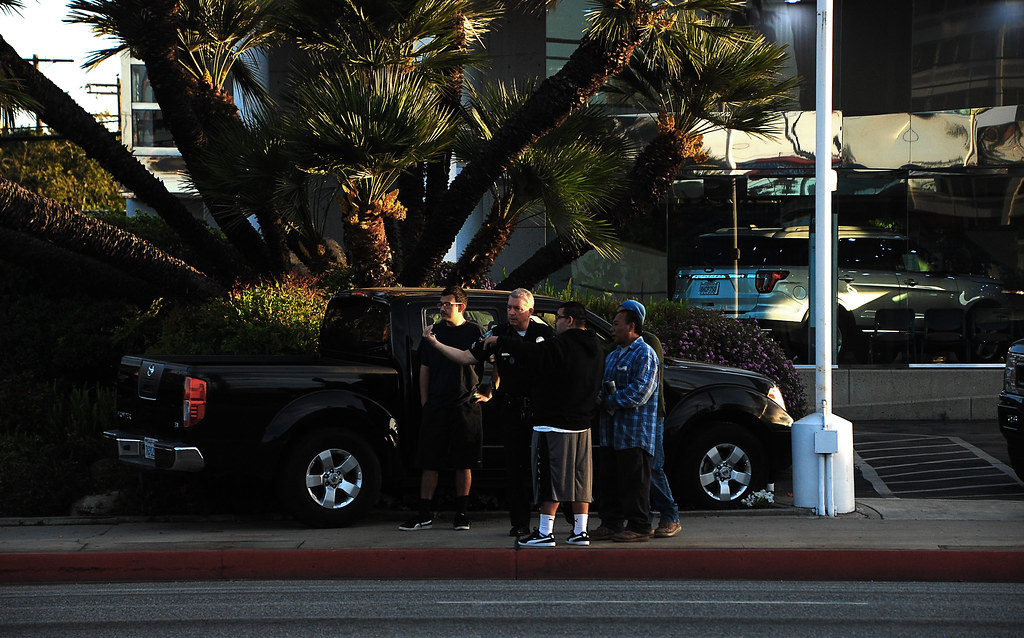
They’d had the truck for less than a week, the kind of “finally” purchase that comes with a temporary high and a permanent monthly payment. It was the family’s first brand-new vehicle—clean interior, plastic still clinging to the edges, that faint factory smell that makes people talk softer in the cabin. The husband was still doing that thing where he parked a little farther away from other cars, just to avoid door dings.
He also couldn’t stop showing it off. Not in a braggy way, at least not intentionally—more like a kid who’d saved up for something and needed everyone to validate that it was worth it. So when his longtime friend came over for beers on a Saturday and kept circling the driveway, it didn’t take much for the idea to land: “Want to take it around the block?”
The wife didn’t love that question, mostly because “around the block” is how people justify stupid decisions. But she didn’t want to be the fun police either, and her husband was already reaching for the keys with that proud, eager grin. The friend did the whole “Oh man, are you sure?” routine while still holding his hand out, and a few seconds later he was in the driver’s seat like it belonged to him.
The test drive starts with compliments and gets weird fast
At first it was normal. The friend adjusted the seat, fiddled with the mirrors, ran his hand over the steering wheel like he was appraising leather. He talked about torque and towing capacity, then asked if the truck had “sports mode” like it was a video game setting and not a two-ton vehicle.
The husband rode shotgun, basking in it, offering little bits of information he’d memorized from the salesperson. The wife stayed in the driveway watching them roll off, feeling that nagging discomfort that comes from not being in control of something you care about. She told herself it would be five minutes, maybe ten, and then they’d be back laughing about how smooth it felt.
But they didn’t come back quickly. Ten minutes turned into fifteen, and then she noticed that the house felt too quiet, the kind of quiet where you start listening for sounds you’d normally ignore. When her phone buzzed, she expected a casual “we’re on our way back,” and instead saw her husband’s name and a message that made her stomach drop: “Something happened. Coming home.”
The crash is minor… until it isn’t
They limped into the driveway not long after, and the truck looked wrong in a way that was hard to process at first. The front end wasn’t demolished, but it was undeniably damaged—bumper pushed in, a headlight cracked, paint scraped like someone had dragged it along sandpaper. The kind of damage that’s too expensive to ignore but not dramatic enough to feel like it “counts” as a real accident, which is exactly what makes people minimize it.
The friend climbed out first, laughing a little too loudly, trying to set the tone before anyone could react. He started talking immediately—some story about a tight turn, a curb that “came out of nowhere,” a car that “stopped short.” The husband looked pale and embarrassed, the way people look when they realize they’ve just created a problem that won’t disappear if they avoid eye contact.
The wife didn’t yell right away. She just walked to the front of the truck and stared, running her eyes over the damage like she could reverse it with enough attention. Then she turned to the friend and asked the simplest question in the world: “What happened?”
He shrugged, still smiling, and said it was no big deal. “That’s what insurance is for,” he added, like he’d solved the entire situation with a single sentence. It was the kind of casual, throwaway line you might use after dropping a glass at a party, not after putting a brand-new family vehicle into a body shop.
“Insurance will handle it” turns into a full-blown argument
Something in that line set the wife off, not because she didn’t understand how insurance worked, but because of what it implied. It implied that the inconvenience didn’t matter, that the money wasn’t real money, and that the decision to let him drive was just a fun little moment that came with no consequences. She asked him if he planned to pay the deductible, because “insurance” doesn’t mean “free,” and because their rates could go up for years over a claim.
The friend blinked like she’d asked him to donate a kidney. He said he didn’t have cash like that lying around and reminded them they were friends, like friendship was supposed to cover dented metal and paperwork. He also tossed out the classic deflection: he’d barely tapped anything, it was mostly cosmetic, and besides, her husband had offered.
The husband tried to calm it down, standing between them like a referee who regretted taking the job. He told his wife they’d figure it out and muttered something to the friend about “maybe pitching in,” but he didn’t say it with any authority. It was clear he wanted everyone to just stop talking so he could rewind the last hour and keep his truck perfect.
That’s when the friend doubled down. He said, again, louder this time, that insurance exists for accidents, and accidents happen. He sounded almost offended that they weren’t grateful for his wisdom, like they were being irrational for caring about something they’d spent a huge amount of money on.
The awkward truth: the friend doesn’t treat it like his problem
Once the immediate shock wore off, the practical questions started flooding in. Who was driving? Obviously the friend. Whose policy would cover it? The family’s, because it was their vehicle, and the husband had voluntarily handed over the keys. Would the friend’s insurance help? Maybe, but that’s not a guarantee, and now everyone had to make phone calls and explain why a “quick test drive” ended in a curb strike or a fender scrape.
The friend didn’t stick around for any of that. He hovered long enough to make sure nobody was going to scream at him, then started inching toward his own car, mumbling apologies that didn’t include any responsibility. He promised to “help however he could,” which is what people say when they don’t plan to help in any concrete way.
The wife watched him leave with the weird, sour feeling of realizing someone’s character in real time. It wasn’t just that he’d crashed the truck—accidents can happen. It was that he’d decided, immediately, that the cost and headache belonged to someone else, and he felt entitled to that decision.
After he drove off, the husband stood in the driveway staring at the damage, hands on his hips, looking smaller than usual. He admitted he shouldn’t have let his friend drive, then immediately added a defense—his friend had driven trucks before, he’d seemed excited, it was just around the block. The wife didn’t even have to argue; the evidence was parked right there.
The fallout spreads: money, blame, and a friendship on ice
Over the next day, the truck stopped being an exciting new purchase and turned into a rotating list of chores. Phone calls with the insurance company. Waiting on estimates. Hearing the words “deductible” and “rate increase” over and over until they started to feel personal. The wife found herself obsessing over details she shouldn’t have to think about, like whether the body shop would match the paint perfectly or if the front end would always look slightly “off” to anyone who knew.
The husband started doing that thing where guilt makes people defensive. He’d bring up how the friend “didn’t mean to,” or how it could’ve been worse, as if minimizing the damage made the decision smarter. And the wife, who couldn’t stop hearing “that’s what insurance is for,” started resenting not just the friend but the fact that her husband had let the friend’s casual attitude set the terms for their family’s finances.
When they finally reached out to the friend about the deductible, it got slippery fast. He didn’t outright refuse, but he also didn’t say yes—he offered half, then suggested they should “just see what insurance says” first, then went quiet for a day. Every message from him felt like it was designed to keep the topic vague until everyone got tired and dropped it.
The wife noticed how quickly the friend stopped checking in once it became clear there might be a price tag attached. The husband noticed too, but he hated admitting it, because it meant acknowledging he’d handed over something precious to someone who didn’t respect it. The friendship didn’t explode in one dramatic confrontation; it just started cooling, turning into that awkward silence where nobody knows how to act without bringing up the thing everyone’s thinking about.
By the time the truck was scheduled for repairs, the family had absorbed a new kind of stress—one that didn’t come from the crash itself, but from what the crash revealed. The wife couldn’t shake the feeling that her husband had been more concerned with not looking “uptight” than protecting their biggest shared purchase. And the husband couldn’t shake the humiliation of realizing his friend’s loyalty didn’t extend past a carefree spin around the neighborhood, especially now that the damage was sitting there like a bill nobody wanted to claim.
The truck would get fixed eventually, the deductible would get paid by someone, and the insurance paperwork would finally stop. But that line—“That’s what insurance is for”—hung around like exhaust in a closed garage, because it wasn’t really about insurance. It was about how easy it was for one person to treat the family’s hard-earned security like a disposable perk, and how hard it was for the husband to admit he’d let him.