

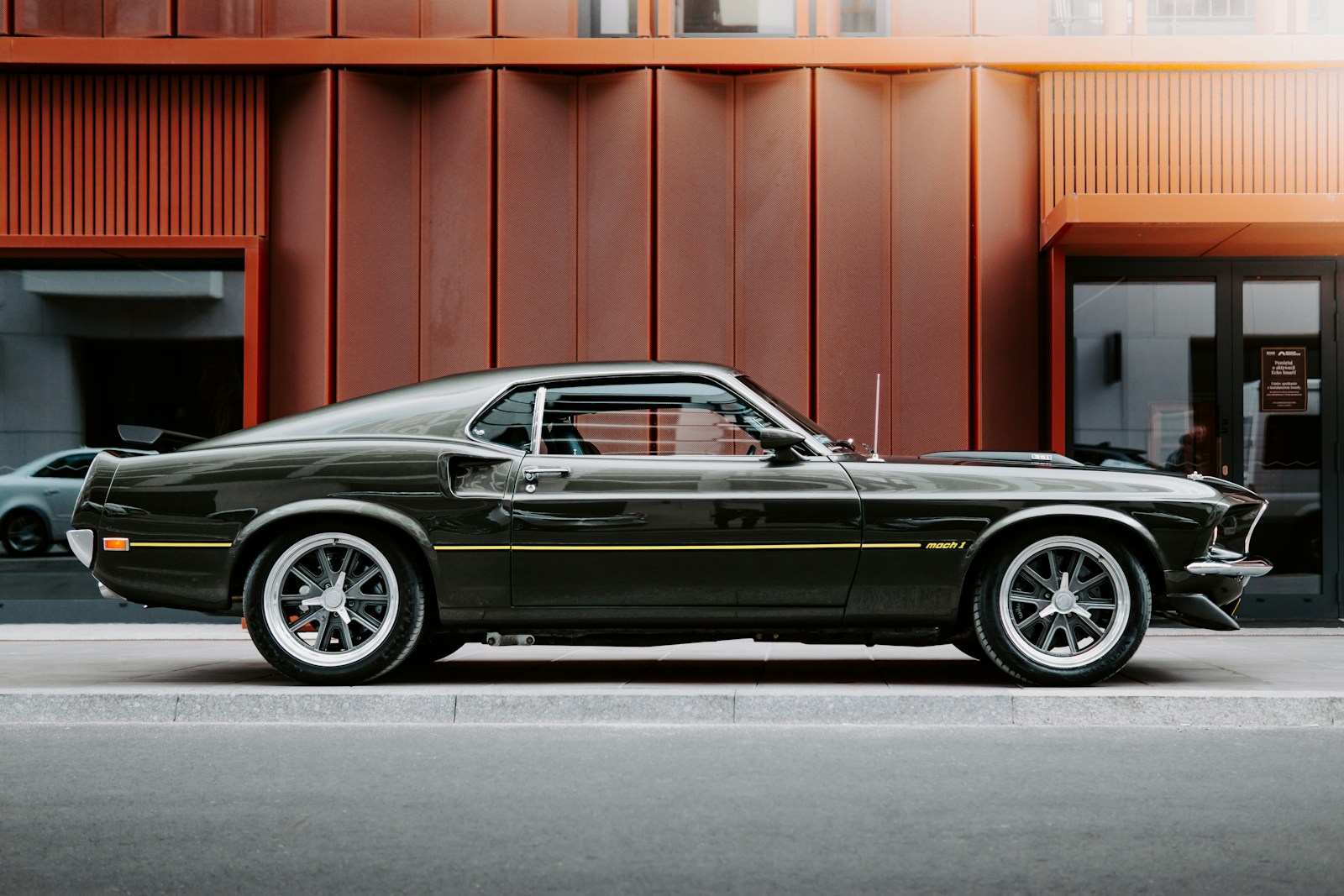
He’d spent three years bringing the Mustang back from the dead in a friend’s garage, one knuckle-busting weekend at a time. Not a “restomod” with a tablet glued to the dash, but a proper classic: deep blue paint, chrome that actually shone, and an engine bay he kept cleaner than his own kitchen. It wasn’t his daily driver. It was his “don’t touch it unless you respect it” car.
So when his brother showed up on a Saturday morning asking to borrow it for “one quick errand,” the answer should’ve been an easy no. Except the brother had that specific tone—half casual, half entitled—like he was asking to borrow a phone charger. Their mom was in the background, making coffee, already softening the edges with, “It’s just down the street.”
The owner hesitated long enough for the conversation to slide past the point of return. The brother promised he’d be careful, promised it was literally one stop, promised he wouldn’t “do anything stupid.” The keys changed hands with that weird little pause people do when they know they’re crossing a line but still want to pretend it’s normal.
The “one errand” pitch
The brother’s story was simple: he needed to run to the hardware store and pick up a part for his own car, which was “acting up.” His usual ride was parked out front, but he claimed he didn’t trust it to make the trip, which was convenient because the Mustang was right there, freshly washed. He even did the thing where he complimented the car like a bargaining chip—“Man, you’ve really got it running great.”
The owner laid out rules like he was lending a power tool: no burnouts, no revving it at lights, no letting anyone else drive it, and bring it straight back. He reminded him it still had an older clutch setup and a touchy first gear, the kind that punishes you for getting cute. The brother nodded fast, like he was agreeing to terms he’d already decided not to read.
As he backed out of the driveway, the owner watched like a parent watching a teenager take the car for the first time. The Mustang rolled off clean, no drama, just the low burble of a well-tuned engine disappearing down the street. For a few minutes, it almost looked like the whole thing might be fine.
The waiting starts to feel long
An hour went by. Then another half hour. The “quick errand” timeline started to stretch into that uncomfortable zone where you don’t want to text because you’ll sound controlling, but you also don’t want to be the person who let their pride and joy disappear on a handshake agreement.
He finally sent a simple message—“All good?”—and got nothing back. Another twenty minutes later, he called and it went straight to voicemail. That’s when the owner’s stomach did the little drop, the same one you get when you realize you trusted someone who treats boundaries like suggestions.
His mom tried to smooth it over, saying maybe he got stuck in line or ran into a friend. The owner didn’t argue, but he started pacing the living room anyway, listening for that familiar exhaust note like it might fix the situation just by returning. When the sound finally came, it wasn’t the calm rumble he’d sent out—it was louder, uneven, like the car was arriving with a story.
The Mustang comes back smelling wrong
The brother pulled into the driveway too fast and braked late, like he was parking at a gas station instead of someone’s home. The first thing the owner noticed wasn’t the tires—it was the smell. That sharp, sour burned smell that sits in your nose and doesn’t let go, the one anyone who’s cooked a clutch recognizes instantly.
Then he saw the rear tires: the tread looked chewed up, and there were fresh black smears along the inside edge, like rubber had been peeled away. Little bits of it clung to the wheel well, and there was a faint haze still hanging near the back of the car. The brother climbed out like nothing happened, keys dangling from one finger, not even pretending to be cautious.
The owner asked, quietly at first, “What did you do?” and the brother did that dismissive laugh people do when they’re trying to make your concern sound dramatic. “Relax,” he said, tossing the keys into the owner’s palm like he was returning a borrowed pen. He claimed he “might’ve spun it a little” leaving a light because someone next to him “wanted to race.”
The fight is about respect, not rubber
The owner didn’t even touch the keys at first. He just stared at the tires, then at the brother, and asked again, slower, if he’d done a burnout. The brother shrugged with that infuriating half-smile and said, “It’s a Mustang. It’s meant for that.”
That’s when the owner’s voice got louder, not theatrical, just that sharp jump when someone’s trying not to explode. He pointed out that the clutch smell wasn’t “normal Mustang stuff,” and that the car hadn’t smelled like that when it left. The brother rolled his eyes and said the owner was acting like he’d crashed it, like he couldn’t believe anyone would be mad about “a little fun.”
The mom stepped in, trying to de-escalate, saying, “Okay, okay, just talk,” but it made things worse because it turned it into a family scene. The brother started doing that thing where he talks over people, building a case out of nonsense: it was only one time, he didn’t “floor it that hard,” the tires were probably old anyway, and besides, the owner shouldn’t lend it out if he’s going to be “so precious.”
That last word landed like a slap. The owner wasn’t mad because tires wear out; he was mad because the brother treated the car like a prop in his own movie. The Mustang wasn’t just transportation—it was hours of work, money he’d saved, mistakes he’d fixed, and pride he’d earned the hard way.
“No apology” becomes the real damage
The owner popped the hood like he needed a physical task to keep himself from saying something irreversible. Everything looked intact, but the smell was still there, and when he pressed the clutch pedal, it felt slightly different—softer, less crisp. He didn’t have to be a mechanic to know something had been stressed.
He asked the brother to pay for new rear tires and whatever it cost to inspect the clutch. Not a punishment, just a straightforward “you did it, you cover it.” The brother immediately got defensive, saying he didn’t have money for that and that the owner was “overreacting” because the car still drove.
Then came the non-apology apology, the kind people use like a shield: “I’m sorry you’re mad.” The owner didn’t accept it, and the brother snapped back that he’d only borrowed it because he “needed help” and apparently that meant the owner should eat the cost. He tried to pivot to guilt—family helps family—while ignoring that family also doesn’t torch someone’s clutch for entertainment.
The argument ended in that unresolved, ugly way where nobody storms off dramatically, they just stop talking. The brother walked inside like he expected dinner to still be on schedule. The owner stayed in the driveway with the Mustang, running his thumb over the roughened rubber on the tire like he could erase the last two hours by touching it.
By that night, the owner wasn’t even thinking about the repair bill as much as the feeling he couldn’t shake: the brother hadn’t just borrowed the car, he’d borrowed trust and returned it burned up. The Mustang sat in the driveway cooling down, smelling faintly of abuse, and the real problem was sitting in the kitchen acting normal—waiting for everyone else to pretend the “one errand” hadn’t been a test run for how much disrespect he could get away with.