

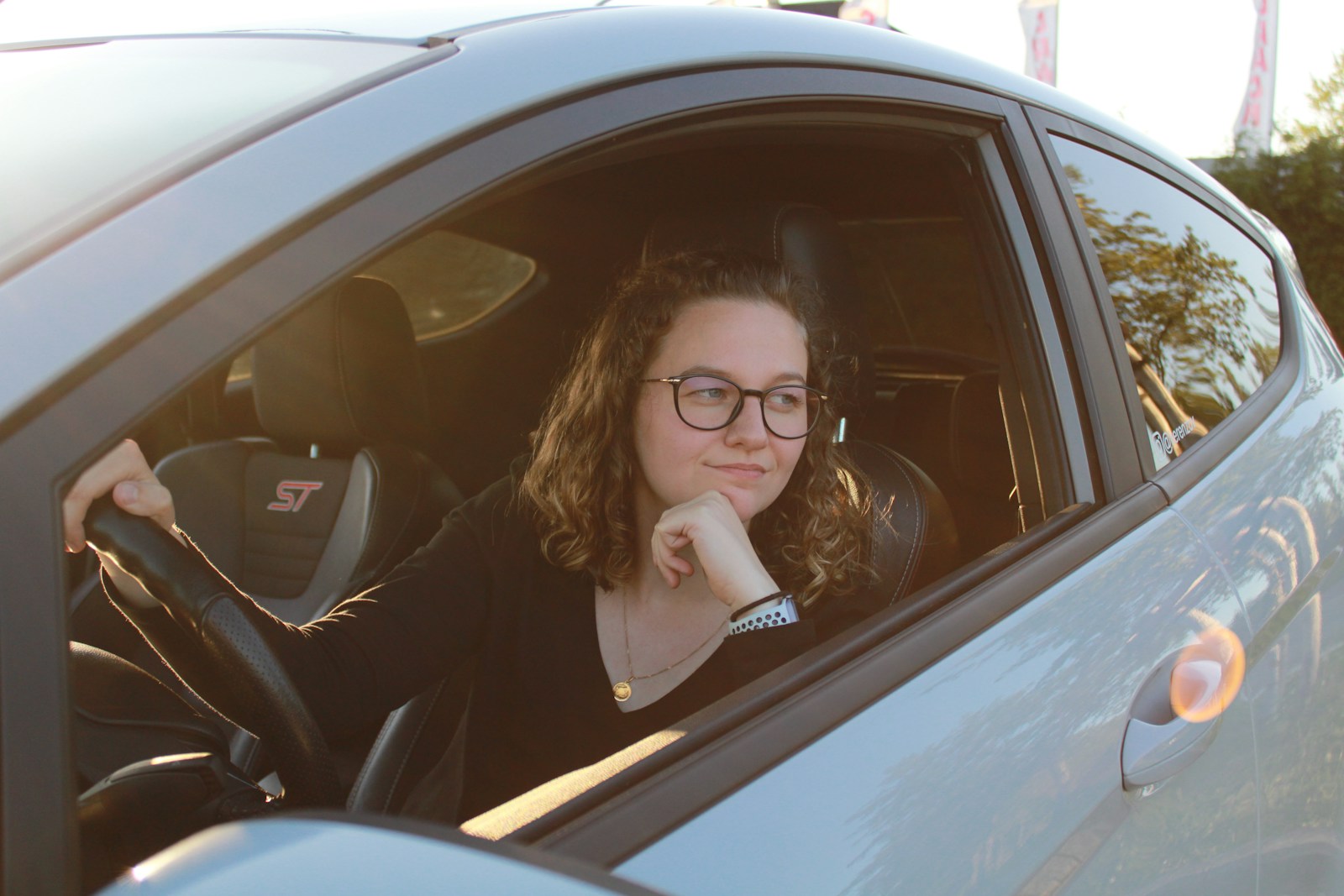
The new SUV still had that faint dealership smell when the couple pulled into his parents’ driveway for Sunday dinner. It was the kind of purchase you make after months of spreadsheeting and second-guessing—safe, reliable, expensive enough to make you park a little farther from shopping carts. They’d barely shut the doors when his mom’s eyes went straight to the keys in his hand.
It wasn’t a compliment first, either. Not “wow, nice car,” not “congrats,” just a quick once-over and a too-casual, “So… you’re letting Tyler drive it for school this week, right?” Like it had already been decided and they were just there to hear the plan.
Tyler—his sister’s 17-year-old—was inside on the couch, feet up, scrolling on his phone like the house belonged to him. He didn’t look up until he heard his name, and even then it was the bare minimum: a glance, a smirk, a shrug that said, Obviously. The couple exchanged that silent married look—the one that’s half question, half warning—because they both knew exactly where this was going.
The SUV was “family,” apparently
At the table, the conversation did that thing it does in families that don’t like direct conflict: small talk stapled together with expectation. His dad asked about work, his mom asked about the color, and then the sister slid in the real topic again, like she was adding salt. Tyler’s “ride situation” had been “a mess,” she said, and he needed something “reliable.”
The couple had heard about the mess. Tyler had already totaled a car a few months earlier—an older sedan his mom had gotten him because he “needed independence.” He’d wrapped it around a guardrail on a wet road while “messing with the music,” and the insurance payout didn’t exactly stretch to a replacement.
Now the family had decided the couple’s brand-new SUV was the solution. Not asked, not hinted at gently—decided. The sister even tried to make it sound flattering, like she was giving them an opportunity to be generous: “You guys don’t even have kids yet, and you work from home most days. It’s just sitting there.”
He tried to keep it light at first, like you do when you’re hoping the other person will catch the vibe and retreat. “Yeah, no, we’re not comfortable with that,” he said, reaching for his water. His wife nodded, calm but firm, the way people get when they’ve already rehearsed this boundary in their heads.
They said no, and the room went cold
The sister blinked like she hadn’t processed the word “no” as a real option. “It’s for school,” she said, dragging out the phrase like it was a magic key that unlocked other people’s property. Tyler finally sat up, suddenly invested, and asked, “So how am I supposed to get there?” in a tone that implied the couple had sabotaged his future.
The wife repeated it more clearly: “We’re not lending out the SUV.” She didn’t raise her voice, but you could hear the line in it—this wasn’t a negotiation, and she wasn’t going to get dragged into a debate about their finances and their schedule like she was on trial.
That’s when his mom jumped in, not as a mediator but as the person who thought she could override the decision. She did the whole “family helps family” speech, complete with the little sigh that suggests someone is being selfish and disappointing. Then she tried to steer it into guilt: “After everything we’ve done for you, you can’t do this one thing?”
His dad added, “He’s a good kid,” the way adults say it when they want to ignore the very recent evidence that someone is, at minimum, a reckless driver. Tyler, for his part, sat there like a customer waiting for a manager, not a teenager asking for a favor.
The husband kept his voice steady and finally said the part everyone was thinking: “He already totaled one car. We’re not risking ours.” The words landed with a thud. For half a second, the table went silent, and you could almost hear everyone deciding whether they were going to acknowledge reality or punish the person who brought it up.
“That was an accident,” and somehow it became their fault
The sister’s face hardened immediately. “That was an accident,” she snapped, as if the SUV would be protected by semantics. She started listing reasons Tyler wasn’t to blame—bad weather, other drivers, “it was a learning experience”—like the couple was supposed to nod along and hand over the keys as proof they believed in growth.
The wife didn’t bite. She said something like, “Accident or not, we’re not comfortable. It’s our car, and we’re not lending it out.” Calm, polite, final. That’s the kind of boundary that should end a conversation, but it’s also the kind of boundary that makes entitled people escalate because they can’t poke holes in it.
His mom pivoted to money, which is always a sign things are going off the rails. “You have full coverage,” she said, too quickly, like she’d been thinking about that detail. “So what’s the problem? If something happens, insurance handles it.”
The husband looked at her like she’d suggested they let Tyler borrow the house because they had homeowners insurance. He pointed out the deductible, the rate hikes, the time, the hassle, the fact that a claim on a new SUV isn’t just a theoretical inconvenience. And then—because no one in that room was actually being honest about it—he said the quiet part: they didn’t trust Tyler with a vehicle they’d worked hard to buy.
That’s when Tyler finally spoke like someone who’d been saving up resentment. “I’m not a little kid,” he said. “You’re acting like I’m irresponsible.” He didn’t say it like a plea. He said it like an accusation, like the couple had insulted him by not pretending the previous crash never happened.
The blowup: shouting, guilt, and the keys becoming a symbol
The sister got louder, fast. She started talking about how the couple “thinks they’re better than everyone” because they can afford a new SUV. She threw in a few jabs about them not having kids, like that made their needs imaginary, and she implied they were being cruel on purpose.
His mom backed her up with that particular brand of parental outrage where the volume increases and the logic decreases. She accused the wife of “controlling” her son and suggested the husband was “whipped” because he wasn’t bending. Every sentence turned into a character attack, like the only way to win was to make the couple feel small enough to comply.
And Tyler—this was the part that stuck with the husband afterward—didn’t look embarrassed. He looked annoyed, like customer service was taking too long. He kept asking questions that weren’t really questions: “So you’re really saying no?” “You’d rather I miss school?” “What, you don’t trust me?”
The husband finally stood up, keys in his pocket, and said they were leaving. That should’ve been the pressure release valve, but it was like pouring gasoline on the fire. His dad called it “disrespectful,” his mom said they were “tearing the family apart over a car,” and his sister followed them down the hallway still arguing.
Outside, it got even uglier. The sister demanded they at least let Tyler use it “just for the week,” just until she could “figure something out.” His mom suggested the couple was “punishing Tyler” for something that wasn’t “that serious.” The wife, standing by the passenger door, repeated the same sentence like a shield: “No. We’re not doing that.”
The aftermath: silent treatment, side texts, and a new kind of distance
By the time they got home, the texts had already started. His mom sent a long message about how hurt she was and how “this isn’t who we are.” His sister sent shorter ones, sharper ones, full of sarcasm and “must be nice” energy, plus a few lines about how Tyler was “crying” and “stressed,” like emotional distress was a bill the couple now owed.
Then came the quieter manipulation: relatives reaching out “just to talk,” which somehow always circled back to Tyler’s commute. A cousin asked if the couple could “help him practice driving” in the SUV, as if practice with the expensive vehicle was the compromise. Someone else suggested the couple could drive Tyler themselves, which was almost impressive in how quickly it turned their purchase into unpaid family logistics.
The husband and wife weren’t even arguing with each other, which made the pressure from his family feel louder. They agreed it was a hard no, but the constant drumbeat of disappointment and accusation started to turn the SUV into a symbol of something bigger. It wasn’t just a car anymore; it was the first time they’d said no and not backed down.
When the next family gathering came up, his mom acted like everything was “fine,” but in that forced-bright way that makes it obvious it isn’t. Tyler barely looked at them, and when he did, it was with that cold teenage contempt that says, I’ll remember this. The couple sat through dinner feeling like they’d walked into a room where everyone had agreed on a story that made them the villains.
And the unresolved part wasn’t whether Tyler would get to school—someone would figure it out, they always do. It was the way the in-laws had revealed their real expectation: that the couple’s stability, money, and possessions were communal resources, available on demand, and that any boundary would be treated as betrayal. The SUV sat in their driveway afterward, spotless and new, but it didn’t feel like a celebration anymore—it felt like a line in the sand they’d drawn, and a family that was already deciding how to punish them for it.