

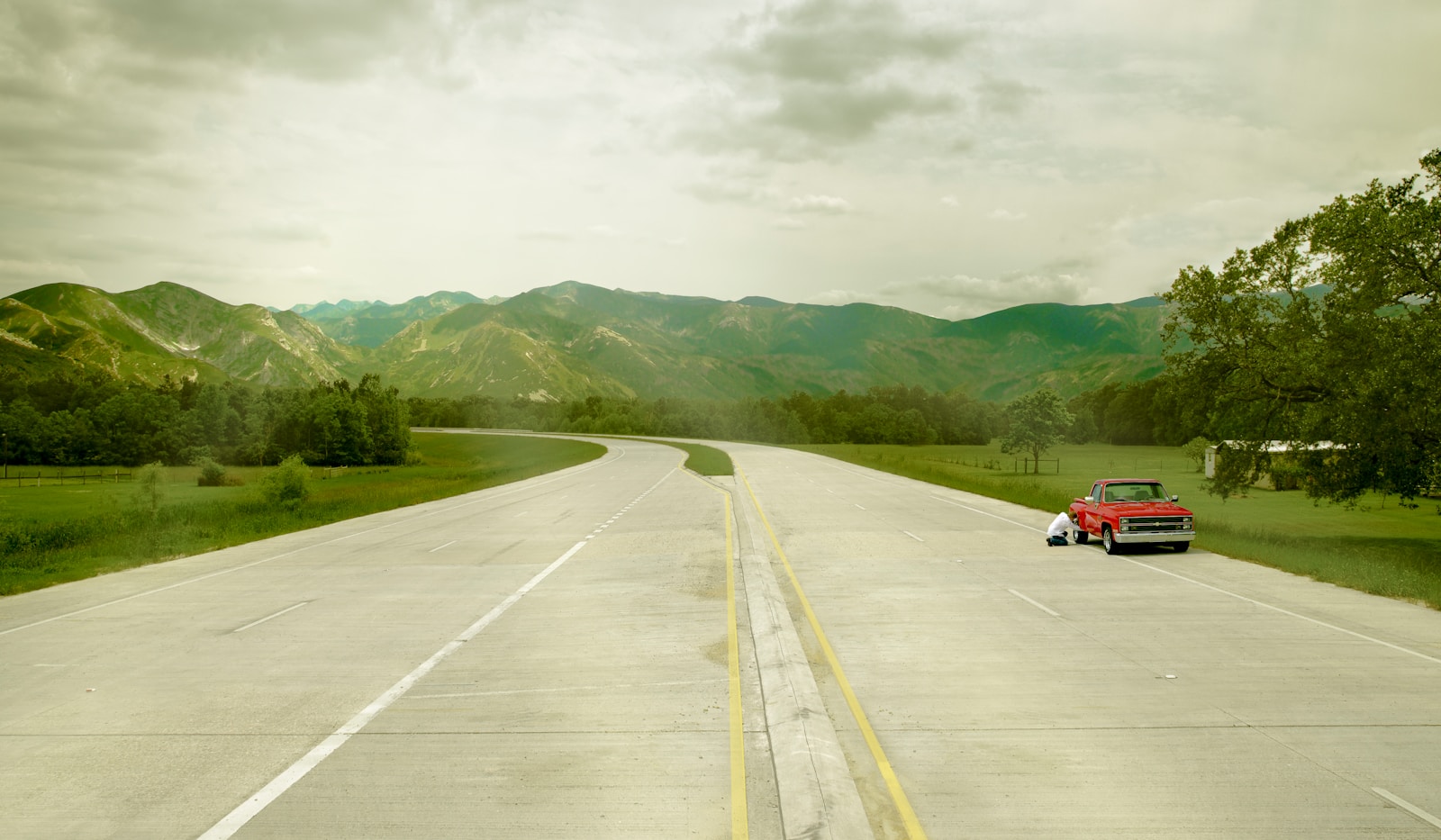
They’d been on the road for three hours when the dashboard started nagging. Not a dramatic alarm, just that low-fuel icon glowing like a tiny, smug reminder that cars don’t run on vibes. The wife noticed it first, casually, like it was no big deal—“Hey, we should stop soon, right?”—and her husband didn’t even look up from the highway.
He had that particular road-trip energy some people get: determined, slightly wired, convinced the only way to do travel “right” is to keep moving. He was driving, he’d made the route, and he’d decided they were going to “make good time,” which in his mind seemed to mean not stopping for anything that wasn’t absolutely unavoidable. She let it go for a bit, because it was early, because the car still had range, because arguing about gas this soon felt ridiculous.
But the longer they drove, the more it stopped being about the gas and started being about who got to be right. Every time they passed an exit with a cluster of stations, she’d glance over and say something mild like, “That one looks easy,” and he’d respond with some version of “We’re fine.” The little light stayed on, and the tension in the car started to feel thicker than the air-conditioning.
The “We’re Fine” Spiral
At first, his reasoning sounded almost responsible. He said stations right off the highway were overpriced, and he didn’t want to pay “tourist gas” when they could find something cheaper a little farther along. Then it became about timing—stopping now would mess up their plan, and they’d just eaten, and he didn’t want to lose the momentum.
She wasn’t demanding anything dramatic. She wasn’t asking for a sit-down meal or a scenic detour, just a five-minute pit stop so they wouldn’t end up stranded in the middle of nowhere. The more she pushed, the more he responded like she was trying to control him, and the more she tried to soften it, the more irritated he got.
She tried different approaches, because that’s what you do when you’re trapped in a car with someone who’s decided the argument is now a referendum on their competence. She joked about it—“Unless you’ve invented a new way to power engines, we should probably stop.” She offered to pay. She even offered to drive if he was tired. None of it landed.
Then the car hit that point where the fuel gauge isn’t just low, it’s insulting. The estimated miles-to-empty number started dropping faster than it should’ve, the kind of thing that makes you start counting exits even if you’re not the one behind the wheel. She pointed out a station with a big sign and plenty of room to pull in, and he dismissed it with a tight smile like he’d just won something.
When the Gas Stations Start Disappearing
The landscape shifted from “every exit has options” to “long stretches of nothing,” which is always when people who refuse to stop suddenly start acting like the universe has personally betrayed them. They drove past a few exits that were just dark ramps and closed diners, and she felt that sinking realization that they’d crossed some invisible line. She didn’t even want to say “I told you so,” because she didn’t want this to become a whole day of him sulking. She just wanted a working car.
He kept insisting he knew what he was doing. He said he’d seen a sign earlier for services up ahead, or maybe it was on the GPS, or maybe he just “remembered” there being something around this stretch. The details changed every time she asked, which made it worse, because now it wasn’t just stubbornness—it was improvisation.
She pulled up the map on her phone. The dot showed them threading through a long, empty corridor of highway with very few exits, and the next cluster of services was farther than the car’s range suggested. She said it carefully, like she was handling something fragile: “We might not make it.”
That was the moment his tone flipped. Instead of hearing it as a warning, he heard it as an accusation, and suddenly he was defensive in that sharp, offended way that makes you feel like you’re the one being unreasonable. He asked why she was “panicking,” and then, when she stayed calm, he accused her of “trying to start a fight.”
The Slow, Awkward Breakdown
The car didn’t die with a dramatic sputter. It started with little signs: the engine felt slightly weaker when they went uphill, the acceleration lagged, the cabin got quiet in the way it does when both people are listening for something they don’t want to hear. She turned off her music because it suddenly felt inappropriate, like playing a playlist in a waiting room.
He gripped the wheel harder, eyes fixed ahead like sheer focus could manifest gasoline. The miles-to-empty dropped into the single digits, then became a blank, and that’s when she stopped talking entirely. Not to punish him, not as a tactic—she just didn’t know what to say that wouldn’t ignite something.
When it finally happened, it was almost gentle: a subtle jerk, a loss of power, and then the horrifying silence of a car coasting on a highway shoulder. He managed to guide them over without swerving, but the moment they came to a stop, his body language said this wasn’t going to be a quiet, humbled situation. It was going to be somebody’s fault.
He sat there for a beat with his hands still on the wheel, staring forward like he couldn’t believe reality would do this to him. Then he exhaled hard and said something like, “Unbelievable,” as if the car had personally disrespected him. She didn’t gloat. She just looked at the empty gauge and felt tired in her bones.
How It Became Her Problem
Once they were safely on the shoulder, he hopped out and did the whole ritual of checking the car, as if opening the door and looking at the tires might magically refill the tank. She watched him from the passenger seat for a second before getting out too, mostly because sitting there felt like waiting for the argument to come through the window. The highway noise was relentless, cars rushing past with that indifferent roar.
He started talking fast, explaining how the gauge must be wrong, or the car must be burning fuel too quickly, or maybe the last fill-up “didn’t take.” And then, with barely any transition, he aimed the frustration at her. He asked why she didn’t “say something sooner,” like she hadn’t been pointing at gas stations for the last hour.
She reminded him—still pretty controlled—that she did say something. Over and over. She even told him they might not make it, and he’d waved it off. He didn’t deny that exactly; he just shifted the framing, saying her “attitude” made it hard to concentrate, that she was “stressing him out,” that she “could’ve just trusted him.”
It was such a perfect reversal that it almost sounded rehearsed. The problem wasn’t the choice to ignore the fuel light; the problem was that she hadn’t been supportive enough while he ignored the fuel light. She stood there on the gravel shoulder, feeling the heat from the pavement, and realized they weren’t arguing about a tank of gas anymore.
Stranded Logistics, Emotional Fallout
Now they had the practical problem: they were miles from anything, and they had no gas can. He wanted her to call roadside assistance immediately, but they were in a patchy service area, and every attempt to load a page took forever. She suggested they try flagging someone down, but he hated the idea of “asking strangers,” like being stubborn was still a virtue even when the car was dead.
Eventually he started walking a little way up the shoulder toward the next exit, phone in hand, trying to find a signal. She stayed by the car, partly because that’s what people do, and partly because she couldn’t stand the idea of walking beside him while he simmered. She texted a friend with their location when her phone briefly caught a bar of service, just in case they ended up waiting longer than expected.
When he came back, he was madder, not calmer. He said roadside assistance would take “forever,” and complained that she’d “made this a whole thing,” as if the car had simply decided to stop out of spite. She didn’t yell, but her patience snapped in that quiet way where you stop managing someone else’s emotions and just tell the truth: “You did this. And you’re trying to make it my fault because you can’t stand being wrong.”
That landed like a thrown object. He stared at her, then looked away, jaw tight, as if admitting anything would collapse his whole self-image. The cars kept flying by, and the sun kept climbing, and they stood there in the weird intimacy of a shared disaster where only one person seemed willing to acknowledge the obvious.
They eventually got help—some combination of a delayed service truck and a reluctant agreement to pay whatever it cost—though the more memorable part wasn’t the solution, it was the silence that followed. Even after the tank was filled and the engine was running again, the atmosphere in the car didn’t reset. She sat there listening to the turn signal click and thinking about how easy it had been for him to gamble with their safety, and how much easier it was for him to decide she was the problem for noticing.