

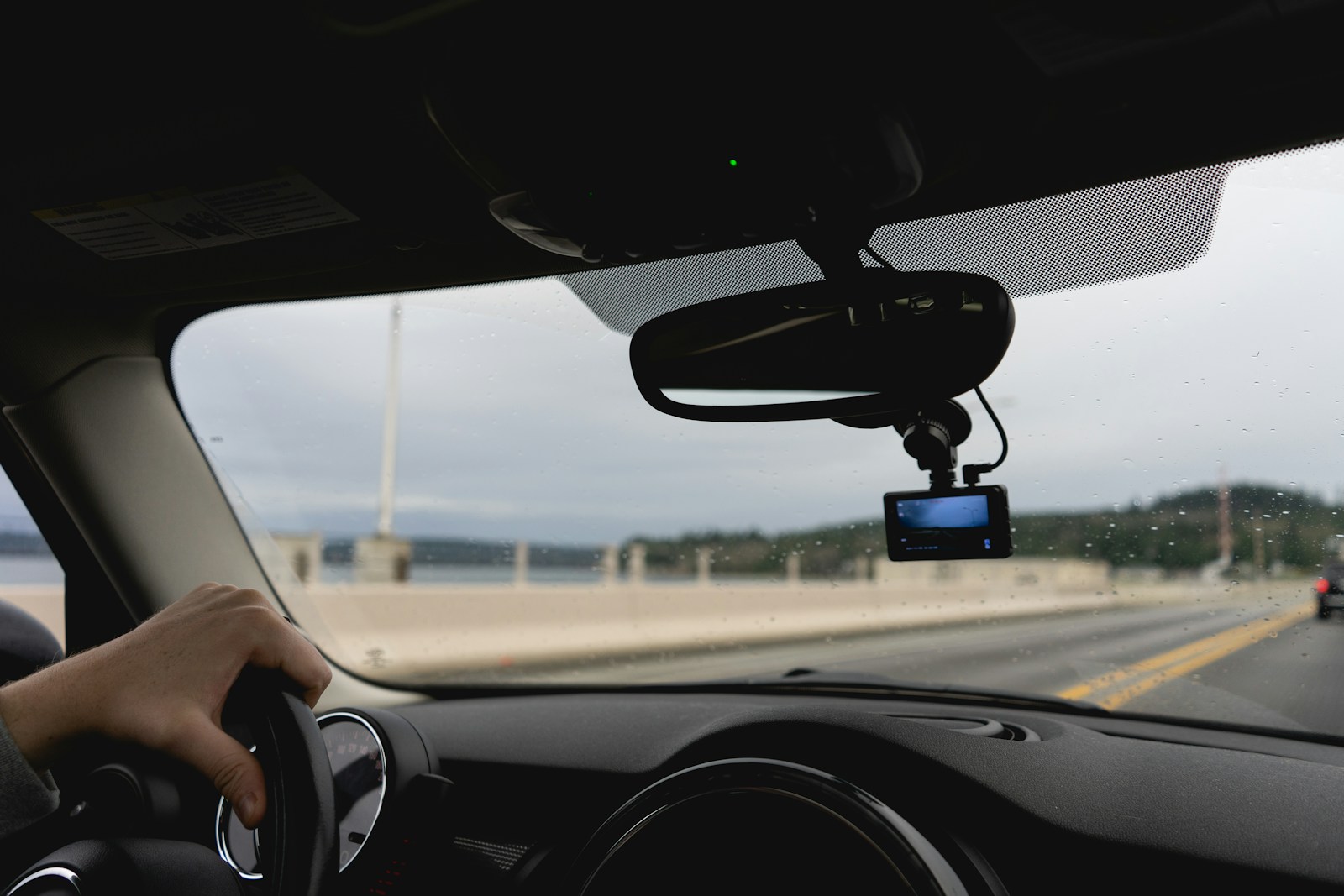
It started as one of those tiny “household tech” moments that usually ends with someone rolling their eyes and moving on. Her husband had asked her to pull a clip off the dashcam because it “glitched again,” and he needed the model number for customer support. She wasn’t snooping, at least not at first—she was sitting at the kitchen table with his SD card adapter, clicking through folders with names like “2026_05_18” and “EVENT,” trying to find the one clip he’d mentioned.
Then she saw a location that didn’t belong in their life. Not in the normal way, like an unfamiliar street on the far side of town. In the very specific way of a place he’d promised—more than once—he never went near, because it was “a non-issue” and “not even on my route.”
And the worst part was how boring the footage looked at first. No dramatic encounter, no screaming match in a parking lot. Just his car idling at a long light, wipers ticking, a radio host talking about weekend traffic, and then a slow turn into a neighborhood she recognized instantly. The kind of recognition that hits before you can talk yourself out of it.
The “why are you even looking at that?” moment
She replayed it twice to make sure she wasn’t mixing it up with somewhere else. There was a strip mall sign in the background and a faded mural on a brick wall—two dumb landmarks that shouldn’t have mattered, except she’d passed them a hundred times when she used to meet her sister for coffee over there. The street name popped up on the GPS overlay in the corner of the video, crisp as a confession.
When her husband walked in, she didn’t lead with accusations. She said his name once, the way you do when you want someone to come closer and also want to keep your voice steady. He glanced down at the laptop, saw the paused frame, and his whole posture changed—shoulders going stiff, eyes narrowing like he was trying to read the situation before he stepped into it.
“What’s that?” he asked, even though the date stamp was right there. She said, “It’s your dashcam. It’s you. It’s last Tuesday. Where were you going?” He gave the first answer that comes out when someone’s caught off-balance: “What are you talking about?”
She didn’t bite on the deflection. She rotated the screen a little, pointed at the street sign, and said it plainly: “That’s Cedar Ridge. You told me you don’t go to Cedar Ridge.”
He tries to make it small, and she won’t let him
He started with the casual brush-off, the kind meant to shrink the problem down to nothing. “I must’ve taken a wrong turn,” he said, already reaching for the SD card like he could physically remove the conversation. “Or it’s old footage. Those things recycle clips, you know.”
Except the dashcam didn’t recycle that way, and she knew it, because she was the one who set it up. She told him the date matched the day he’d texted her that he was “stuck late” and asked her to handle dinner. She reminded him that he’d come home with that tired, irritable mood and a fast shower, like he wanted the day to be over without talking about it.
That’s when he got annoyed at her for remembering. Not openly, not yet, but the irritation leaked out in little jabs: why is she tracking timestamps, why is she watching his dashcam, does she not trust him? It was a quick pivot from “this is nothing” to “you’re the problem for caring.”
She held her ground and asked again, calmer than she felt: “Why are you there?” He sighed and said, “It’s just a road. It’s not like I went to a motel.” The fact that he volunteered “motel” without her saying it landed like a dropped glass.
The place he swore he never went
Here’s why Cedar Ridge mattered: it wasn’t just a random neighborhood. It was where his ex lived—the one he’d said he cut contact with after she “got weird” and tried to pull him into old drama. Cedar Ridge was also where his mother’s friend lived, the one who never liked his wife and used to “accidentally” invite the ex to family events back when they were dating.
They’d argued about that whole orbit before. Not screaming, not slamming doors, but the kind of simmering argument that leaves residue. He’d promised her, unprompted, that he didn’t go over there, didn’t talk to the ex, didn’t want the mess, didn’t want to reopen anything.
So when she saw his car turning onto that street like it was familiar, her mind did what minds do. It filled in the blanks before she could stop it: a conversation he didn’t mention, a quick stop he didn’t count, a secret he decided wouldn’t matter if she never knew.
She asked him if he’d seen his ex. He didn’t say no right away. He paused, rubbed his forehead, and said, “Can we not do this right now?” That was the moment it stopped being about a neighborhood and became about whether she could believe him in general.
The argument turns into a trap door
He tried a new story: he’d gone to look at a used bike listed online, and the seller lived nearby. It sounded plausible for about ten seconds, until she asked why he didn’t mention it. Then he said it was because she “gets anxious” and he didn’t want to deal with questions.
That answer did something sharp to the room. It wasn’t just that he might be lying; it was that he was admitting he managed her emotions by withholding information. She told him that if he can’t tell her where he’s going without preemptively labeling her reaction, then they’ve got a bigger problem than a dashcam clip.
He snapped back that she was “spying” and making him feel like a criminal. He said it wasn’t normal to comb through footage, and she reminded him she wasn’t combing through anything—he asked her to find it. She pointed out that the only reason it felt like spying is because he didn’t want her to see it.
They circled like that for a while, both of them saying the same few sentences with different emphasis. Her: tell me the truth. Him: you’re blowing this up. The air got thick with that specific kind of marital exhaustion where each person is fighting the current argument and also every argument that came before it.
The part where “fine, you want the truth?” doesn’t fix anything
Eventually he threw his hands up and said, “Fine. I was there.” Not “I’m sorry.” Not “I should’ve told you.” Just a blunt concession, like he was tired of being cornered and wanted the interrogation over.
He admitted he’d met his ex for coffee. He framed it like something that happened to him rather than something he chose: she’d messaged him about some paperwork from years ago, she was “insistent,” it was “easier” to just meet and make it stop. He said he didn’t tell his wife because she’d “make it a whole thing,” and he didn’t have the energy.
She asked what paperwork, and he got vague. She asked why coffee, why in person, why not a phone call, why not a public place closer to home, why not tell her first. He answered some questions with half-answers and dodged the ones that would’ve made the story coherent.
Then he did the one thing that tends to detonate any fragile hope of resolution: he got angry that she was still upset after he’d “told the truth.” Like honesty was a transaction and her reaction was a breach of contract.
Fallout: the fight becomes about trust, not the ex
By that night, they weren’t really arguing about the ex anymore. They were arguing about the system he’d built where he decides what she can handle, and she’s supposed to smile and accept whatever version of events he hands her. He insisted he didn’t cheat, insisted it was “one stupid coffee,” insisted she was treating him like a liar when he “finally explained.”
She didn’t even say “cheating” as much as she kept coming back to the same point: he looked her in the face and said he never went there. He didn’t just omit; he denied. And now, when presented with proof, his first instinct wasn’t to come clean—it was to argue the footage was wrong.
The next day, she found herself doing things she hadn’t done in years, like checking their shared calendar for gaps and replaying old conversations in her head for inconsistencies. She hated that she was thinking that way, hated that a piece of plastic in a windshield had turned her into someone scanning for threats. He, meanwhile, acted like the confession should’ve closed the book, and her continued discomfort was her “choosing to punish him.”
They ended up sleeping in separate rooms, not because anyone demanded it, but because they ran out of safe things to say. The dashcam clip stayed on her laptop like an open tab you can’t close, a mundane little video that now carried the weight of every “trust me” he’d ever asked for. And the real crisis wasn’t whether he went to Cedar Ridge—it was that she couldn’t tell if the next explanation would be the whole truth, or just the next version he thought she’d accept.