

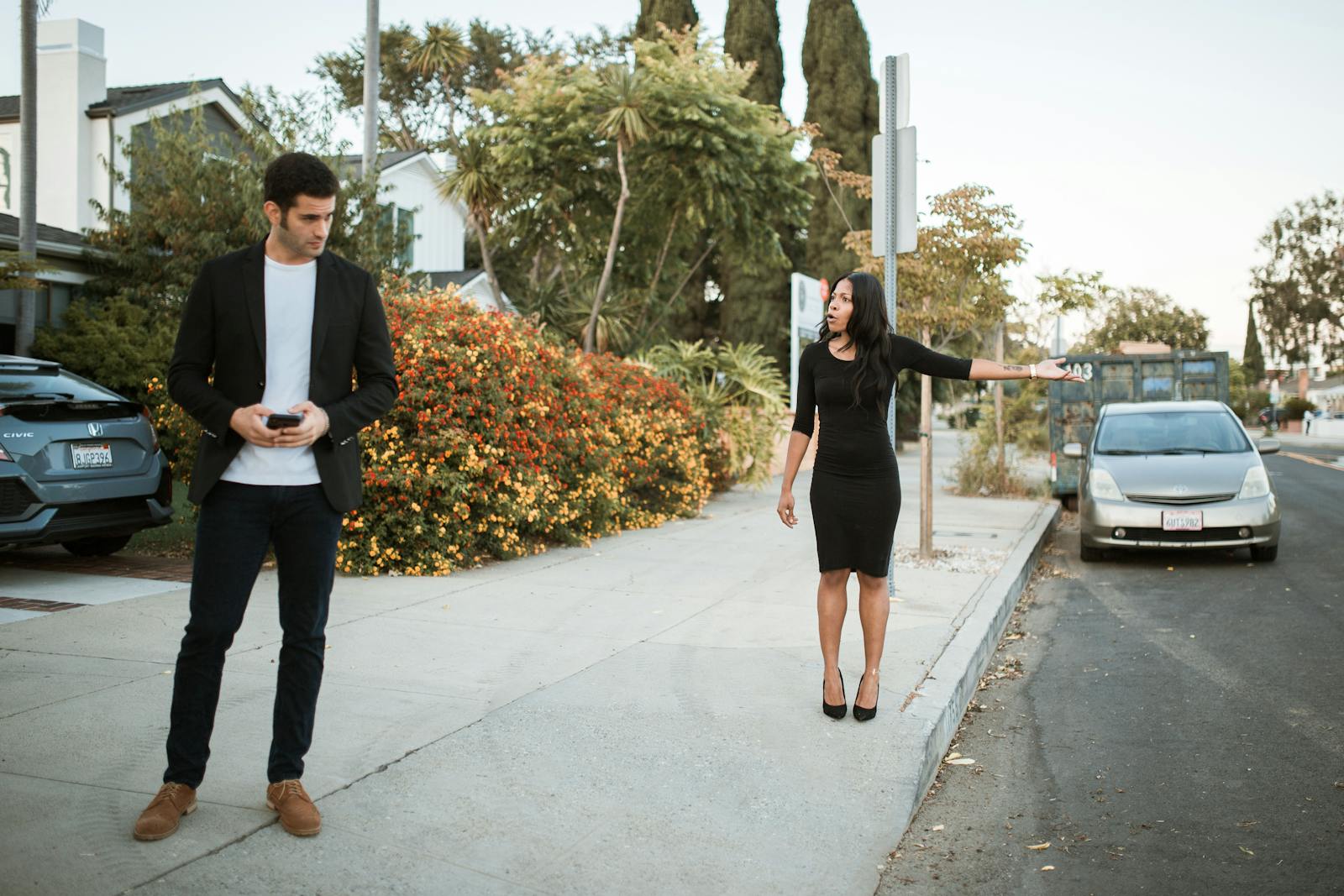
She didn’t even realize the breakup was going to turn into a hostage situation until she walked out of work and her parking spot looked wrong. Not “I forgot where I parked” wrong—empty, clean, like her little silver sedan had been erased. For a solid minute she stood there blinking, gripping her tote bag, waiting for her brain to catch up.
Then she remembered: the night before, after the fight, she’d tossed him the keys. Not in a dramatic movie way, just in that exhausted “get your stuff and go” way, because he’d driven her car over to her place and she didn’t want to stand in the driveway while he stomped around. He’d said, “Fine,” pocketed them, and left. She’d assumed he’d drop the car back like a normal person.
When she called him, he didn’t deny taking it. He sounded almost cheerful, like she’d called to ask for a sweater she left at his place. “Yeah, I have it,” he said, and then hit her with the line that made her stomach drop: she could have it back when she “stops acting crazy.”
The breakup wasn’t dramatic until it suddenly was
Up until that moment, the breakup had been standard messy. They’d been together long enough to collect mutual friends and overlapping routines, not long enough to learn how to fight without going nuclear. The argument that ended it wasn’t even about cheating or anything cinematic; it was more like a slow accumulation of disrespect and little boundary pushes that finally snapped.
He’d gotten used to borrowing her car for errands because his was “in the shop” for weeks that turned into months. She’d let it happen because she thought it was temporary, because he was charming when he wanted to be, because she didn’t want to be “that girlfriend” counting favors. Over time, the borrowing started to feel less like asking and more like announcing.
So when she finally told him they were done, he went straight to that weaponized calm people use when they’re trying to make you feel ridiculous. He acted like she was having a tantrum, like she’d break up, cool off, and come crawling back. Her tossing him the keys wasn’t permission; it was her trying to end the interaction without another hour of circular arguing.
“Stop acting crazy” became the new rental agreement
On the phone the next day, she tried to keep it practical. She asked where her car was and when he could return it. He didn’t give an address, didn’t give a time—just kept repeating the same vague condition like he was negotiating with a toddler.
She pressed him: did he take it to work, to his place, somewhere else? He laughed and said she was “spiraling,” that she was proving his point. Every question she asked got folded into his diagnosis of her personality, like her wanting her own property back was evidence she was unstable.
When she told him she needed the car to get to work—because of course she did—he said she should “figure it out” and “take a breath.” He kept dangling the keys like a reward: be calm, be nice, stop “making a scene,” and then maybe he’d be reasonable. It wasn’t a conversation so much as a power play with a smug tone.
She hung up and called again ten minutes later, thinking maybe if she sounded calmer he’d drop the act. He picked up and immediately went, “See? This is what I mean.” Like the act of calling a second time was a psychological symptom. That’s when she realized he wasn’t misunderstanding her; he was enjoying it.
Mutual friends got dragged in, and it got uglier
She did what people do when something feels too bizarre to be happening: she texted a friend from their shared circle and asked if they’d heard from him. She didn’t start with “he stole my car,” because saying it out loud felt ridiculous. She tried, “Hey, do you know where he is? He has my car and won’t bring it back.”
The friend responded with a cautious “Wait, what?” and then, after a pause, admitted he’d been ranting to people about her “freaking out” and “losing it.” Not specifics, just vibes—painting her as this volatile ex who couldn’t let go. It was like he’d preemptively insured himself by spreading the idea that anything she did next would be “crazy behavior.”
She sent a couple more messages, trying to keep it simple: the car is in her name, she needs it returned, she’ll pick it up if he gives her an address. He replied hours later with a thumbs-up and “we’ll talk when you calm down.” That was it. No address, no plan, just that same condescending little loop.
Meanwhile, she’s scrambling. She’s calling rides, asking coworkers for lifts, checking her bank app to see if she can afford a week of Ubers if this drags on. Each time she got in someone else’s car, she could feel the humiliation rising, because it wasn’t just inconvenient—it was someone treating her life like a bargaining chip.
He started acting like the car was collateral for her “behavior”
Later that night, he finally texted her a location: a strip mall parking lot on the edge of town. No apology, no explanation, just “I’ll be there at 8 if you can be normal.” The phrasing made her jaw clench. He was setting up a meetup like she was on probation and he was the parole officer.
She didn’t go alone. She asked her brother to come, partly for safety and partly because she didn’t trust herself not to get baited into an argument. She even rehearsed what she’d say: “Give me the keys. I’m leaving.” Nothing else. No explaining, no defending, no emotional closure.
When they arrived, he was already there, leaning against the car like it was his. He’d left fast-food trash in the cup holder and the seat was pushed way back like he’d been lounging. He smiled when he saw her brother, but it was tight, the kind of smile that’s supposed to say, “Oh, so we’re doing this.”
She held out her hand for the keys. He didn’t immediately give them to her—of course he didn’t. He asked, in this performative “let’s be mature” voice, if she was ready to “talk like an adult.” Her brother cut in and told him to hand over the keys or they’d call the police right there.
That word—police—changed his face. Suddenly the playful dominance slipped and he got prickly, defensive, like she was threatening him unfairly. He started talking fast about how she “let” him drive it, how she “knew” he had it, how she was “making him look like a criminal.” He still didn’t give the keys.
The handoff didn’t resolve anything—it just drew a new line
Eventually he tossed the keys into her palm like he was doing her a favor. No “sorry,” no “here you go,” just a final jab: “See? If you weren’t so crazy, this wouldn’t happen.” He said it like a closing argument, like he wanted the last sentence to stick to her skin.
She got in the driver’s seat and immediately noticed the gas was almost empty. It’s a small detail, but it hit her hard—like he’d been running it down on purpose, squeezing a little extra inconvenience out of the situation. Her brother followed her home, and the entire drive she kept checking her mirrors, half-expecting him to tail her just to keep the control going.
Back at her place, she sat in the car for a minute with the engine off, keys still in the ignition, trying to steady her breathing. She didn’t feel relieved so much as wrung out. Getting her car back wasn’t closure; it was proof of how easily he’d turned something basic into a punishment.
Over the next day, she realized the fallout was going to linger. Some mutual friends were quietly sympathetic, but others had clearly absorbed his version—that she was “dramatic,” that she “lost it,” that he was just trying to “handle her.” And the part that stuck in her throat was how cleanly he’d framed her reasonable panic as instability, like he’d found the perfect word to keep her on defense.
She could change her locks and block his number, sure. But she couldn’t unlearn how it felt to stand in a parking lot and realize someone could take something essential and then call her crazy for wanting it back. The car was home again, but the bigger theft—the confidence that she’d be believed—was the thing he’d tried hardest to keep.