

She didn’t go looking for trouble. She was just trying to be helpful in that low-stakes, married-life way—pay a bill, file a form, clear a stack of mail that had been sitting on the counter long enough to start looking like furniture.
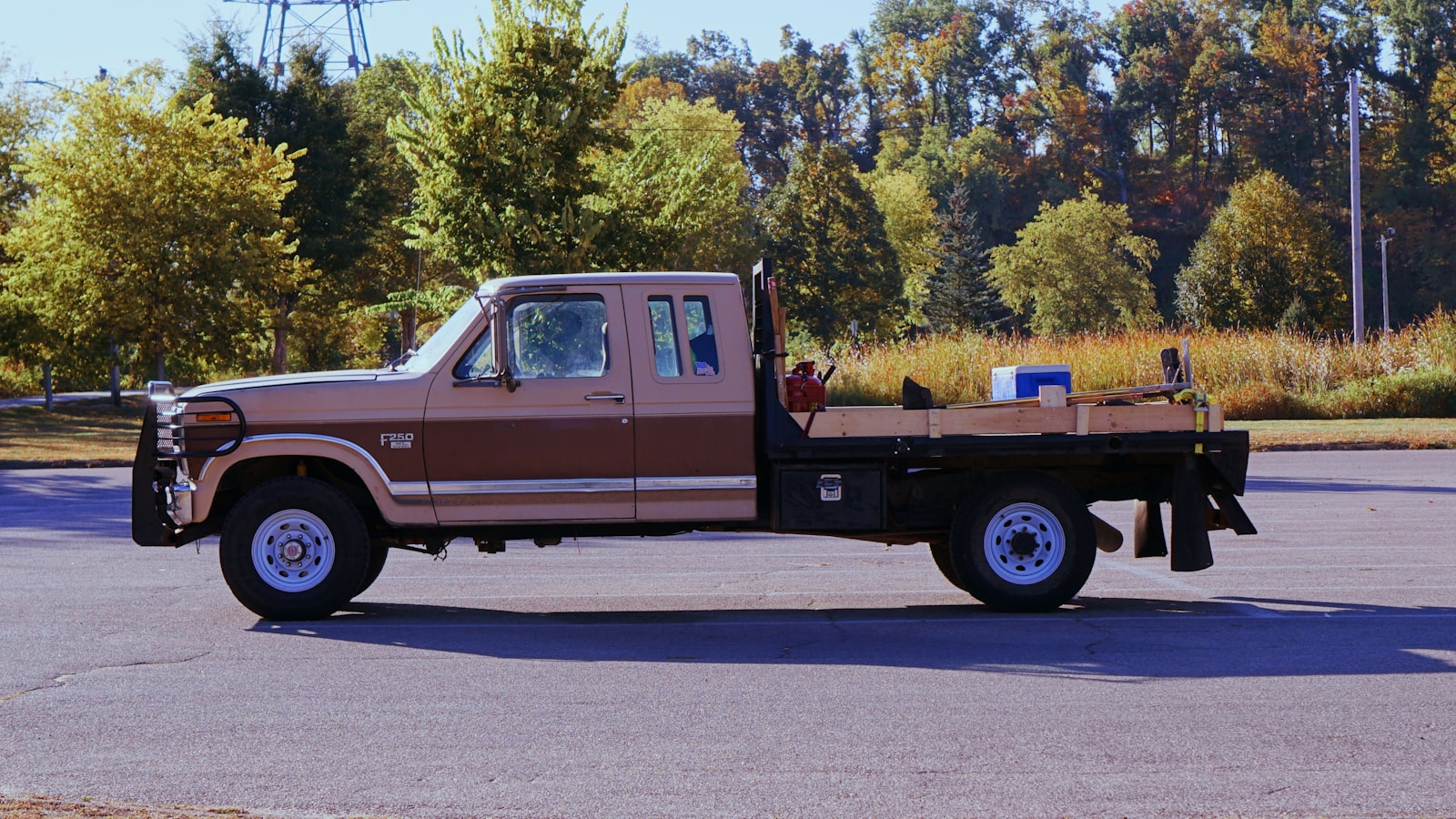
Her husband’s “work truck” had always been this separate little planet in their household. He used it “for the job,” kept it messy, and treated anything involving it—registration, insurance, repairs—as his domain. The only time she really interacted with it was when he tossed her the keys and asked her to grab something from the cab, or when she moved it so the trash cans could get out.
So when she needed the registration info for something boring and administrative, she figured it would be easy. Open the glove box, grab the card, copy the VIN or policy number, move on with her day. Instead, she pulled out paperwork that made her stomach drop in a way you don’t forget.

The glove box surprise
The registration wasn’t in his name. It wasn’t in her name either, which would’ve been weird but at least explainable. It was registered to another woman—full name, address, everything—printed as plainly as if the truck belonged to her and her alone.
At first she did that thing people do when something doesn’t fit reality: she assumed she was reading it wrong. Maybe it was an old slip, maybe he’d bought the truck used and forgot to update it, maybe it was some clerical mix-up where a previous owner’s info had been stapled to the wrong packet. She checked the date, then checked it again, and the date was recent enough that “old paperwork” didn’t work as a comforting theory.
She sat in the driver’s seat for a minute with the glove box hanging open, listening to the quiet hum of the neighborhood and feeling her thoughts race ahead of her. The truck was the one he drove constantly. He’d told her it was in his name, always made a point of being the one to handle anything related to it, and now the official paper said it belonged to someone else.
His first explanation: insurance
When she confronted him, she didn’t do it theatrically. She didn’t throw the papers at him or scream across the driveway. She waited until he walked in, handed him the registration, and asked, calmly, “Why is your truck registered to another woman?”
He glanced down like he’d been caught holding something hot, then tried to smooth his face into neutral. The first thing out of his mouth was weirdly casual: “Oh, that. It was just easier for insurance.”
He said it like it should’ve been the end of the conversation, like she should nod and go back to folding laundry. When she didn’t, when she just stared at him and waited for the part where it made sense, he started talking faster. He claimed this woman helped him get a better rate, that her policy had some kind of discount, that the truck being “work-related” made things complicated and this was the simplest workaround.
She asked the obvious next questions, the ones he didn’t volunteer. Who is she? Why is it not registered to the business if it’s a work truck? Why didn’t you tell your wife you put your vehicle under another woman’s name? Each question made his posture tighten, like he was bracing for impact while trying to pretend the room wasn’t filling with smoke.
Details that didn’t line up
The more he explained, the more the explanation felt like it had been assembled in the car on the way home. He couldn’t clearly describe how the insurance arrangement worked. He couldn’t explain why registration had to match her name if it was “just insurance,” or why their own insurance agent had apparently never been part of this genius plan.
She asked to see the policy. He said it was on his phone. He scrolled too long, swiped away a notification too quickly, then claimed the login wasn’t working. When she pushed, he pivoted to a different angle: the truck was technically “financed through someone,” and that person needed to be on the paperwork.
That would’ve been a halfway decent excuse if he’d ever mentioned it before, or if he hadn’t spent years presenting himself as the guy who had everything handled. He’d been weirdly possessive of the truck, too—always insisting on driving it, always offering to “just take care of it” when repairs came up, always acting like her asking about it was nagging. Now she had a name that wasn’t his and a story that changed shape every time she touched it.
She looked up the name on the registration, not because she wanted drama, but because human curiosity is basically unstoppable when your life starts feeling like a lie. The woman wasn’t some distant corporate contact. She lived close enough that it wasn’t a random out-of-state insurance hack. And once that sunk in, “easier for insurance” started sounding less like a boring financial decision and more like a cover story.
The fight gets slippery
He didn’t explode. He didn’t confess. He did something quieter and, in its own way, more unnerving: he got annoyed at the questions. He told her she was making a big deal out of nothing, that she didn’t understand how work stuff operated, that he was trying to save money for “their family.”
That’s the part that always hits hard—when the person who created the weirdness acts like you’re the problem for noticing it. She pointed out that saving money usually involves communication, especially when the cost is putting someone else’s name on a vehicle he drives every day. He kept repeating “it was easier” like a magic phrase, as if saying it enough times could make the paperwork rearrange itself.
She asked him again who the woman was, and he finally gave a first name like it was being dragged out of him. He said she was “someone from work” who knew a guy, who had done him a favor, who didn’t want to get involved in “drama.” But her full name was right there on the registration, and the more he minimized her, the more it felt like he was trying to shrink her down until she became unimportant.
When she asked why this “favor” involved legal ownership, he snapped that she was accusing him of cheating. She hadn’t even said the word yet. He said it with that defensive tone people use when their own thoughts beat someone else to the punch.
Pulling threads she can’t unsee
After that, she started noticing everything she’d waved off before. The way he guarded his phone. The way he always took calls in the garage. The way he’d suddenly started “working late” on days when there wasn’t a deadline. None of it was proof, but all of it started lining up around the same axis: secrecy.
She asked for the title. He said he didn’t have it. She asked how he’d even pay taxes or handle repairs if it wasn’t his. He said the business reimbursed him. When she asked to see those reimbursements—because now she was in “show me, don’t tell me” mode—he accused her of trying to control him.
There was also the practical, unromantic fear that comes with something like this: liability. If he got in an accident, whose insurance is actually covering what? If he gets pulled over, why is he driving a truck registered to another woman? If their finances are tied together, how does this impact them if it’s not just shady but illegal?
He told her she was spiraling. She told him she was responding to reality. And the conversation kept circling back to the same stuck place: she had paperwork in her hands, and he had stories that didn’t hold still long enough to be examined.
By the end of it, nothing was resolved except the fact that he couldn’t—or wouldn’t—give her a straight answer. The truck sat in the driveway like it always had, only now it looked less like a tool for work and more like a prop in a life he’d been staging beside her. And the worst part wasn’t even the possibility of another woman; it was how easily he’d tried to train her to doubt her own eyes when the truth was printed in black ink and tucked into the glove box.
More from Steel Horse Rides: