
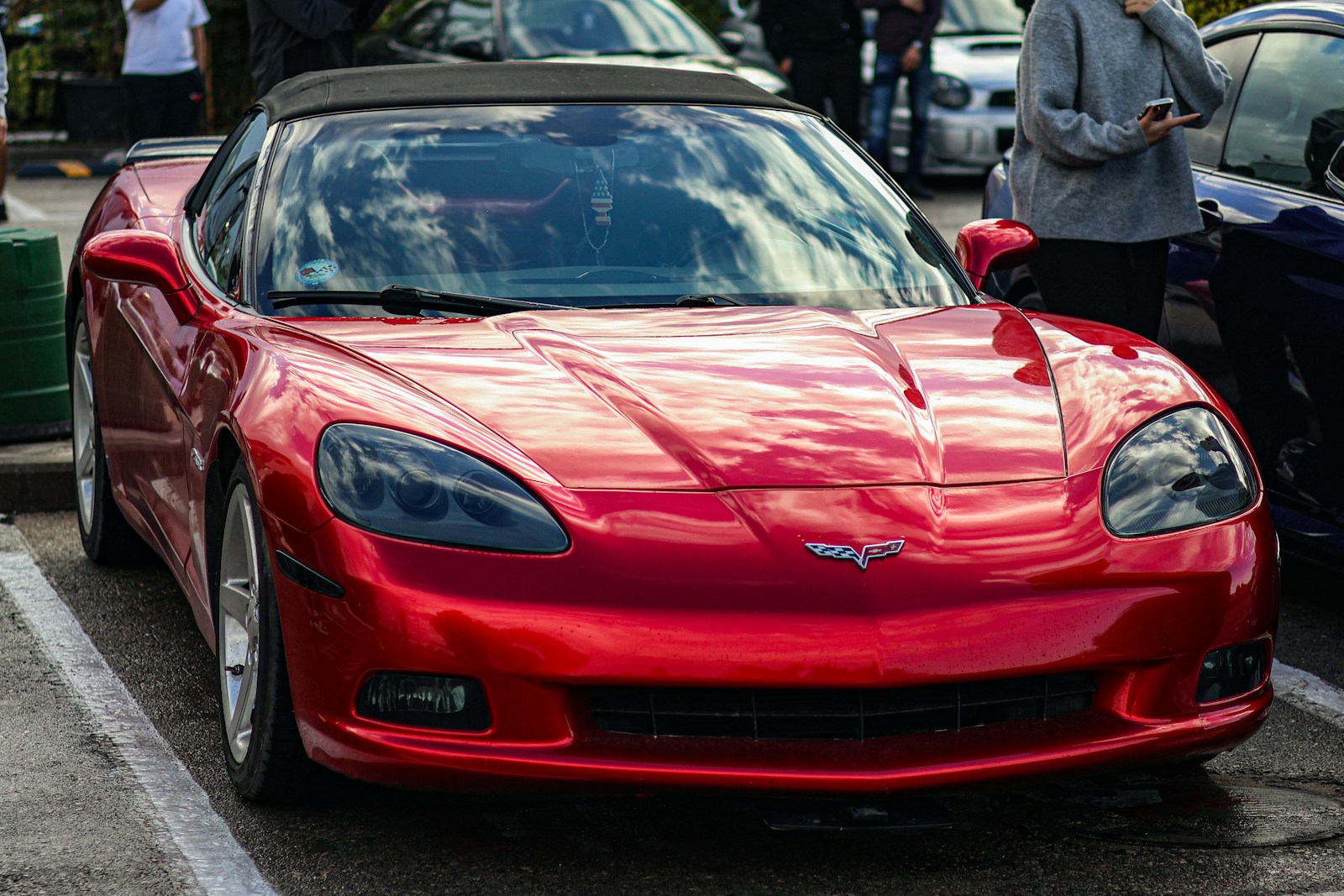

The dad’s Corvette wasn’t even a “garage queen,” which made what happened feel worse. It was the car he actually drove on sunny weekends, the one he washed by hand and parked like it was made of glass. He’d brag about it in that half-joking way—“She’s old, but she’s still got it”—and he never tossed the keys in a bowl like normal people.
His son still found them anyway. The kid was sixteen, tall enough to look older in a hoodie, and cocky in that specific way teenagers get when they’ve watched enough driving videos to think skill is basically vibes. Around midnight, he slid out of the house, eased the Corvette out of the driveway, and tried to make it to a friend’s place without waking the whole neighborhood.
He didn’t make it far. By 12:27 a.m., the car was sitting crooked against a curb with the front end crushed like it had been punched, one headlight blown out, and that unmistakable smell of hot coolant and humiliation hanging in the air.
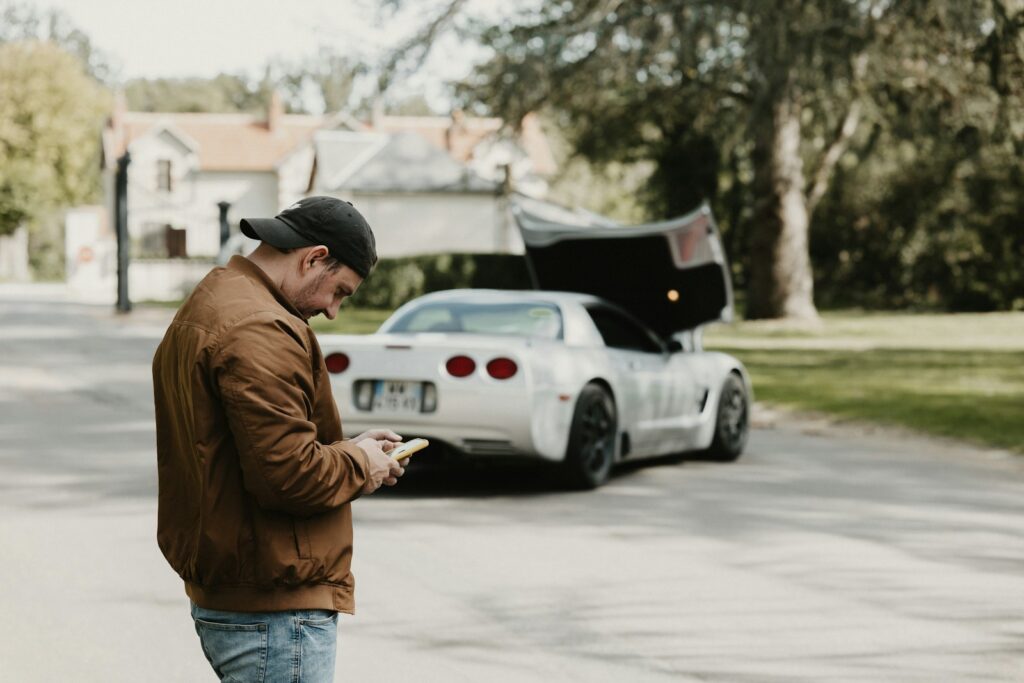
How the keys disappeared without anyone noticing
This wasn’t the first time the parents had argued about how strict to be. The mom leaned toward “keep him busy, keep him honest,” while the dad liked rules—clear ones, with consequences that actually stuck. They were already in that uneasy middle where the kid knew exactly which parent to ask depending on what he wanted.
The Corvette keys were normally on a hook in the dad’s closet, hidden behind a jacket. He did it because he didn’t trust the kid’s impulse control, and because every time the kid even looked at the car too long, the dad felt his blood pressure go up. The kid had apparently watched where the keys went weeks ago, because he knew exactly what to grab and how to put it back without leaving the hook swinging.
The plan, such as it was, sounded simple: pick up a friend, drive around, maybe stop by a 24-hour drive-thru, get home before anyone woke up. Teen logic always assumes the universe is on a timer that stops whenever adults close their bedroom doors. The Corvette, being loud and low and designed for attention, was a terrible choice for “quietly slip out and blend in.”
Midnight confidence meets a car that doesn’t forgive mistakes
He got out of the neighborhood fine, which probably convinced him he was basically a professional. The road he took after that was a two-lane stretch with a long curve—nothing extreme, but enough to punish anyone who entered it too fast. The kid later described it as “the back end just went,” which is a convenient way to make it sound like physics happened to him, rather than because of him.
The police report ended up being very plain: no other cars involved, no injuries, single-vehicle collision with curb and a street sign. The sign didn’t survive. The Corvette’s front bumper and one fender did that expensive kind of crumpling where you can tell the car absorbed the impact the way it was designed to, and you can also tell the bill is going to make someone sick.
He called his friend first, which tells you everything about where his brain was. The friend didn’t come; the friend told him to call his parents. Then he sat there for a minute, staring at the cracked hood and the steam slipping out, and finally made the call that made his voice go small.
The 1 a.m. driveway confrontation
The dad arrived first, because he drove like the road owed him answers. He got out, took one look at the Corvette, and didn’t even yell right away—he went quiet, which is often worse. The kid started talking fast, trying to explain, and the dad kept walking around the front end, touching the damage like it might be an illusion if he pressed hard enough.
The mom showed up a few minutes later in slippers and a sweatshirt, hair shoved into a messy knot, eyes wide like she’d teleported out of bed. She went straight to the kid, grabbed his shoulders, and checked him for blood the way moms do even when it’s obvious he’s intact. The dad watched this like it was a betrayal, like the first priority should’ve been the car, or at least the principle of what was taken.
The officer on scene asked the basic questions, and the dad answered before the kid could. Yes, it’s his vehicle. No, the kid didn’t have permission. Yes, the kid has a learner’s permit but not a full license. The mom kept interrupting with “He’s okay, right?” and “He’s never done this before,” which wasn’t exactly true—he’d tried to take the car once before and got caught in the garage.
Here’s where the story turns from wrecked-car drama into family civil war: the officer asked, calmly, if the dad wanted to report the vehicle as taken without consent. The dad said yes, immediately, like he’d been waiting for a button to press. The mom’s head snapped toward him, and she said his name in that warning tone that means, Don’t you dare do this in front of strangers.
Insurance math vs. “He needs to learn”
When they got home—minus the Corvette, which went to a tow yard—the argument started before the front door even shut. The dad wanted a police report that clearly stated the kid stole the car, because otherwise their insurance would treat it as “permissive use” and the claim could get ugly. He was already talking about premiums, deductibles, and the possibility that they’d get dropped.
The mom heard “stole” and went pale. To her, that word wasn’t an insurance category; it was a label that would stick to their son, maybe for life. She kept saying, “He made a stupid mistake,” and the dad kept saying, “He committed a crime.” They were having two different arguments and somehow managing to wound each other in both.
The kid hovered at the edge of the kitchen like a ghost, still in the hoodie, smelling faintly like burnt rubber. He tried to apologize, but every time he spoke, it sounded like he was trying to negotiate. When the dad asked him exactly how fast he was going, the kid said, “I don’t know,” and the dad laughed once, sharp, like he couldn’t believe he’d raised someone who could destroy a car without knowing the speedometer existed.
The mom wanted them to file the claim quietly, eat the deductible, and handle punishment at home. She was already listing consequences—no phone, no friends, grounded for the rest of the year, driving privileges nuked until he’s thirty. The dad heard “handle it at home” as code for “he’ll sulk for a week and then we’ll all pretend it didn’t happen.”
The nuclear option: press charges or protect him
By morning, the dad had spoken to the insurance company. They asked the question everyone asks: did the driver have permission? The dad hesitated, which told the adjuster plenty, and then he told the truth. The mom overheard him on the phone and started crying in that angry, frustrated way where tears are more like steam than sadness.
What made it messier was that the dad wasn’t wrong about the practical side. If they claimed the kid had permission, insurance could cover it but their rates might explode, and they’d be insuring a teenager who’d already proved he’d take the car at midnight. If they claimed he didn’t have permission, that aligned with reality, but it could trigger the whole chain of legal consequences: juvenile court, probation, possibly a record that doesn’t disappear as cleanly as people assume.
The mom accused the dad of wanting to ruin their son to make a point. The dad accused the mom of raising a kid who thought consequences were optional. The kid, hearing “charges” and “court,” finally looked scared in a way that wasn’t performative; he kept asking if he was going to be arrested, and nobody gave him a straight answer because the parents couldn’t agree on what they wanted the truth to be.
Somewhere in the middle of the yelling, the dad asked the kid a question that landed like a brick: “If you’d hit someone, would you have come home?” The kid didn’t answer. The mom’s face shifted, like the image flashed in her head and she couldn’t unsee it, and for a second the room went quiet except for the refrigerator humming.
They ended up in that tense limbo families get trapped in—waiting on tow yard estimates, waiting on insurance responses, waiting on the dad to decide whether to sign paperwork that would make the police report official in a way the mom couldn’t undo. The dad slept on the couch, the mom slept with her phone on her chest like she expected a call from a hospital, and the kid stayed in his room, texting friends like normal life was still an option.
By the end of the week, the Corvette was still sitting behind a fence with a growing storage fee, and the parents were still fighting the same fight in different words. The kid had wrecked a car, sure, but what really broke was the agreement they thought they had about how to be a family when things go wrong: whether love means shielding someone from consequences, or making sure the consequences hit hard enough that they never do it again.
More from Steel Horse Rides: